Livestock · Livestock
Bison
Bison bison
Also known as: American bison, North American buffalo
Bison are large North American ruminants raised primarily on extensive rangeland for meat and hides. As ruminants adapted to native grassland, they are managed mostly through pasture-based and ranch systems rather than intensive confinement.
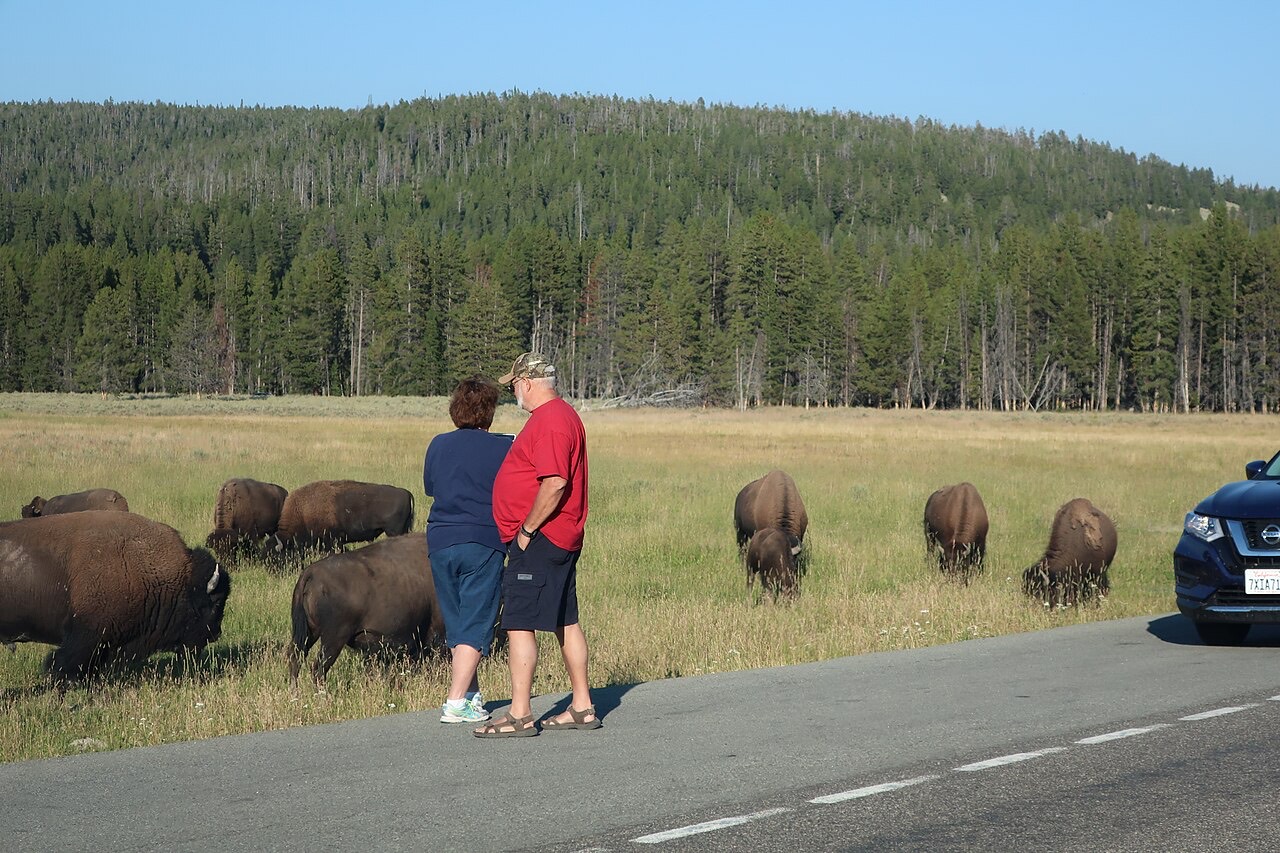
The American bison (Bison bison) is the largest native land mammal in North America and, like cattle, is a ruminant capable of digesting fibrous grasses and forbs through microbial fermentation in a multi-chambered stomach. Once reduced to near-extinction by overhunting, bison have been restored through conservation and commercial ranching and are now farmed for meat and hides across North America and, on a smaller scale, elsewhere.
Bison ranching typically relies on extensive grazing of native or improved rangeland, reflecting the species’ adaptation to open grassland and, in some regions, wooded grazing areas. Compared with domestic cattle, bison are generally managed with less intensive handling and confinement, reflecting both their temperament and their history as a wild grazing species.
Overview
Bison are raised both in commercial meat operations and in conservation or public herds managed for genetic and ecological preservation, with ranching practices generally emphasising extensive grazing over confinement.
Types and herd management
- Commercial meat herds
- Managed for grass-fed or grain-finished meat production on private ranches.
- Conservation and public herds
- Maintained on public or protected land primarily for genetic and ecological conservation.
- Cow-calf ranching systems
- Breeding herds managed to produce calves for growing and finishing elsewhere.
Nutrition and feeding
Bison diets are forage-based, relying on native and improved grassland grazing through most of the year, with hay or other conserved forage supplementation common during winter or periods of forage scarcity.
Health and welfare
Bison require handling facilities and fencing designed for a large, powerful, and less domesticated animal than cattle, alongside routine disease prevention and appropriate access to forage, water, and shelter.
Production context
Bison ranching can make productive use of grassland less suited to cropping, and is often associated with grassland conservation and nutrient cycling goals alongside its role as a specialty meat market.
Relationships
Evidence-backed connections in the knowledge graph.
Climate sensitivity
Commonly raised in
Feeds on
Related topics
Scope & limitations
Geographic scope: Primarily a North American species; farmed populations and regulation are concentrated in the United States and Canada, with smaller herds elsewhere.
Climate context: Bison are well adapted to cold-temperate grassland climates, including harsh winters, and are typically raised on extensive rangeland rather than in climate-controlled housing.
- This is a general species overview, not a ranch- or region-specific production guide.
- Health, medicine, and welfare practices are governed by local regulation and veterinary advice and are not detailed here.
Sources
This article draws on the following authoritative sources. See our sources & methodology for how they are selected.
- [1]FAO — Food and Agriculture Organization (opens in a new tab)Authoritative
Food and Agriculture Organization of the United Nations (FAO)
Cited for: Bison as a ruminant livestock species
- Type:
- Intergovernmental organization
- Jurisdiction:
- Global
- Accessed:
- 2026-07-12
- [2]DAD-IS — Domestic Animal Diversity Information System (opens in a new tab)Authoritative
FAO Commission on Genetic Resources for Food and Agriculture
Cited for: Bison genetic resources and diversity
- Type:
- Official registry
- Jurisdiction:
- Global
- Accessed:
- 2026-07-12
- [3]WOAH — World Organisation for Animal Health (opens in a new tab)Authoritative
World Organisation for Animal Health (WOAH)
Cited for: Animal health and welfare standards
- Type:
- Intergovernmental organization
- Jurisdiction:
- Global
- Accessed:
- 2026-07-12
- [4]National Academies Press — Nutrient Requirements series (opens in a new tab)High
National Research Council, U.S. National Academies
Cited for: Ruminant nutrient requirement references
- Type:
- Peer-reviewed literature
- Jurisdiction:
- Global
- Accessed:
- 2026-07-12