Livestock · Livestock
Cattle
Bos taurus; Bos indicus
Also known as: Cows, Bovines
Cattle are large domesticated ruminants raised worldwide for milk, beef, hides, and draught power. As ruminants, they can convert forage and by-products into food, and are managed across a wide range of systems.
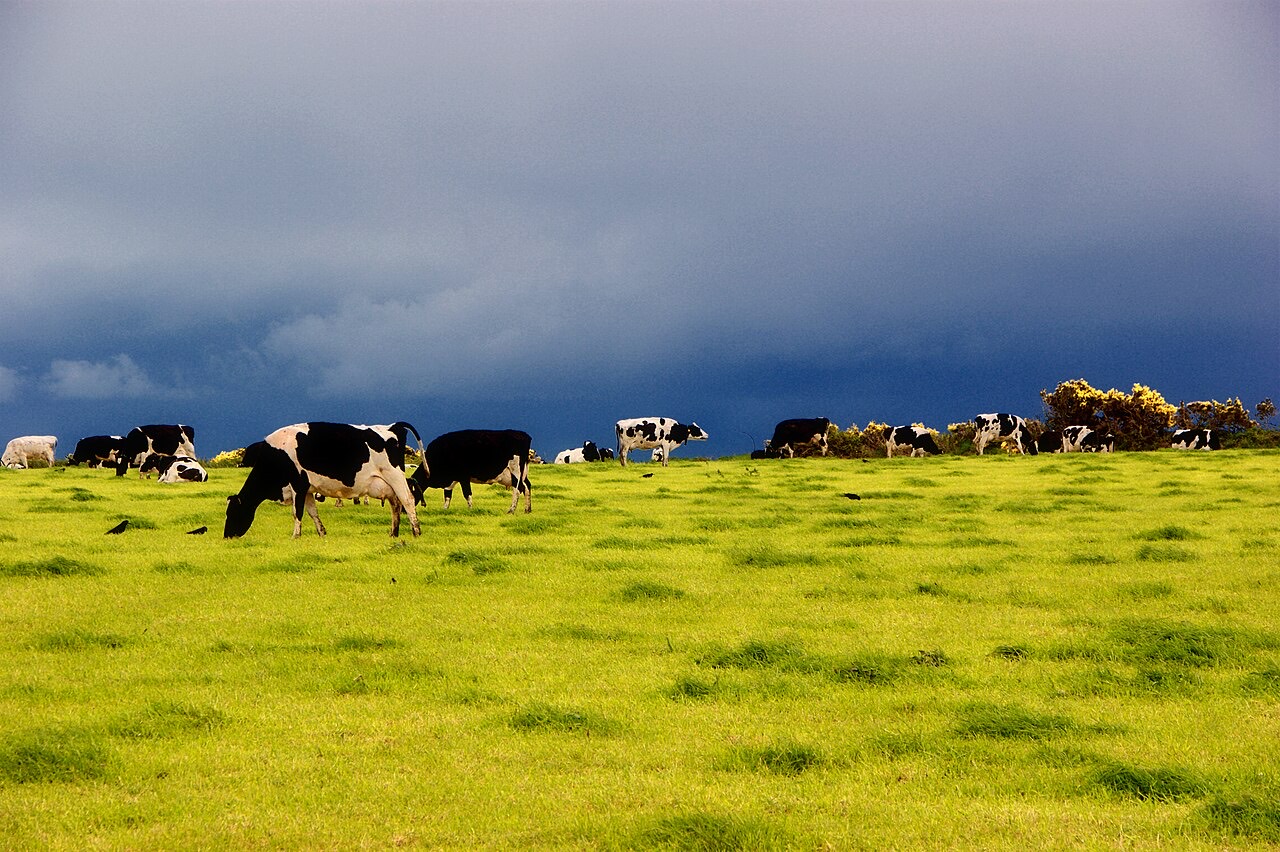
Cattle are among the most economically important domesticated animals, kept across almost every agricultural region for milk, meat, hides, manure, and, in many systems, draught power. Domesticated cattle include taurine types (Bos taurus), common in temperate regions, and zebu or indicine types (Bos indicus), well adapted to hot climates, along with many crossbreeds.
As ruminants, cattle can digest fibrous plant material that humans cannot eat, allowing them to use grassland and crop by-products. Production systems range from extensive grazing to intensive housed operations, and management practices vary accordingly.
Overview
Cattle production is broadly divided into dairy systems, which focus on milk, and beef systems, which focus on meat, with many dual-purpose and mixed systems in between. The choice of breed, feeding, and management follows the production goal, the local environment, and market conditions.
Types and breeds
- Dairy breeds
- Selected primarily for milk yield and composition (for example, several well-known European-origin breeds).
- Beef breeds
- Selected for growth, muscling, and carcass characteristics.
- Dual-purpose and local breeds
- Balanced for milk, meat, and often traits such as heat tolerance or hardiness suited to local conditions.
Breed diversity is documented internationally, including through FAO’s Domestic Animal Diversity Information System (DAD-IS), which records breeds and their status by country.
Nutrition and feeding
Cattle diets are built around forage — grazed pasture, hay, and silage — because the rumen is adapted to ferment fibrous feeds. Depending on the system and production stage, forage may be supplemented with concentrates, minerals, and vitamins to meet requirements.
Health and welfare
Good husbandry protects animal health and welfare and underpins productivity. Core elements include appropriate nutrition and water, comfortable housing or shelter, disease prevention, and low-stress handling.
Production context
Cattle systems interact with land use, feed production, water, and nutrient cycling. They can make productive use of land unsuitable for crops and recycle nutrients through manure, while also carrying environmental considerations that are actively researched and managed. The balance of these factors is highly system- and region-specific.
Official extension guidance
1 resource indexed from public extension publishers. Each was written for a particular place; read it at the source.
Are Your Cattle Cool? Tips for Managing the Summer Heat
Factsheet published by University of Maryland Extension for Maryland. It addresses cattle. The source is organised around “Managing Heat Stress is Critical”, “Signs of Heat Stress in Cattle” and “How to Reduce Heat Stress”.
University of Maryland Extension · Livestock management · publisher states 2021-09-08
These are pointers to guidance published by others. Each was written for a particular place and season and is revised by its publisher; read it at the source, and check it applies where you farm.
Relationships
Evidence-backed connections in the knowledge graph.
Notable breeds
Documented breeds tied to this species, with registry status and sources on each page. Not an exhaustive list.
- Aberdeen AngusThe Aberdeen Angus is a naturally polled beef breed from north-eastern Scotland, known for its solid black (or red) coat, carcass quality, and widespread use as a maternal and terminal breed in crossbreeding.
- AyrshireThe Ayrshire is a hardy red-and-white dairy breed from south-western Scotland, valued for efficient grazing, good udders, and reliable production under a range of conditions.
- Belgian BlueThe Belgian Blue is a heavily muscled beef breed from Belgium characterised by double muscling, producing very lean, high-yielding carcasses; its extreme muscularity has important calving-management implications.
- BrahmanThe Brahman is a humped zebu beef breed developed in the United States from Indian cattle, valued for heat tolerance, insect and parasite resistance, and hardiness in tropical and subtropical conditions.
- Brown SwissThe Brown Swiss is a large grey-brown dairy breed originating in the Alps of Switzerland, one of the oldest dairy breeds, valued for milk suited to cheese-making and for a docile temperament.
- CharolaisThe Charolais is a large, white-to-cream French beef breed known for heavy muscling and growth, used worldwide as a terminal sire and for lean beef production.
- Dairy ShorthornThe Dairy Shorthorn is the dairy line of the English Shorthorn, a red, white, or roan breed valued for dual-purpose heritage, hardiness, and functional milk production from forage.
- GirThe Gir is an Indian zebu dairy breed from Gujarat, distinguished by its domed forehead and long pendulous ears, valued for milk in hot climates and important in tropical dairy crossbreeding.
- GuernseyThe Guernsey is a fawn-and-white dairy breed from the Channel Island of Guernsey, known for rich, golden-tinged milk and a docile temperament.
- HerefordThe Hereford is a hardy English beef breed distinguished by its red body and white face, kept worldwide for efficient forage-based beef production and widely used in crossbreeding.
- HighlandThe Highland is a hardy Scottish beef breed with a long double coat and long horns, renowned for thriving in cold, wet, and harsh conditions and for use in conservation grazing.
- Holstein FriesianThe Holstein Friesian is a large black-and-white (or red-and-white) dairy breed of Dutch and northern German origin, recognised internationally for high milk volume and now the most widely distributed dairy breed in the world.
- JerseyThe Jersey is a small fawn-coloured dairy breed from the Channel Island of Jersey, valued for feed-efficient production of milk that is high in butterfat and protein.
- LimousinThe Limousin is a golden-red French beef breed from the Limousin region, known for heavy muscling, high dressing percentage, and lean meat, and widely used as a terminal sire.
- NelloreThe Nellore is a white zebu beef breed derived from the Indian Ongole and developed extensively in Brazil, valued for heat and parasite tolerance and now a dominant beef breed in tropical South America.
- SimmentalThe Simmental is a large dual-purpose breed originating in the Simme Valley of Switzerland, kept for both beef and milk and among the most widely distributed cattle breeds in the world.
- Texas LonghornThe Texas Longhorn is a hardy North American beef breed descended from Spanish colonial cattle, famous for its very long horns, varied colours, and adaptation to harsh rangeland.
- Wagyu (Japanese Black)Wagyu refers to Japanese cattle breeds; the dominant Japanese Black is a beef breed renowned for intense intramuscular fat (marbling) and is the basis of many premium branded beef products.
Harvested commodities
The traded commodities obtained from this species, described by their own quality, grading, and handling evidence.
- Cattle HidesCattle hides are the raw skins recovered as a by-product of beef production and traded as the principal raw material of the leather industry. Their value depends on defects accumulated during the animal’s life and on how promptly the hide is cured after recovery.
- Raw Cow MilkRaw cow milk is the untreated liquid obtained at milking from dairy cattle, collected as a bulk commodity and moved chilled to a processor. It is bought on compositional and hygiene criteria rather than on volume alone, and it is the feedstock from which the whole dairy chain is built.
Scope & limitations
Geographic scope: Global overview; breeds, systems, regulations, and guidance vary widely by country and region.
Climate context: Cattle are kept from tropical to cold-temperate regions; breed adaptation and management differ with climate.
- This is a general species overview, not breed-, system-, or region-specific husbandry guidance.
- Health, medicine, and welfare practices are governed by local regulation and veterinary advice and are not detailed here.
Sources
This article draws on the following authoritative sources. See our sources & methodology for how they are selected.
- [1]FAO — Food and Agriculture Organization (opens in a new tab)Authoritative
Food and Agriculture Organization of the United Nations (FAO)
Cited for: Cattle production systems and global role
- Type:
- Intergovernmental organization
- Jurisdiction:
- Global
- Accessed:
- 2026-07-12
- [2]DAD-IS — Domestic Animal Diversity Information System (opens in a new tab)Authoritative
FAO Commission on Genetic Resources for Food and Agriculture
Cited for: Cattle breeds and diversity
- Type:
- Official registry
- Jurisdiction:
- Global
- Accessed:
- 2026-07-12
- [3]WOAH — World Organisation for Animal Health (opens in a new tab)Authoritative
World Organisation for Animal Health (WOAH)
Cited for: Animal health and welfare standards
- Type:
- Intergovernmental organization
- Jurisdiction:
- Global
- Accessed:
- 2026-07-12
- [4]National Academies Press — Nutrient Requirements series (opens in a new tab)High
National Research Council, U.S. National Academies
Cited for: Nutrient requirement references
- Type:
- Peer-reviewed literature
- Jurisdiction:
- Global
- Accessed:
- 2026-07-12