Livestock · Livestock
Yak
Bos grunniens
Also known as: Domestic yak
Yaks are large ruminants uniquely adapted to the high-altitude cold environments of the Himalayan and Central Asian plateaus, raised for milk, meat, fibre, hides, and transport. Pastoral grazing and seasonal transhumance are the dominant production systems.
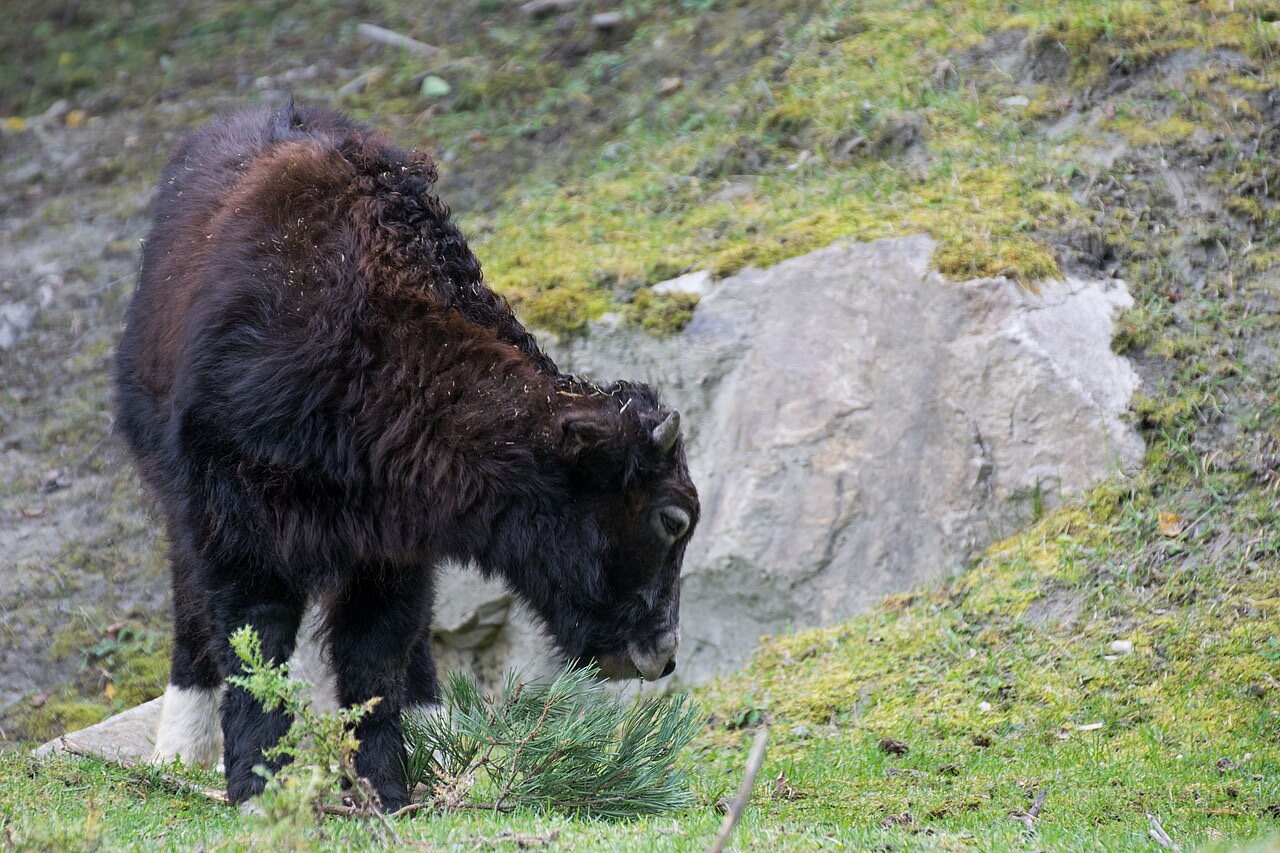
The domestic yak (Bos grunniens) is a ruminant bovine adapted to the cold, oxygen-thin environments of the Tibetan Plateau and surrounding high-altitude regions of Central and South Asia. Physiological adaptations, including a larger lung and heart capacity relative to body size and a dense fibre undercoat, allow yaks to thrive at altitudes and temperatures unsuitable for most other cattle-like livestock.
Yaks are a multi-purpose livestock species for high-altitude pastoral communities, providing milk, meat, fibre, hides, and pack or draught transport across difficult mountain terrain. Herds are typically managed through transhumance, moving between seasonal pastures to match forage availability across the year.
Overview
Yak husbandry is closely tied to high-altitude pastoral livelihoods, with herds providing multiple products simultaneously and management practices adapted to seasonal forage availability and extreme mountain climates.
Types and uses
- Dairy yaks
- Milked for dairy products including butter and cheese central to many high-altitude diets.
- Pack and draught yaks
- Used for carrying loads and, in some areas, light cultivation across mountain terrain.
- Yak–cattle hybrids
- Crosses with lowland cattle (sometimes called dzo or dzomo), used in some regions to combine traits of both species.
Nutrition and feeding
Yaks graze native alpine pasture through most of the year, with forage availability declining sharply in winter; some managed systems provide conserved forage or supplementary feed during the coldest, most forage-scarce months.
Health and welfare
Yaks are well adapted to cold and altitude but can suffer heat stress at lower elevations or during warmer periods; husbandry also addresses parasite and disease risks associated with seasonal grazing movements.
Production context
Yaks underpin livelihoods across high-altitude pastoral regions where few other livestock species can thrive, and their climate sensitivity, particularly to warming temperatures at range margins, is a subject of ongoing research interest.
Relationships
Evidence-backed connections in the knowledge graph.
Climate sensitivity
Commonly raised in
Feeds on
Related topics
Scope & limitations
Geographic scope: Concentrated in the high-altitude Tibetan Plateau and surrounding regions of China, Mongolia, Nepal, Bhutan, and parts of Central Asia; farming systems and regulation vary by country.
Climate context: Yaks are adapted to cold, high-altitude environments and can experience heat stress at lower elevations or under rising temperatures, making climate an important management consideration.
- This is a general species overview, not a region-specific pastoral management guide.
- Health, medicine, and welfare practices are governed by local regulation and veterinary advice and are not detailed here.
Sources
This article draws on the following authoritative sources. See our sources & methodology for how they are selected.
- [1]FAO — Food and Agriculture Organization (opens in a new tab)Authoritative
Food and Agriculture Organization of the United Nations (FAO)
Cited for: Yak production systems and pastoral livelihoods
- Type:
- Intergovernmental organization
- Jurisdiction:
- Global
- Accessed:
- 2026-07-12
- [2]DAD-IS — Domestic Animal Diversity Information System (opens in a new tab)Authoritative
FAO Commission on Genetic Resources for Food and Agriculture
Cited for: Yak genetic resources and diversity
- Type:
- Official registry
- Jurisdiction:
- Global
- Accessed:
- 2026-07-12
- [3]WOAH — World Organisation for Animal Health (opens in a new tab)Authoritative
World Organisation for Animal Health (WOAH)
Cited for: Animal health and welfare standards
- Type:
- Intergovernmental organization
- Jurisdiction:
- Global
- Accessed:
- 2026-07-12
- [4]National Academies Press — Nutrient Requirements series (opens in a new tab)High
National Research Council, U.S. National Academies
Cited for: Ruminant nutrient requirement references
- Type:
- Peer-reviewed literature
- Jurisdiction:
- Global
- Accessed:
- 2026-07-12