Soil · Soil type
Chernozem
Also known as: Black earth, Black soil (steppe)
Chernozem is a deep, dark, humus-rich soil formed under temperate grassland (steppe) vegetation, renowned for its natural fertility and high organic carbon content. It underlies some of the world's most productive cereal-growing regions but is vulnerable to organic-matter loss and erosion under intensive cultivation.
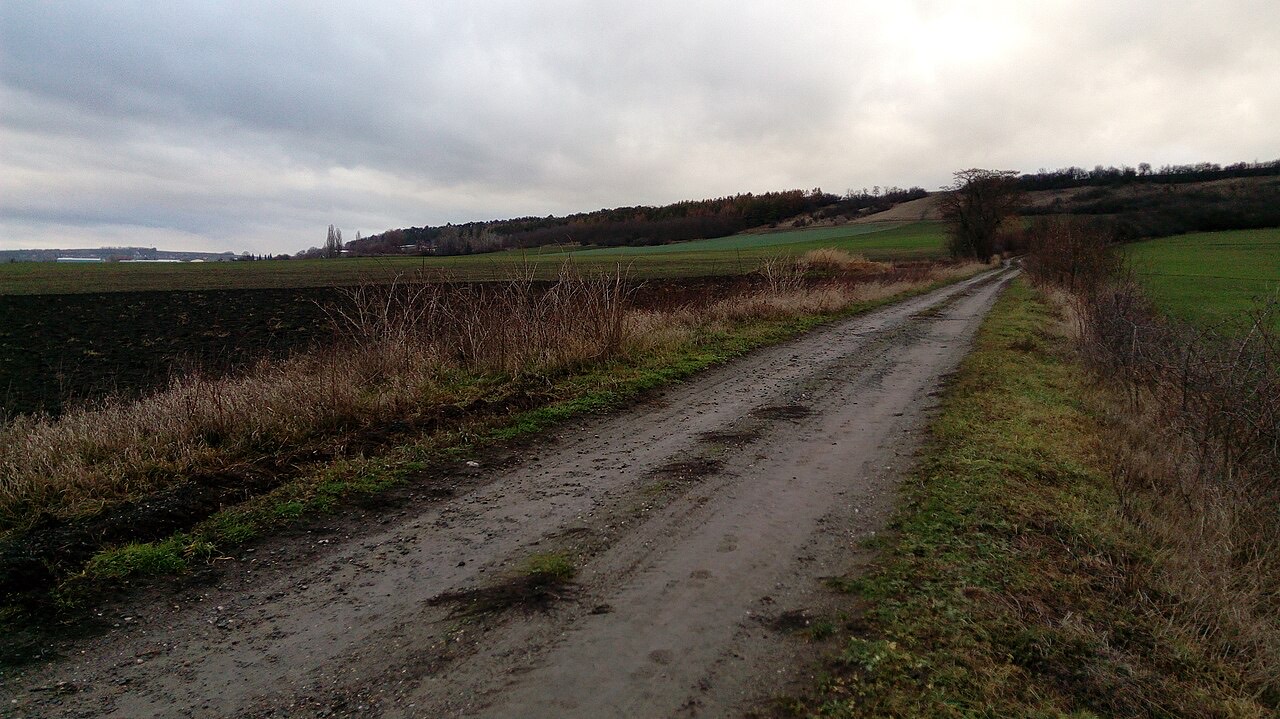
Chernozem, meaning "black earth," forms under long-term grassland vegetation whose deep, fibrous root systems return large amounts of organic matter to the soil. Combined with a continental climate of cold winters that slow decomposition and moderate summer rainfall that supports grassland productivity, this produces a thick, dark, organic-carbon-rich topsoil over a calcareous subsoil.
Chernozem in the strict sense refers to steppe soils of Eurasia, notably in Ukraine and southern Russia. Related grassland soils, classified separately as Mollisols, occur in the North American prairies and the Argentine pampas and share many of the same properties, though this overview treats them together only in general terms.
Overview
Chernozem is defined by a distinctively thick, dark, organic-rich surface horizon built up over long periods under grassland vegetation. This horizon, together with a calcium-carbonate-enriched subsoil, distinguishes chernozem from soils formed under forest or other vegetation types.
Formation and distribution
Deep-rooted grassland vegetation continuously adds organic matter to the soil, while cold winters slow its decomposition and moderate summer rainfall supports sustained grassland productivity without excessive leaching. Over long periods, this combination builds an unusually thick, organic-carbon-rich topsoil. Classic chernozem occurs across the Eurasian steppe, while related Mollisols occur in the North American prairies and the Argentine pampas under broadly similar grassland-climate conditions.
Physical and chemical properties
- Organic carbon content
- A thick, dark topsoil with high organic carbon is the defining feature of chernozem, built up over long periods under grassland vegetation.
- Nutrient retention
- High organic matter and cation exchange capacity give strong natural fertility and nutrient-holding ability.
- Structure
- Typically well-aggregated with a granular topsoil structure that supports good rooting and workability.
- Subsoil carbonate accumulation
- A calcium-carbonate-enriched layer often occurs beneath the dark topsoil, reflecting the semi-arid to sub-humid moisture regime typical of steppe climates.
Management considerations
Managing chernozem centres on protecting its exceptional organic carbon stock, since this resource, once depleted, rebuilds only slowly.
- Minimise unnecessary tillage and protect against erosion to conserve the organic-carbon-rich topsoil
- Use crop rotations and residue management that maintain organic matter inputs over time
- Address wind and water erosion risk, given the fine loamy texture and open steppe landscape typical of chernozem regions
- Monitor organic carbon trends over time where long-term degradation is a concern
Crop suitability
Wheat is historically closely associated with chernozem grain-belt regions. Maize is also grown extensively on chernozem and related Mollisol regions where the climate is favourable, and sugar beet performs well on these deep, fertile soils.
Relationships
Evidence-backed connections in the knowledge graph.
Scope & limitations
Geographic scope: General soil-science overview of chernozem (black earth) soils and related Mollisols in temperate steppe and prairie grassland regions worldwide, including Ukraine, southern Russia, the North American prairies, and the Argentine pampas; properties vary by region and cultivation history.
Climate context: Formed under a continental climate with cold winters that slow organic matter decomposition and moderate summer rainfall supporting grassland productivity; this climate–vegetation combination is central to chernozem formation.
- Chernozem in the strict sense refers to steppe soils of Eurasia; related grassland Mollisols elsewhere share many properties but are classified separately, and this overview treats them together only in general terms.
- Long-term organic carbon status varies with cultivation history and local management and should be assessed through local soil monitoring rather than assumed.
Sources
This article draws on the following authoritative sources. See our sources & methodology for how they are selected.
- [1]USDA NRCS — Natural Resources Conservation Service (opens in a new tab)Authoritative
USDA Natural Resources Conservation Service (NRCS)
Cited for: Soil texture, drainage, and management
- Type:
- Government agency
- Jurisdiction:
- United States
- Accessed:
- 2026-07-12
- Authoritative
Cited for: Soil function and classification context
- Type:
- Intergovernmental organization
- Jurisdiction:
- Global
- Accessed:
- 2026-07-12
- High
Cited for: Global soil properties and information
- Type:
- Research institute
- Jurisdiction:
- Global
- Accessed:
- 2026-07-12
- Authoritative
Cited for: Crop–soil suitability context
- Type:
- Reference database
- Jurisdiction:
- United States
- Accessed:
- 2026-07-12