Livestock · Livestock
Goats
Capra hircus
Also known as: Does, Bucks, Kids
Goats are hardy, adaptable ruminants raised worldwide for milk, meat, and fibre. Their browsing behaviour and tolerance of difficult environments make them an important livestock species in smallholder and marginal-land systems.
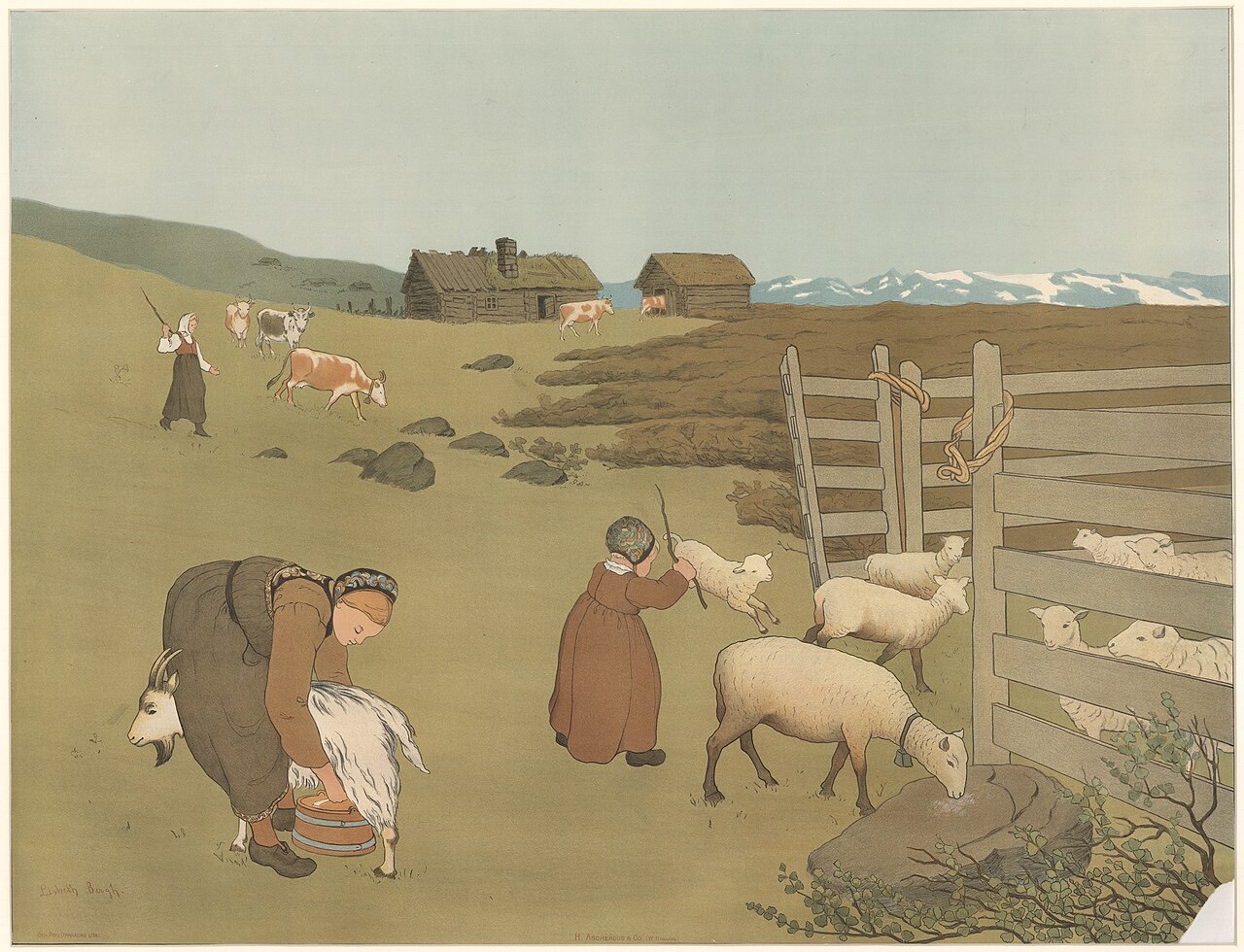
Goats are versatile, widely distributed domesticated ruminants valued for milk, meat, and fibre, including mohair and cashmere from specialised breeds. They are especially important in smallholder agriculture, where their relatively low input requirements and adaptability make them accessible livestock across a wide range of climates and farm sizes.
Unlike grazing species that concentrate on grasses, goats are natural browsers, preferring to eat shrubs, woody vegetation, and a broad range of plants at varying heights. This behaviour, combined with a hardy constitution and tolerance of heat, drought, and rough terrain, allows goats to use vegetation and land that other livestock use less efficiently.
Overview
Goat production includes dairy systems (milk for drinking, cheese, and other products), meat systems, and fibre systems producing mohair (from Angora goats) or cashmere (from the downy undercoat of certain breeds). Many goats worldwide are kept in mixed-purpose smallholder systems rather than single-output enterprises.
- Dairy goats — selected for milk yield, composition, and udder conformation.
- Meat goats — selected for growth rate and carcass characteristics.
- Fibre goats — Angora goats produce mohair; certain breeds and types produce cashmere down.
Types and breeds
- Dairy breeds
- Selected primarily for milk yield and composition, widely kept from smallholdings to specialised dairies.
- Meat breeds
- Selected for growth and carcass traits, prominent in many tropical and subtropical systems.
- Fibre breeds
- Angora goats are bred for mohair; other breeds and crosses produce cashmere down harvested seasonally.
- Hardy local and landrace breeds
- Adapted over generations to local climate, terrain, and forage availability, often prioritising resilience over single-trait output.
Breed diversity is documented internationally, including through FAO’s Domestic Animal Diversity Information System (DAD-IS), which records breeds and their conservation status by country.
Nutrition and feeding
As ruminants, goats ferment fibrous plant material in a specialised stomach, but their browsing behaviour means diets often include shrubs, woody plants, and varied forage in addition to or instead of grazed pasture. Depending on the system and production goal, forage and browse may be supplemented with concentrates, minerals, and vitamins.
Health and welfare
Goat health and welfare depend on adequate nutrition and water, shelter appropriate to climate, routine herd health management, parasite monitoring, and handling suited to their inquisitive and social temperament. Goats are also notable for their agility and tendency to test fencing and enclosures.
Production context
Goats are widely valued in smallholder and pastoral systems for their adaptability, modest input requirements relative to larger livestock, and ability to use vegetation on marginal or degraded land. They contribute meaningfully to household nutrition and income in many regions, alongside considerations around vegetation impact where browsing pressure is high; the balance of these factors is system- and region-specific.
Relationships
Evidence-backed connections in the knowledge graph.
Notable breeds
Documented breeds tied to this species, with registry status and sources on each page. Not an exhaustive list.
- Anglo-NubianThe Anglo-Nubian is a large, lop-eared dual-purpose goat developed in England from British and lop-eared Asian and African goats. It is valued for rich, high-butterfat milk and tolerance of warm climates.
- AngoraThe Angora is a fibre goat of Anatolian origin bred for mohair, the long, lustrous fleece it produces. It is small-framed and is shorn for fibre rather than kept primarily for milk or meat.
- BoerThe Boer is a South African meat goat known for rapid growth, heavy muscling, and a distinctive white body with a red-brown head. It is one of the most widely used specialised meat-goat breeds internationally.
- French AlpineThe French Alpine is a hardy, medium-to-large dairy goat of Alpine origin, valued for good milk yield, adaptability, and a wide range of coat-colour patterns described by traditional French terms.
- JamnapariThe Jamnapari is a large, distinctively long-eared dual-purpose goat from northern India, kept for milk and meat. It is one of the ancestral breeds behind the Anglo-Nubian and is characterised nationally by Indian research bodies.
- KikoThe Kiko is a meat goat developed in New Zealand from feral goats selected for hardiness, growth, and survivability under low-input hill-country conditions. It is widely used in extensive and pasture-based meat systems.
- LaManchaThe LaMancha is an American dairy goat instantly recognised by its very short external ears. Developed in the United States from Spanish-descended goats, it is valued for a calm temperament and steady milk production.
- Nigerian DwarfThe Nigerian Dwarf is a miniature dairy goat developed in the United States from West African Dwarf stock. It is prized for high-butterfat milk relative to its small size and is popular on smallholdings and homesteads.
- SaanenThe Saanen is a large white Swiss dairy goat widely regarded as one of the highest-yielding milk breeds. It is distributed internationally and underpins many commercial dairy-goat herds.
- ToggenburgThe Toggenburg is a Swiss dairy goat, often cited as one of the oldest registered goat breeds. It is recognised by its brown coat with distinctive white facial stripes, ears, legs, and rump.
Harvested commodities
The traded commodities obtained from this species, described by their own quality, grading, and handling evidence.
Scope & limitations
Geographic scope: Global overview; breeds, systems, regulations, and guidance vary widely by country and region.
Climate context: Goats are kept from arid and semi-arid rangeland to humid tropical and cold-temperate regions; breed adaptation and management differ with climate.
- This is a general species overview, not breed-, system-, or region-specific husbandry guidance.
- Health, medicine, and welfare practices are governed by local regulation and veterinary advice and are not detailed here.
- Fibre production practices (mohair and cashmere) vary considerably by breed and region and are described here only in general terms.
Sources
This article draws on the following authoritative sources. See our sources & methodology for how they are selected.
- [1]FAO — Food and Agriculture Organization (opens in a new tab)Authoritative
Food and Agriculture Organization of the United Nations (FAO)
Cited for: Goat production systems and global role
- Type:
- Intergovernmental organization
- Jurisdiction:
- Global
- Accessed:
- 2026-07-12
- [2]DAD-IS — Domestic Animal Diversity Information System (opens in a new tab)Authoritative
FAO Commission on Genetic Resources for Food and Agriculture
Cited for: Goat breeds and diversity
- Type:
- Official registry
- Jurisdiction:
- Global
- Accessed:
- 2026-07-12
- [3]WOAH — World Organisation for Animal Health (opens in a new tab)Authoritative
World Organisation for Animal Health (WOAH)
Cited for: Animal health and welfare standards
- Type:
- Intergovernmental organization
- Jurisdiction:
- Global
- Accessed:
- 2026-07-12
- [4]National Academies Press — Nutrient Requirements series (opens in a new tab)High
National Research Council, U.S. National Academies
Cited for: Nutrient requirement references
- Type:
- Peer-reviewed literature
- Jurisdiction:
- Global
- Accessed:
- 2026-07-12