Livestock · Livestock
Horses
Equus caballus
Also known as: Equines, Ponies
Horses are large monogastric herbivores kept worldwide for draught power, transport, recreation, and, in some countries, meat. As hindgut fermenters rather than ruminants, they digest fibrous forage in the cecum and colon and are managed across grazing, stabled, and working-animal systems.
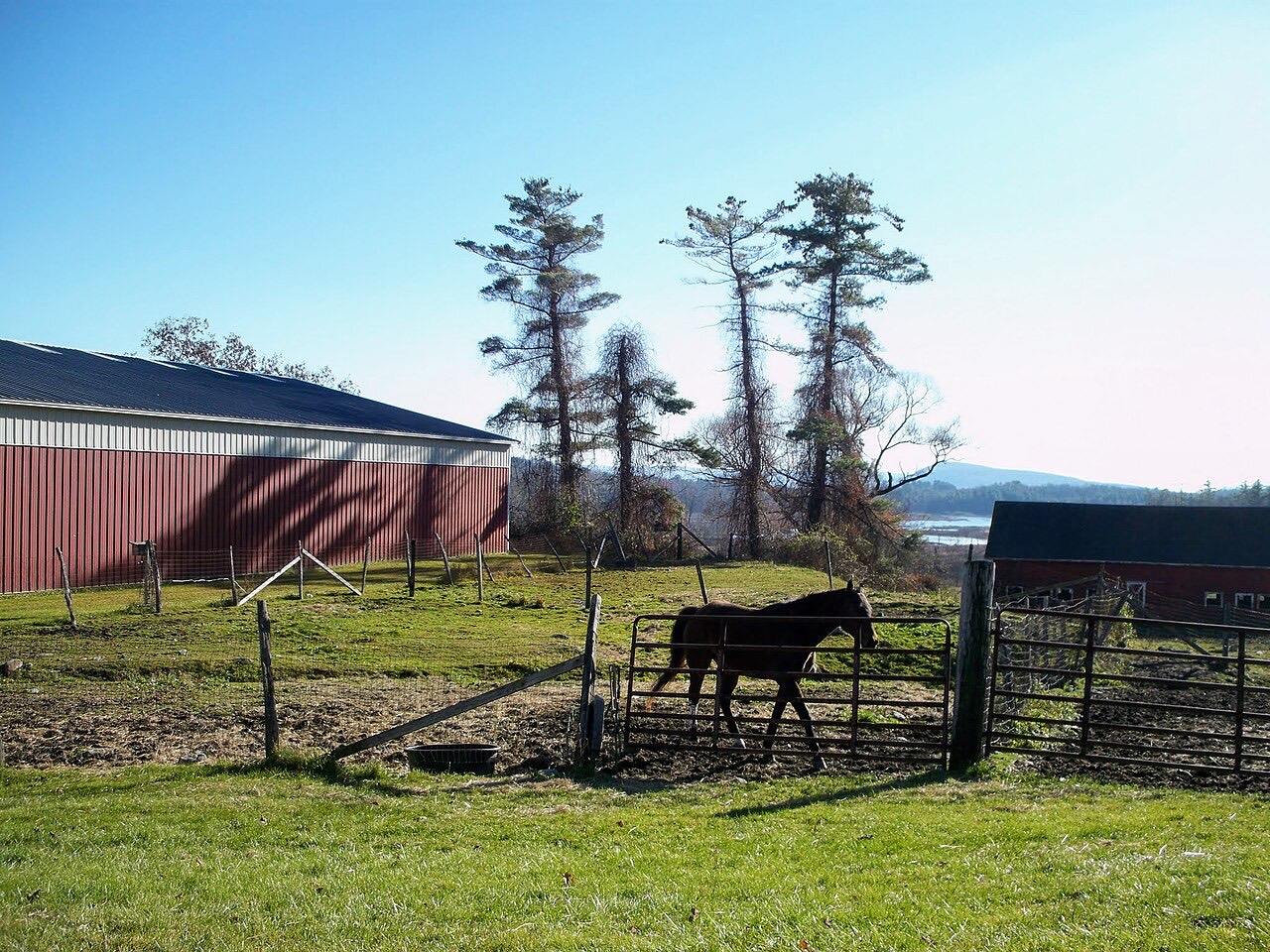
Horses (Equus caballus) are domesticated equines used across agriculture and rural livelihoods for draught power, transport, and recreation, alongside smaller-scale meat and by-product production in some countries. Unlike cattle, sheep, and goats, horses are not ruminants: they are monogastric animals with a single stomach, but they are hindgut fermenters, using an enlarged cecum and colon to ferment fibrous plant material after it passes through the stomach and small intestine.
This digestive strategy allows horses to derive substantial nutrition from forage such as pasture and hay, while also requiring careful feeding management, because fermentation happens after — rather than before — the main absorptive section of the gut. Production and use of horses range from extensive pasture-based systems to intensively managed stables supporting working, sport, or breeding animals.
Overview
Horses are kept for a wide range of purposes that vary by region and economy, including draught and transport work in mixed farming systems, recreational and sport use, breeding, and, in some countries, meat production. Their role in agriculture has shifted over the past century as mechanised power has replaced draught animals in many regions, though working horses, donkeys, and mules remain important in others.
Types and uses
- Draught and working horses
- Bred and managed for pulling or carrying loads, historically central to farm power and transport, and still used in some regions and specialised contexts.
- Sport and recreational horses
- Kept for riding, competition, and leisure, spanning many breeds selected for temperament, movement, or athletic ability.
- Pony and local/landrace types
- Smaller or regionally adapted types, often hardy and suited to local terrain, climate, and smallholder use.
Breed and type diversity is documented internationally, including through FAO’s Domestic Animal Diversity Information System (DAD-IS), which records equine breeds and their status by country.
Nutrition and feeding
Horses are adapted to graze and browse for many hours a day, and their digestive health depends on a forage-based diet — pasture, hay, or other preserved forage — as the foundation of feeding. Because fermentation occurs in the hindgut rather than a rumen, introducing large amounts of starch-rich concentrate too quickly can disrupt the hindgut microbial balance, so grain and concentrate feeds are typically introduced and adjusted gradually alongside forage.
Health and welfare
Horse health and welfare depend on consistent access to forage and water, appropriate shelter or housing, routine hoof and dental care, parasite and disease management, and handling suited to the animal’s temperament and use.
Production context
Horses interact with land use and feed production in ways similar to other grazing livestock, using pasture and forage crops, while their role in draught work, transport, and recreation gives them a different economic position from primarily food-producing species. Regulation of horse movement, identification, and, where applicable, the food chain for equine meat varies substantially by country.
Official extension guidance
2 resources indexed from public extension publishers. Each was written for a particular place; read it at the source.
Factsheet published by Ohio State University Extension for Ohio. It addresses horses. The source is organised around “Comparing Two Rations”, “Calcium and Phosphorus Requirements” and “Converting Dry-Matter Basis to an As-Fed Basis”.
Ohio State University Extension · Nutrient management · publisher states no date; reachable 2026-08-27
Factsheet published by Penn State Extension for Pennsylvania. It addresses horses. The source is organised around “Pasture Improvement”, “Pasture Renovation” and “Pasture Management”.
Penn State Extension · Pasture · publisher states 2005-08-01
These are pointers to guidance published by others. Each was written for a particular place and season and is revised by its publisher; read it at the source, and check it applies where you farm.
Relationships
Evidence-backed connections in the knowledge graph.
Commonly raised in
Notable breeds
Documented breeds tied to this species, with registry status and sources on each page. Not an exhaustive list.
- American Quarter HorseThe American Quarter Horse is a compact, powerfully muscled light horse breed from the United States, named for its speed over a quarter-mile and celebrated as a versatile stock horse with a calm, willing temperament.
- AndalusianThe Andalusian, known in Spain as the Pura Raza Española (PRE), is a Spanish baroque light horse breed of Iberian origin, elegant and strongly built, historically influential and prized today for classical dressage and haute école work.
- ArabianThe Arabian is an ancient light horse breed from the Arabian Peninsula, prized for its refined head, endurance, and stamina, and enormously influential as a foundation breed on many other horse breeds worldwide.
- ClydesdaleThe Clydesdale is a Scottish draught horse breed from the valley of the River Clyde, known for its size, feathered legs, high-stepping action, and bay coats with bold white markings.
- FriesianThe Friesian is a Dutch horse breed from the province of Friesland, an elegant black "baroque"-type horse with a long, flowing mane and tail and lower-leg feathering, used chiefly for driving and dressage.
- HaflingerThe Haflinger is a small, hardy mountain horse breed from the Tyrol region of Austria and northern Italy, recognisable by its chestnut coat with flaxen mane and tail, and valued as a versatile, good-natured working and riding horse.
- PercheronThe Percheron is a French heavy draught horse breed from the Perche region of Normandy, typically grey or black, known for combining great strength with relative elegance and clean, largely unfeathered legs.
- ShireThe Shire is an English heavy draught horse breed, among the tallest and most powerful of all horses, historically used for farm work, haulage, and brewery drays and now a conservation-priority breed kept for showing and heritage.
- ThoroughbredThe Thoroughbred is a hot-blooded light horse breed developed in England for racing, tracing to three foundation Oriental stallions, and prized for speed, athleticism, and its influence on sport-horse breeding worldwide.
Scope & limitations
Geographic scope: Global overview; breeds, uses, systems, and regulations vary widely by country and region.
Climate context: Horses are kept from tropical to cold-temperate regions; forage availability, shelter needs, and management differ with climate.
- This is a general species overview, not breed-, discipline-, or region-specific care or feeding guidance.
- Health, medicine, and welfare practices are governed by local regulation and veterinary advice and are not detailed here.
Sources
This article draws on the following authoritative sources. See our sources & methodology for how they are selected.
- [1]FAO — Food and Agriculture Organization (opens in a new tab)Authoritative
Food and Agriculture Organization of the United Nations (FAO)
Cited for: Equine production and role in agriculture
- Type:
- Intergovernmental organization
- Jurisdiction:
- Global
- Accessed:
- 2026-07-12
- [2]DAD-IS — Domestic Animal Diversity Information System (opens in a new tab)Authoritative
FAO Commission on Genetic Resources for Food and Agriculture
Cited for: Horse breeds and genetic diversity
- Type:
- Official registry
- Jurisdiction:
- Global
- Accessed:
- 2026-07-12
- [3]WOAH — World Organisation for Animal Health (opens in a new tab)Authoritative
World Organisation for Animal Health (WOAH)
Cited for: Animal health and welfare standards
- Type:
- Intergovernmental organization
- Jurisdiction:
- Global
- Accessed:
- 2026-07-12
- [4]National Academies Press — Nutrient Requirements series (opens in a new tab)High
National Research Council, U.S. National Academies
Cited for: Nutrient requirement references
- Type:
- Peer-reviewed literature
- Jurisdiction:
- Global
- Accessed:
- 2026-07-12