Livestock · Livestock
Mule
Equus asinus × Equus caballus
Also known as: Horse–donkey hybrid
Mules are sterile hybrids of a male donkey and a female horse, combining donkey hardiness with horse size and strength. Valued worldwide as pack and draught animals, they are monogastric hindgut fermenters kept mainly in working-animal systems.
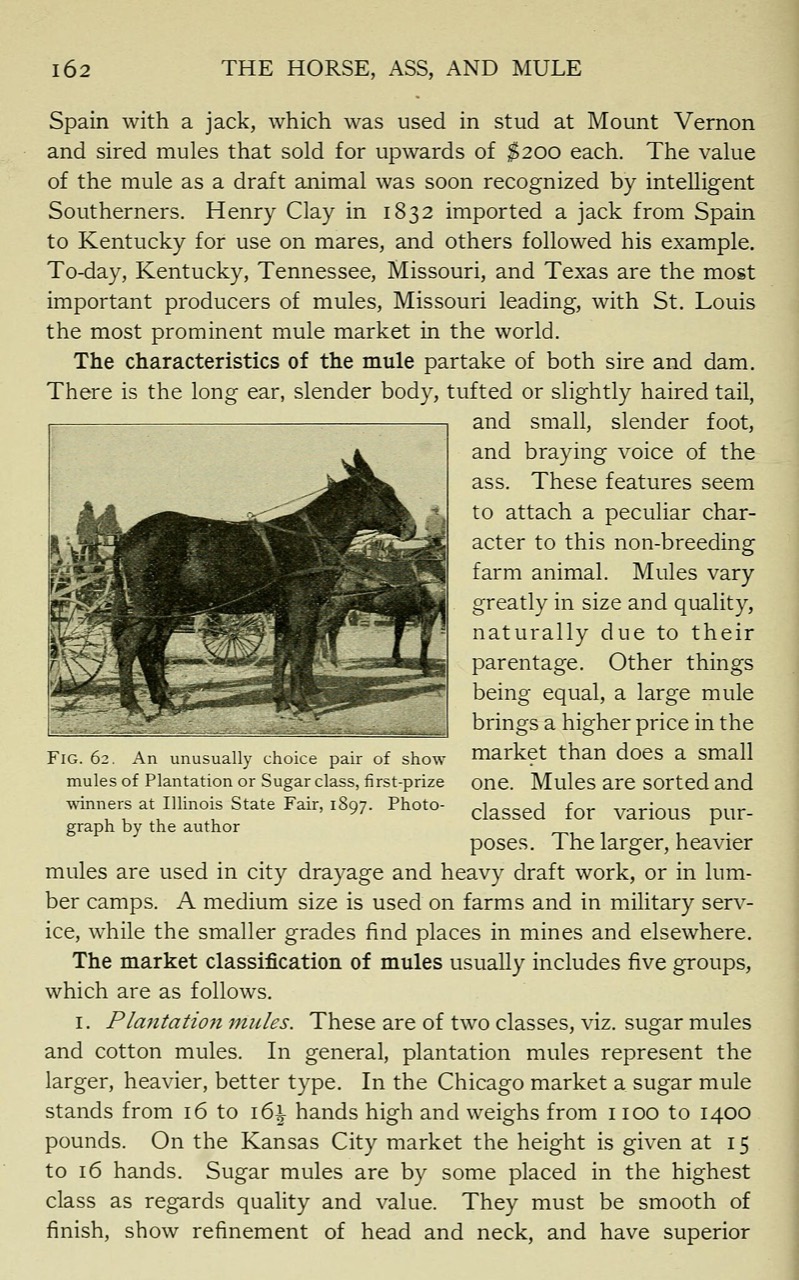
The mule is a hybrid produced by crossing a male donkey (jack) with a female horse (mare); the reciprocal cross of a female donkey with a male horse produces a hinny. Mules are almost always sterile because their parent species have different chromosome numbers, so mule populations are maintained entirely through continued donkey–horse crossbreeding rather than by breeding mules themselves.
Like horses and donkeys, mules are monogastric hindgut fermenters, digesting fibrous forage through an enlarged caecum and colon after initial digestion in the stomach and small intestine. Mules are widely valued for combining a donkey’s hardiness, surefootedness, and disease resistance with a horse’s size and strength, making them well suited to pack transport and draught work in difficult terrain.
Overview
Mules remain widely kept as working animals, particularly where terrain, cost, or infrastructure limit the use of motorised transport, and where their combination of strength and hardiness suits demanding pack and draught roles.
Types and uses
- Pack mules
- Used to carry loads across trails and terrain unsuited to wheeled vehicles.
- Draught and farm mules
- Used for pulling carts, implements, and other farm haulage tasks.
- Riding and specialty mules
- Kept for riding, recreational use, or historically for military pack transport.
Nutrition and feeding
Mules are efficient at extracting nutrition from forage, similar to donkeys, and can be prone to excess weight gain on rich pasture when in light work. Working or lactating mules need forage supplemented with additional energy and protein matched to workload.
Health and welfare
Mule health and welfare depend on consistent access to forage and water, routine hoof care, and workloads and equipment suited to the animal’s size and condition; hybrid vigour can reduce the incidence of some health issues seen in either parent species.
Production context
Mules continue to support transport and cultivation in mountainous and infrastructure-limited regions, reducing labour burdens for smallholder households, even as their overall numbers have declined in many mechanised regions.
Relationships
Evidence-backed connections in the knowledge graph.
Climate sensitivity
Commonly raised in
Scope & limitations
Geographic scope: Global overview; mules are kept wherever pack and draught transport is needed, with concentrations in mountainous and infrastructure-limited regions.
Climate context: Mules tolerate a wide range of climates, generally sharing donkeys’ heat and drought tolerance alongside horses’ cold tolerance.
- This is a general species overview, not a region- or use-specific working-animal management guide.
- Health, medicine, and welfare practices are governed by local regulation and veterinary advice and are not detailed here.
- As sterile hybrids, mules are produced by crossing donkeys and horses; donkey and horse breeding practices are not covered in detail here.
Sources
This article draws on the following authoritative sources. See our sources & methodology for how they are selected.
- [1]FAO — Food and Agriculture Organization (opens in a new tab)Authoritative
Food and Agriculture Organization of the United Nations (FAO)
Cited for: Mules as working animals and role in agriculture
- Type:
- Intergovernmental organization
- Jurisdiction:
- Global
- Accessed:
- 2026-07-12
- [2]DAD-IS — Domestic Animal Diversity Information System (opens in a new tab)Authoritative
FAO Commission on Genetic Resources for Food and Agriculture
Cited for: Equine genetic resources and diversity
- Type:
- Official registry
- Jurisdiction:
- Global
- Accessed:
- 2026-07-12
- [3]WOAH — World Organisation for Animal Health (opens in a new tab)Authoritative
World Organisation for Animal Health (WOAH)
Cited for: Animal health and welfare standards
- Type:
- Intergovernmental organization
- Jurisdiction:
- Global
- Accessed:
- 2026-07-12
- [4]National Academies Press — Nutrient Requirements series (opens in a new tab)High
National Research Council, U.S. National Academies
Cited for: Equine nutrient requirement references
- Type:
- Peer-reviewed literature
- Jurisdiction:
- Global
- Accessed:
- 2026-07-12