Livestock · Livestock
Ostrich
Struthio camelus
Also known as: Common ostrich
Ostriches are large, flightless ratite birds farmed worldwide for meat, leather, and feathers. As monogastric birds adapted to arid grassland, they are raised in both extensive ranching and intensive commercial systems.
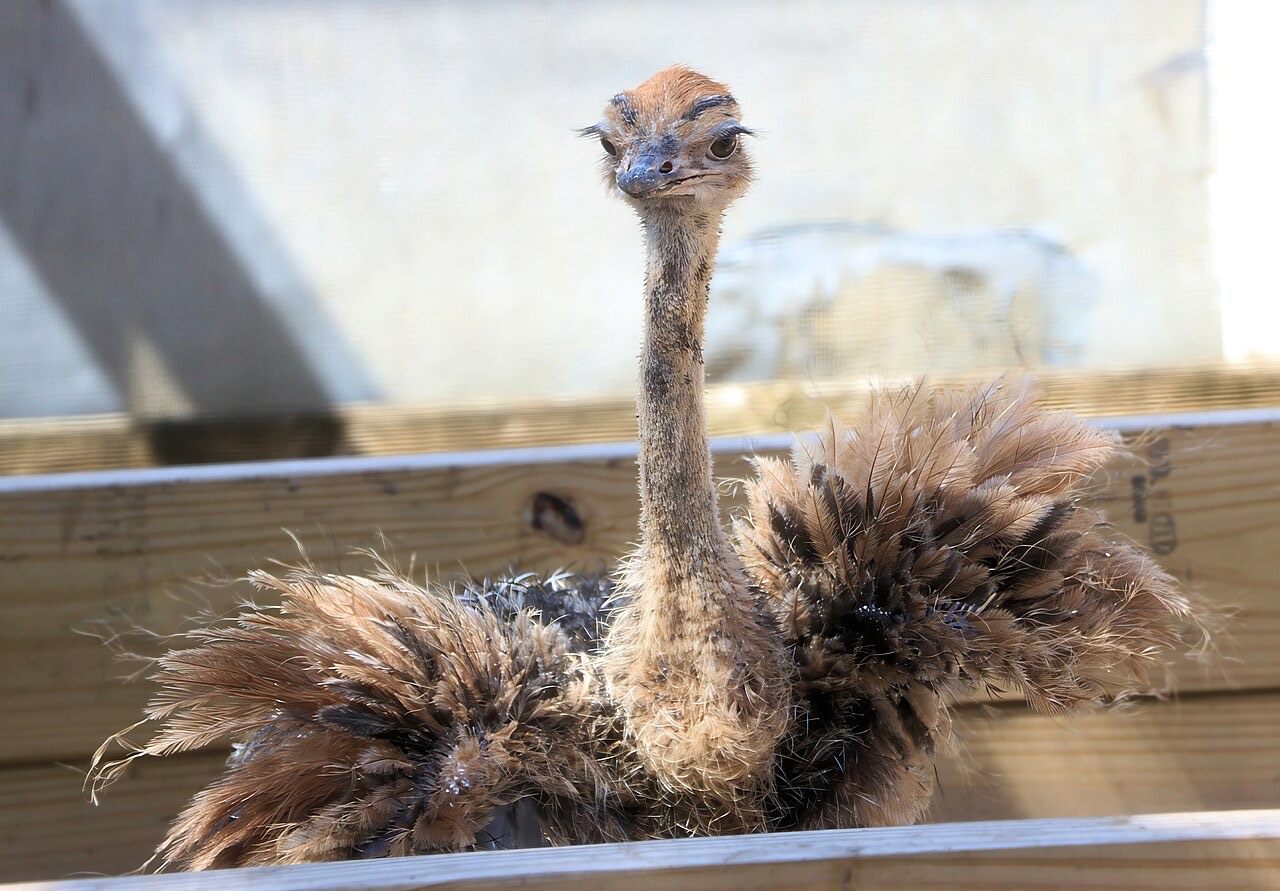
The ostrich (Struthio camelus) is the world’s largest living bird, a flightless ratite native to the grasslands and semi-arid savanna of Africa. Commercial ostrich farming developed around three main products — meat prized for being low in fat, distinctive and durable leather, and decorative feathers — with eggs a minor by-product. Farmed populations are now found across Africa, Europe, the Americas, and parts of Asia.
Unlike chickens and other common poultry, ostriches are monogastric birds without a true crop, relying on a muscular gizzard and swallowed grit to break down coarse plant material. Their large size, long production cycle to slaughter or breeding maturity, and specific housing and handling needs distinguish ostrich farming from conventional poultry production.
Overview
Commercial ostrich farming is generally organised around a three-product model — meat, leather, and feathers — with the relative economic weight of each varying by market and region. Breeding stock is typically managed in pairs or trios, and birds are reared to slaughter age over a period of many months.
Types and production lines
- Meat production
- Birds reared for lean, low-fat red meat marketed as a specialty product in many countries.
- Leather production
- Hides processed into distinctive, durable leather used in fashion and accessory goods.
- Feather production
- Feathers harvested for decorative, fashion, and industrial (dusting) uses.
Nutrition and feeding
Ostrich diets combine formulated pelleted rations with pasture or cut forage such as lucerne (alfalfa), plus grit to support gizzard-based digestion. Ration composition shifts with growth stage, from higher-protein starter diets for chicks to maintenance and breeder rations for adults.
Health and welfare
Ostrich husbandry requires handling facilities and fencing suited to a large, strong, and potentially defensive bird, alongside appropriate stocking density, shelter from extreme weather, and routine disease prevention.
Production context
Ostrich farming can make productive use of arid and semi-arid land less suited to cropping, and the species’ tolerance of heat and drought supports its role as a specialty livestock enterprise in regions with limited water and rainfall.
Relationships
Evidence-backed connections in the knowledge graph.
Climate sensitivity
Commonly raised in
Scope & limitations
Geographic scope: Global overview of a farmed species originating in Africa; farming scale, regulation, and market structure vary widely by country.
Climate context: Ostriches are native to arid and semi-arid African grassland and tolerate heat and drought well, though housing and management must still protect against extreme cold and wet conditions.
- This is a general species overview, not a farm-system or region-specific production guide.
- Health, medicine, and welfare practices are governed by local regulation and veterinary advice and are not detailed here.
Sources
This article draws on the following authoritative sources. See our sources & methodology for how they are selected.
- [1]FAO — Food and Agriculture Organization (opens in a new tab)Authoritative
Food and Agriculture Organization of the United Nations (FAO)
Cited for: Ostrich farming systems and global role
- Type:
- Intergovernmental organization
- Jurisdiction:
- Global
- Accessed:
- 2026-07-12
- [2]DAD-IS — Domestic Animal Diversity Information System (opens in a new tab)Authoritative
FAO Commission on Genetic Resources for Food and Agriculture
Cited for: Ratite genetic resources and diversity
- Type:
- Official registry
- Jurisdiction:
- Global
- Accessed:
- 2026-07-12
- [3]WOAH — World Organisation for Animal Health (opens in a new tab)Authoritative
World Organisation for Animal Health (WOAH)
Cited for: Animal health and welfare standards
- Type:
- Intergovernmental organization
- Jurisdiction:
- Global
- Accessed:
- 2026-07-12
- [4]USDA ARS — Agricultural Research Service (opens in a new tab)Authoritative
USDA Agricultural Research Service (ARS)
Cited for: Ratite nutrition and production research
- Type:
- Government agency
- Jurisdiction:
- United States
- Accessed:
- 2026-07-12