Livestock · Livestock
Chickens
Gallus gallus domesticus
Also known as: Poultry, Hens, Roosters, Broilers, Layers
Chickens are domesticated monogastric birds raised worldwide for eggs and meat. Distinct broiler (meat) and layer (egg) types have been developed, and production ranges from backyard flocks to large intensive commercial systems.
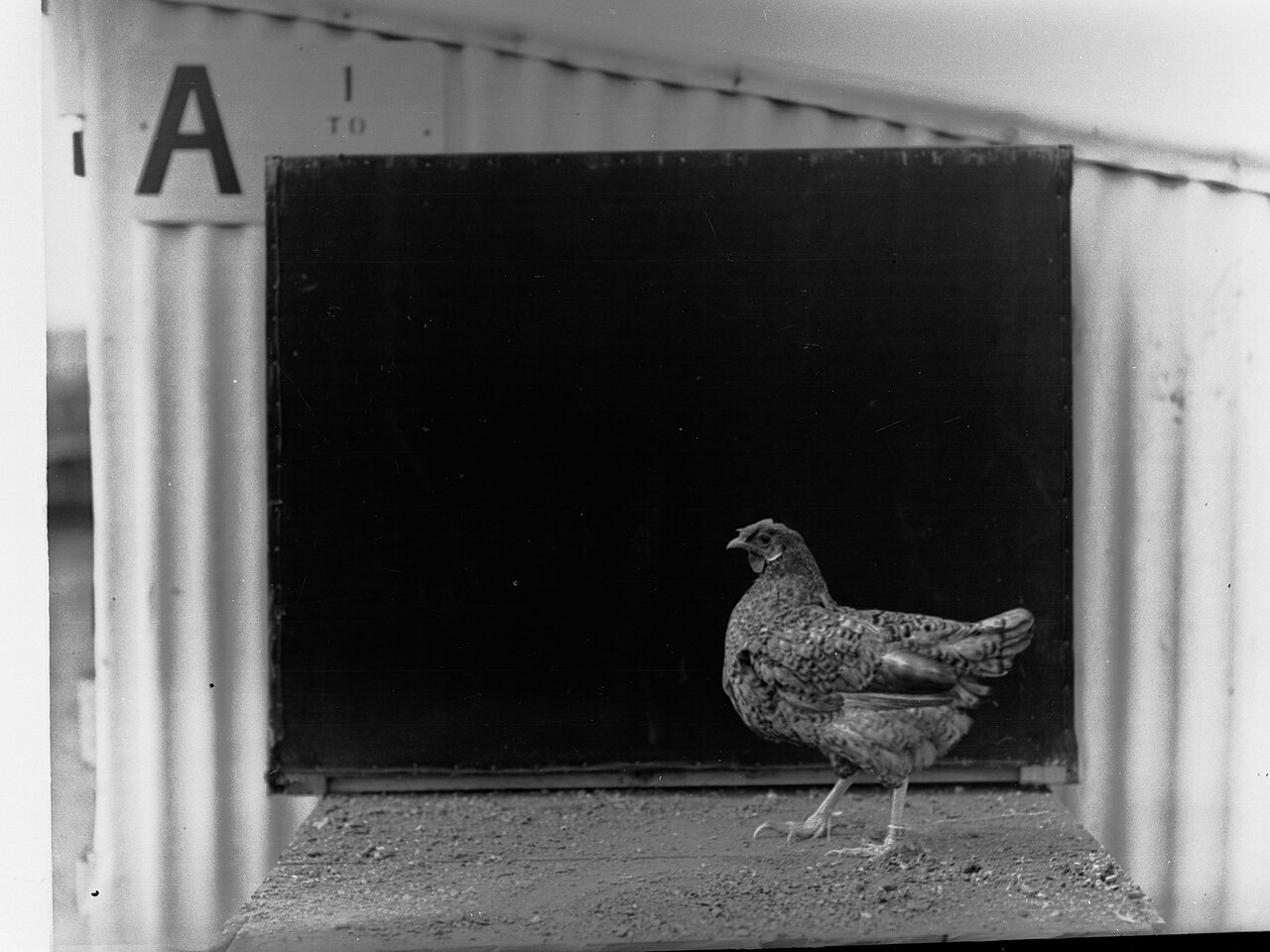
Chickens are the most numerous domesticated bird and one of the most widely kept livestock species globally, valued for eggs and meat. As monogastric animals with a single-stomach digestive system (supplemented by structures such as the crop and gizzard rather than a fermenting rumen), chickens are fed formulated diets rather than the forage-based rations used for ruminants.
Modern commercial chicken production is typically divided into two specialised types: broilers, bred and raised for meat, and layers, bred and kept for egg production, each with distinct genetics, management, and growth patterns. Backyard and smallholder flocks, by contrast, often keep dual-purpose or traditional breeds for both eggs and meat.
Overview
Commercial chicken production centres on two specialised streams. Broiler production raises chickens for meat, using genetic lines selected for rapid growth and feed efficiency over a relatively short rearing period. Layer production keeps hens for egg output over an extended laying cycle, using lines selected for egg number, size, and shell quality.
- Broilers — meat-type chickens selected for fast growth and efficient feed conversion.
- Layers — egg-type hens selected for sustained, high egg production.
- Dual-purpose and traditional breeds — kept for both eggs and meat, common in backyard and smallholder settings.
Types and breeds
- Broiler strains
- Commercial meat-type genetic lines selected for rapid growth rate, breast-meat yield, and feed efficiency.
- Layer strains
- Commercial egg-type genetic lines selected for high, sustained egg production and feed efficiency per egg.
- Dual-purpose and heritage breeds
- Traditional breeds balanced for both egg and meat production, widely kept in backyard and smallholder flocks and valued for hardiness or foraging ability.
Breed and strain diversity is documented internationally, including through FAO’s Domestic Animal Diversity Information System (DAD-IS), which records poultry breeds and their status by country.
Nutrition and feeding
As monogastric birds, chickens are fed formulated diets rather than forage-based rations. Diets are typically based on cereal grains and protein sources, balanced with vitamins and minerals to suit the bird’s type (broiler or layer), age, and production stage. Because chickens lack a rumen, they cannot efficiently use large quantities of fibrous forage the way ruminants do.
Health and welfare
Flock health and welfare depend on appropriate nutrition and water, suitable housing with attention to ventilation, temperature, and stocking density, biosecurity to limit disease introduction (including diseases of concern to both poultry and public health), and management suited to flock behaviour, including access to nesting, perching, or foraging opportunities depending on the system.
Production context
Chicken production is a major global source of eggs and affordable animal protein, with efficient feed conversion relative to many other livestock species. Systems range from highly integrated commercial broiler and layer operations to free-range and backyard flocks, with biosecurity, feed sourcing, and manure management among the key considerations that vary by system and region.
Relationships
Evidence-backed connections in the knowledge graph.
Notable breeds
Documented breeds tied to this species, with registry status and sources on each page. Not an exhaustive list.
- AustralorpThe Australorp is an Australian dual-purpose chicken breed developed from Orpington stock and selected strongly for laying ability, becoming famous for its brown-egg productivity while retaining a docile, hardy character.
- BrahmaThe Brahma is a very large, feather-legged chicken breed developed in the United States from imported Asian stock, historically important as a meat fowl and now valued as an imposing, cold-hardy dual-purpose and exhibition breed.
- CornishThe Cornish, known in Britain as the Indian Game, is a heavily muscled English meat breed prized for its broad breast and compact build, and it is a principal ancestor of modern commercial broiler chickens.
- LeghornThe Leghorn is a light, active Mediterranean-class chicken breed originating in central Italy, renowned as a prolific layer of white-shelled eggs and as the foundation of most modern commercial white-egg laying strains.
- MaransThe Marans is a French dual-purpose chicken breed from the Atlantic port town of Marans, celebrated above all for laying eggs with an exceptionally dark, chocolate-brown shell.
- New HampshireThe New Hampshire is an American dual-purpose chicken breed selectively developed from the Rhode Island Red for faster growth and earlier maturity, valued as a productive meat-and-egg bird with a rich chestnut-red plumage.
- OrpingtonThe Orpington is a large, soft-feathered English dual-purpose chicken breed developed in Kent in the late 19th century, popular for its docile temperament, cold-hardiness, and, in its Buff variety, striking golden plumage.
- Plymouth RockThe Plymouth Rock is an American dual-purpose chicken breed, most familiar in its Barred variety, valued for docility, cold-hardiness, and steady production of brown eggs on farms and in backyard flocks.
- Rhode Island RedThe Rhode Island Red is an American dual-purpose chicken breed developed in the late 19th century, valued for hardiness and a reliable output of brown eggs, and widely used as a farm fowl and in producing modern brown-egg laying stock.
- SilkieThe Silkie is an ancient ornamental chicken breed of Asian origin, unmistakable for its fluffy, fur-like plumage, black skin and bones, five toes, and famously broody, docile nature.
- SussexThe Sussex is an old English dual-purpose chicken breed from south-east England, kept for both eggs and meat, and recognised in several colour varieties of which the Light and Speckled are the most familiar.
- WyandotteThe Wyandotte is an American dual-purpose chicken breed known for its rose comb, cold-hardiness, and many attractive laced and patterned colour varieties, kept for brown eggs, meat, and exhibition.
Harvested commodities
The traded commodities obtained from this species, described by their own quality, grading, and handling evidence.
Scope & limitations
Geographic scope: Global overview; breeds, systems, regulations, and guidance vary widely by country and region.
Climate context: Chickens are farmed from tropical to cold-temperate regions; housing, ventilation, and environmental management differ substantially with climate.
- This is a general species overview, not breed-, system-, or region-specific husbandry guidance.
- Health, medicine, and welfare practices are governed by local regulation and veterinary advice and are not detailed here.
- Specific diet formulations and biosecurity protocols vary by production system and are not provided here.
Sources
This article draws on the following authoritative sources. See our sources & methodology for how they are selected.
- [1]FAO — Food and Agriculture Organization (opens in a new tab)Authoritative
Food and Agriculture Organization of the United Nations (FAO)
Cited for: Poultry production systems and global role
- Type:
- Intergovernmental organization
- Jurisdiction:
- Global
- Accessed:
- 2026-07-12
- [2]DAD-IS — Domestic Animal Diversity Information System (opens in a new tab)Authoritative
FAO Commission on Genetic Resources for Food and Agriculture
Cited for: Chicken breeds and genetic diversity
- Type:
- Official registry
- Jurisdiction:
- Global
- Accessed:
- 2026-07-12
- [3]WOAH — World Organisation for Animal Health (opens in a new tab)Authoritative
World Organisation for Animal Health (WOAH)
Cited for: Animal health and welfare standards
- Type:
- Intergovernmental organization
- Jurisdiction:
- Global
- Accessed:
- 2026-07-12
- [4]National Academies Press — Nutrient Requirements series (opens in a new tab)High
National Research Council, U.S. National Academies
Cited for: Nutrient requirement references
- Type:
- Peer-reviewed literature
- Jurisdiction:
- Global
- Accessed:
- 2026-07-12
- [5]USDA ARS — Agricultural Research Service (opens in a new tab)Authoritative
USDA Agricultural Research Service (ARS)
Cited for: Poultry production research context
- Type:
- Government agency
- Jurisdiction:
- United States
- Accessed:
- 2026-07-12