Machinery · Agricultural machinery
Thresher
Also known as: Threshing machine
A thresher separates grain from the stalks, heads, or pods of a harvested crop, typically also winnowing away chaff and light debris, and is used as a stand-alone machine where cutting and threshing are not combined in a single harvester pass.
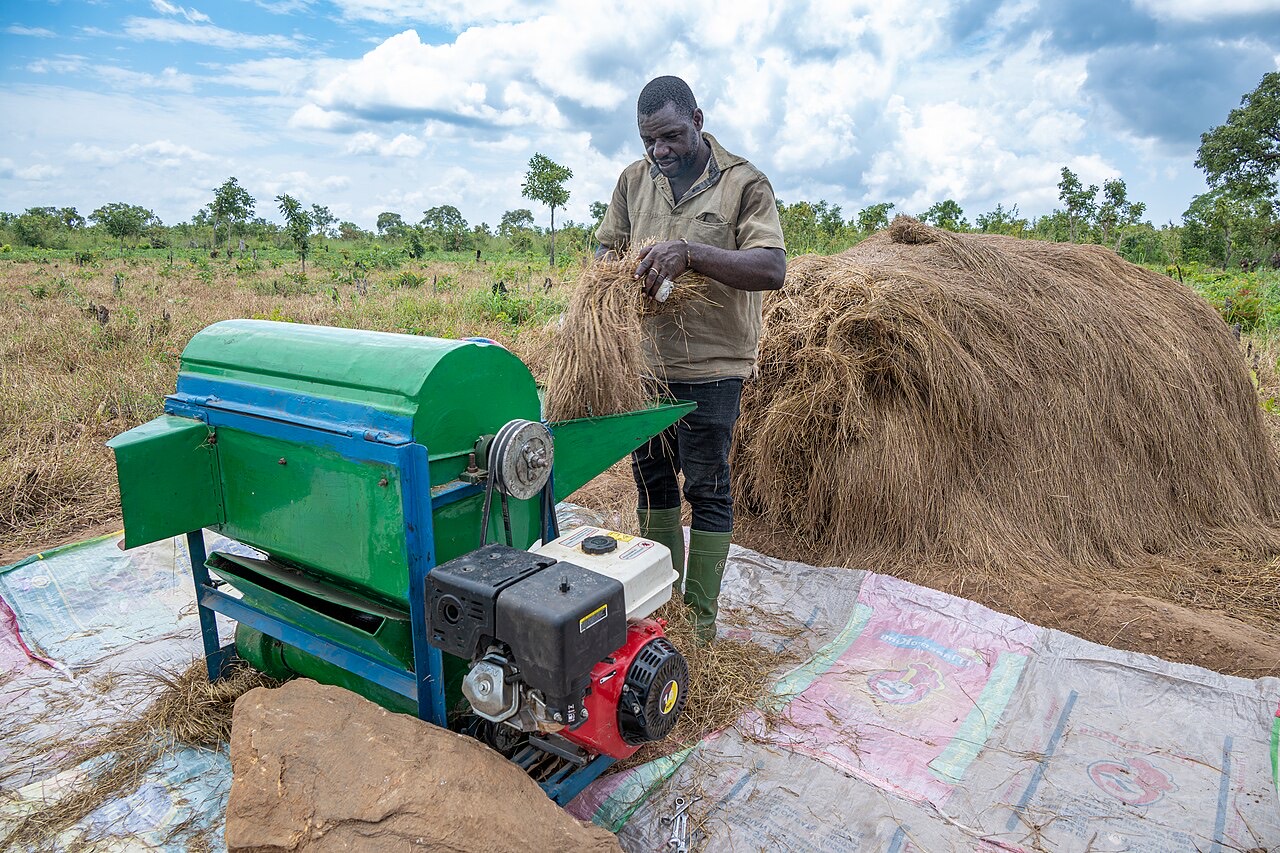
A thresher performs the specific task of separating grain from the plant material that surrounds it — straw, husks, or pods — by beating, rubbing, or impact action that dislodges grain without excessive damage. Many threshers also incorporate a winnowing step, using an airflow to blow away lighter chaff and debris while allowing the heavier grain to fall through and be collected separately.
Before the combine harvester integrated cutting, threshing, and cleaning into one machine, threshing was typically a separate operation: crops were cut and gathered first, then fed into a stationary or mobile thresher. Stand-alone threshers remain widely used today, particularly in smallholder systems and for crops or regions where combine harvesters are not practical or available.
What a thresher is
A thresher is defined by its single core function — separating grain from the rest of the harvested plant material — distinguishing it from combine harvesters, which also cut the standing crop, and from cleaning or grading equipment used further down the post-harvest chain.
How it works
- Cut crop material (sheaves, bundles, or loose material) is fed into the machine
- A rotating cylinder or drum, often fitted with rasp bars, pegs, or beater arms, strikes and rubs the material to dislodge grain
- Straw and larger residue are separated and ejected
- A fan or sieve system winnows lighter chaff away from the heavier grain
- Cleaned grain is collected, often into sacks or a holding bin
Role in the production cycle
Threshing sits between cutting/reaping and cleaning or storage in the post-harvest chain, and in systems without combine harvesters it is often the main bottleneck determining how quickly a cut crop can be processed and moved to storage or market. Where crops are cut by hand or with a reaper, a separate thresher allows this labour-intensive step to be mechanised even without investing in a full combine harvester.
Efficient threshing minimises grain loss (ungathered or damaged grain) and grain damage (cracked or broken kernels), both of which affect the marketable and storable value of the harvest.
Types and variations
- Stationary thresher
- Fixed in place and fed with cut crop material brought to it, often powered by a tractor PTO or belt drive.
- Mobile/pull-type thresher
- Can be moved between fields or farms, sometimes self-propelled.
- Multi-crop thresher
- Adjustable settings allow the same machine to thresh several different crops.
Considerations
Cylinder speed, concave clearance, and feed rate must be matched to the crop and its moisture content; settings that are too aggressive increase grain cracking and damage, while settings that are too gentle leave grain unthreshed or increase losses. Dust and chaff generated during threshing also require attention to operator safety and equipment maintenance.
Relationships
Evidence-backed connections in the knowledge graph.
Farming systems
Related topics
Scope & limitations
Geographic scope: General overview of threshers as used in cereal and pulse harvesting worldwide. Scale and role alongside combine harvesters vary by region and farm size.
- This entry describes thresher function and types in general terms; it does not specify cylinder speeds or clearances, which are crop- and machine-specific.
- Grain loss and damage rates depend on crop condition, moisture, and machine settings not detailed here.
Sources
This article draws on the following authoritative sources. See our sources & methodology for how they are selected.
- [1]Iowa State University Extension and Outreach (opens in a new tab)High
Iowa State University Extension and Outreach
Cited for: Threshing mechanics and grain-damage avoidance
- Type:
- University extension service
- Jurisdiction:
- United States (Iowa)
- Accessed:
- 2026-07-12
- [2]USDA ARS — Agricultural Research Service (opens in a new tab)Authoritative
USDA Agricultural Research Service (ARS)
Cited for: Post-harvest grain handling research context
- Type:
- Government agency
- Jurisdiction:
- United States
- Accessed:
- 2026-07-12
- [3]AHDB — Agriculture and Horticulture Development Board (opens in a new tab)High
Agriculture and Horticulture Development Board (AHDB)
Cited for: Cereal harvesting and threshing guidance context
- Type:
- Government agency
- Jurisdiction:
- United Kingdom
- Accessed:
- 2026-07-12
- [4]FAO — Food and Agriculture Organization (opens in a new tab)Authoritative
Food and Agriculture Organization of the United Nations (FAO)
Cited for: Role of threshing equipment in smallholder and mechanised harvesting
- Type:
- Intergovernmental organization
- Jurisdiction:
- Global
- Accessed:
- 2026-07-12