Machinery · Agricultural machinery
Combine Harvester
Also known as: Combine
A combine harvester is a self-propelled machine that cuts, threshes, separates, and cleans grain and oilseed crops in a single pass, combining operations that were once performed by several separate machines.
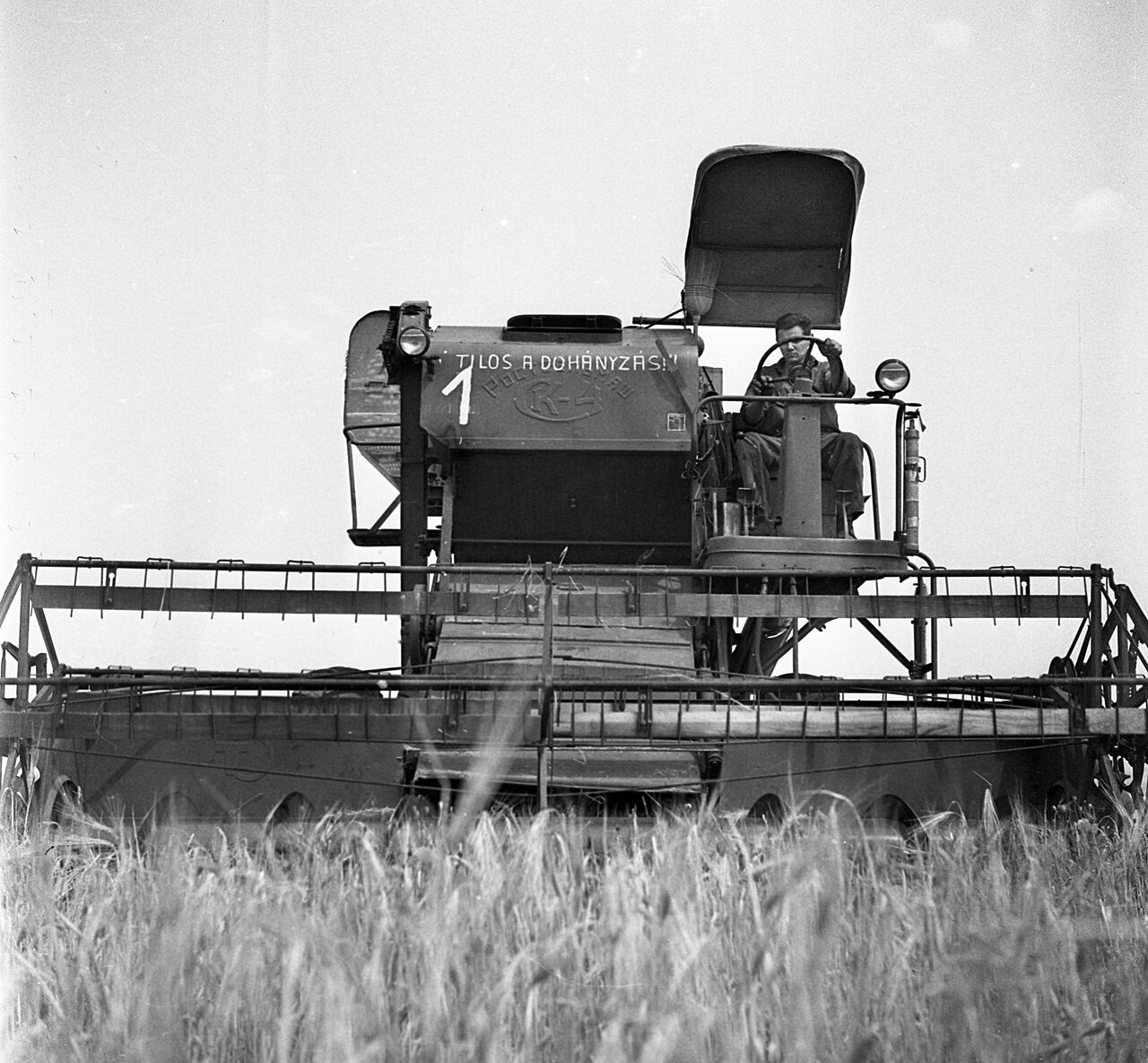
The combine harvester takes its name from combining the harvesting steps of reaping (cutting the crop), threshing (separating grain from the plant), and winnowing or cleaning (removing chaff and debris) into one continuous operation performed while the machine moves across the field.
Combines are built around interchangeable front-end headers suited to different crops, feeding harvested material into an internal threshing and separating mechanism, then storing clean grain in an onboard tank for periodic unloading into a trailer or truck.
What a combine harvester is
A combine harvester is a large, self-propelled machine purpose-built for gathering mature grain and oilseed crops efficiently at scale. It replaced the historical sequence of separate reaping, stooking, threshing, and winnowing operations with a single continuous process.
How it works
- The header cuts or gathers the standing crop and feeds it into the machine
- A threshing mechanism (cylinder-and-concave or rotor design) separates grain from stalks and heads
- Straw walkers or rotary separators recover remaining loose grain from the residue
- Cleaning shoe and fans winnow chaff and light material from the grain using airflow and sieves
- Clean grain is elevated into an onboard tank; straw and chaff are discharged or spread behind the machine
Role in the production cycle
The combine harvester marks the culmination of a grain or oilseed crop’s field life, converting a standing crop into stored, marketable grain. Timeliness matters: harvesting at the correct crop moisture and maturity affects grain quality, storability, and field losses, and combine capacity often sets the pace of the whole harvest operation.
Residue left behind by the combine — straw and chaff — also feeds into subsequent operations, whether baled for livestock bedding and feed, incorporated by tillage, or retained on the surface as part of a conservation-tillage system.
Header types and variations
- Grain (cereal) header
- A cutter-bar header for wheat, barley, and similar close-standing cereals
- Draper header
- Uses moving belts rather than an auger to feed cut material gently into the machine
- Row-crop (corn) header
- Individual row units that strip or snap ears from stalks, used for maize
- Flexible/floating cutter-bar header
- Follows ground contour closely, useful for low-podding crops such as soybean
Operating considerations
Combine settings — cylinder or rotor speed, concave clearance, and fan and sieve adjustment — are tuned to the specific crop and its moisture content to balance threshing effectiveness against grain damage and losses. Because combines are large and heavy, they can also contribute to soil compaction, particularly when field traffic occurs on wet soil.
Relationships
Evidence-backed connections in the knowledge graph.
Farming systems
Scope & limitations
Geographic scope: General overview of combine harvesters as used in mechanised grain and oilseed production worldwide. Header types and settings are adapted to regional crops and conditions.
- This entry describes combine function and components in general terms; it does not specify harvest-moisture targets or machine settings, which are crop- and variety-specific.
- Field-loss and grain-damage figures vary with machine, crop, and operating conditions and are not quantified here.
Sources
This article draws on the following authoritative sources. See our sources & methodology for how they are selected.
- [1]Iowa State University Extension and Outreach (opens in a new tab)High
Iowa State University Extension and Outreach
Cited for: Combine harvester operation and settings
- Type:
- University extension service
- Jurisdiction:
- United States (Iowa)
- Accessed:
- 2026-07-12
- [2]USDA NASS — National Agricultural Statistics Service (opens in a new tab)Authoritative
USDA National Agricultural Statistics Service (NASS)
Cited for: Grain harvest statistics context
- Type:
- Government agency
- Jurisdiction:
- United States
- Accessed:
- 2026-07-12
- [3]USDA ARS — Agricultural Research Service (opens in a new tab)Authoritative
USDA Agricultural Research Service (ARS)
Cited for: Harvest machinery research context
- Type:
- Government agency
- Jurisdiction:
- United States
- Accessed:
- 2026-07-12
- [4]FAO — Food and Agriculture Organization (opens in a new tab)Authoritative
Food and Agriculture Organization of the United Nations (FAO)
Cited for: Role of mechanised harvest in grain production
- Type:
- Intergovernmental organization
- Jurisdiction:
- Global
- Accessed:
- 2026-07-12