Crop · Cereal crop
Millet
Pennisetum glaucum (pearl millet); also cultivated as Panicum miliaceum (proso millet), Eleusine coracana (finger millet), and Setaria italica (foxtail millet)
Also known as: Pearl millet
"Millet" refers to a group of small-seeded, warm-season cereal grasses grown mainly in semi-arid regions of Africa and Asia for grain and fodder, valued for tolerating heat, drought, and low-fertility soils.
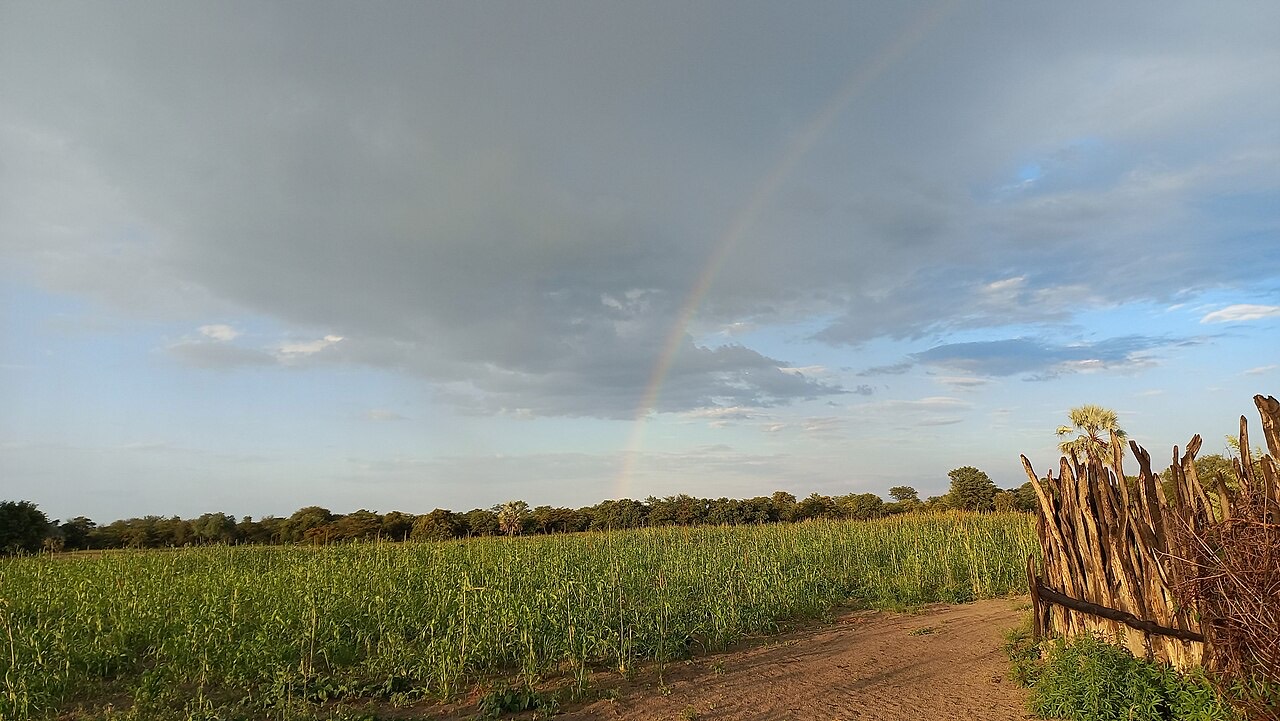
Millet is not a single species but a group of small-grained grasses — including pearl millet, finger millet, proso millet, and foxtail millet — grown mainly where heat, drought, and poor soil fertility limit other cereals. Pearl millet is the most widely grown type globally, particularly across the semi-arid tropics of West Africa and South Asia.
Millets are typically grown by smallholder farmers as food-security crops, valued for short growing seasons, low input requirements, and reliable yield under marginal conditions, alongside growing interest in some regions for gluten-free food products and forage.
Overview
Millets are self- or cross-pollinating annual grasses grown for small grains that are milled, ground, or otherwise processed for food, and for their fodder value. Their agronomic profile — short duration, heat and drought tolerance, and modest soil requirements — makes them important staples in semi-arid cropping systems.
Production is dominated by smallholder systems in sub-Saharan Africa and South Asia, though some millet types are also grown in developed-country markets for forage, birdseed, and specialty food products.
Botanical classification
- Family
- Poaceae (grass family)
- Principal genera and species
- Pennisetum glaucum (pearl millet), Eleusine coracana (finger millet), Panicum miliaceum (proso millet), Setaria italica (foxtail millet)
- Growth habit
- Tillering annual grasses, generally with a short life cycle relative to other cereals
Origin and distribution
The different millet species were domesticated independently in different regions: pearl millet in the Sahel of West Africa, finger millet in East Africa (and separately in South Asia), and proso and foxtail millet in China. Today they remain most important across the semi-arid tropics of Africa and Asia.
Climate requirements
Millets are among the most heat- and drought-tolerant cereals, capable of producing a grain crop where rainfall is too low or erratic for maize or sorghum. Pearl millet in particular is adapted to hot, semi-arid environments with short, unreliable rainy seasons.
Short duration to maturity allows millet to fit into cropping windows where the growing season is too brief or unpredictable for longer-season cereals.
Soil requirements
Millets tolerate poor, sandy, and low-fertility soils better than most cereals, which is a major reason for their importance in marginal semi-arid cropping systems where other grains perform poorly.
Establishment and crop management
Millet is typically sown at the start of the rainy season, often by hand or with simple seeding equipment in smallholder systems, though mechanized sowing is used in larger-scale production.
- Species and variety selection matched to season length and end use
- Crop rotation and intercropping, commonly with legumes, to manage soil fertility and pests
- Seedbed preparation appropriate to local rainfall and tillage practices
- Thinning and weeding during early establishment, when the crop is most vulnerable to competition
Nutrient considerations
Nitrogen is the main limiting nutrient for millet yield in most low-fertility soils, though the crop is grown with minimal fertilizer input across much of its smallholder production area. Where inputs are used, phosphorus can also be important on inherently low-fertility soils.
Water and irrigation
Millet is grown predominantly rain-fed in semi-arid regions with low and variable rainfall, and its drought tolerance is a primary reason for its cultivation there. Irrigated millet is grown in some regions, mainly to stabilize yield in dry seasons.
Common diseases and pests
Downy mildew is one of the most significant diseases of pearl millet, capable of causing substantial yield loss in susceptible varieties, and millet ergot can affect grain quality. Stem borers damage the stem and growing point, while white grubs attack roots in the soil.
Management relies heavily on resistant or tolerant varieties, along with monitoring and, where justified and available, locally authorized control products used according to their labels.
Harvest
Millet is harvested once the grain has matured and dried sufficiently for threshing and safe storage. In smallholder systems, harvesting and threshing are often done manually or with simple equipment; larger operations use mechanized harvesting suited to the crop and region.
Uses
- Whole or milled grain for porridge, flatbreads, and other traditional foods
- Increasing use in gluten-free and specialty food products in some markets
- Livestock and poultry feed, and fodder from crop residues
- Birdseed and specialty grain markets in some countries
What this page covers
agricultural use conceptThis page covers millet as an agricultural category, not as a taxon. Millets are small-grained cereals from at least four genera that share a growing environment and nothing else; the page is keyed to pearl millet because that is the largest of them, and five others have their own pages.
The page groups crops by what they are grown for rather than by taxon. The members may be in different genera and the boundary is agricultural: what belongs is what is grown and traded for the same purpose.
| Taxon | In this corpus | Role |
|---|---|---|
| Eleusine coracanaFinger millet | held as a verified taxon | The East African and South Indian millet, and the one whose grain stores longest. |
| Setaria italicaFoxtail millet | held as a verified taxon | A very short-season millet of China and India, sown when a season is already half gone. |
| Panicum miliaceumProso millet | held as a verified taxon | The lowest-water millet of the group, grown as a rotation crop on the semi-arid Great Plains as well as across dry Asia. |
| Echinochloa colona subsp. edulisBarnyard millet | held as a verified taxon | The fastest-maturing cereal in cultivation, and a hill-country staple in India and Nepal. |
| Paspalum scrobiculatumKodo millet | held as a verified taxon | An Indian domesticate whose grain stores for years and whose harvest carries a documented poisoning hazard when infected in the ear. |
When a taxon here earns its own page: A millet earns its own page when its agronomy cannot be stated at group level without being wrong about the others — a maturity, a hazard, a water requirement or a storage behaviour that is its own. All five here met that. The group as a whole still needs a page, because "millet" is what markets, statistics and farmers say.
Botanical identity
Species- Accepted name
- Cenchrus americanus
- Family
- Poaceae
- Genus
- Cenchrus
- Harvested part
- grain, forage biomass
- Agricultural use
- human food, animal feed, forage
- Crop group
- Cereals
What the authorities say
- World Flora Online — Taxonomic Backbone
- Cenchrus americanus
- Plants of the World Online
- Cenchrus americanus
Botanical identity here is what the consulted taxonomic authorities publish, on the date they were read. Where authorities disagree, both readings are shown rather than one being chosen silently.
Traded as
This crop is traded as one commodity in this corpus.
What AgricultureID holds for this crop
- 36 crop calendar records
- 1 verified extension resources
- 4 pests and diseases naming this crop as a host
- 2 soil references
- 2 climate references
- 261 market price series
- 11 related crops
Not held
- No published cultivars — not researched
- No official variety registrations — source exists not mapped
- No farm economics observations — source exists not mapped
An absence here means this corpus holds no such record, not that none exists.
How to read figures on this page
Production, area and trade figures for any crop change from season to season and are compiled by FAO and by national agricultural statistics agencies. Take current numbers from those primary sources, dated to the period you mean, rather than from a secondary summary — including this one.
Crop water requirements are estimated from reference evapotranspiration and local climate data, following methods published by FAO and national agricultural agencies. A requirement quoted without the reference method and the local climate behind it is not a number that can be applied to a field.
Part of
Related crops
- Same crop concept
- Barnyard Millet, Finger Millet, Foxtail Millet, Kodo Millet, Proso Millet
- Same genus
- Napier Grass
Planting and harvest calendar
Usual sowing and harvest windows across 36 jurisdictions, covering mil africain and pearl millet.
Official extension guidance
1 resource indexed from public extension publishers. Each was written for a particular place; read it at the source.
Japanese Millet as a Cover Crop in Ohio
Factsheet published by Ohio State University Extension for Ohio. It addresses millet. The source is organised around “Cultural Traits”, “Potential Disadvantages” and “Search form”.
Ohio State University Extension · Cover crops · publisher states no date; reachable 2026-08-27
These are pointers to guidance published by others. Each was written for a particular place and season and is revised by its publisher; read it at the source, and check it applies where you farm.
Tools for this
Each tool shows its formula, constants and sources, and starts empty — nothing is filled in from this page.
- Seed-rate calculator
Convert a target plant stand into a seed rate, allowing for germination and establishment.
- Row spacing calculator
Work out in-row spacing and plants per metre of row for a target density.
- Production, area and yield calculator
Relate a harvested area and a yield to a production total, in either direction.
- Growing degree-days calculator
Accumulate heat units against a base temperature.
Relationships
Evidence-backed connections in the knowledge graph.
Susceptible to
Nutrients required
Suitable soils
Climate sensitivity
Irrigation methods
Machinery
Farming systems
Harvested commodities
The traded commodities harvested from this crop. A commodity is the harvested lot, described by its own quality, grading, and storage evidence — not by the agronomy of the plant.
Scope & limitations
Geographic scope: Global overview, focused on semi-arid production systems. Agronomic details (timing, rates, varieties) are region- and species-specific.
Climate context: Warm-season cereals adapted to hot, semi-arid climates with low and variable rainfall.
- "Millet" spans several distinct species with different origins and agronomy; this entry provides a general overview rather than species-specific detail.
- Production statistics change annually and should be taken from primary datasets such as FAOSTAT.
Sources
This article draws on the following authoritative sources. See our sources & methodology for how they are selected.
- [1]FAO — Food and Agriculture Organization (opens in a new tab)Authoritative
Food and Agriculture Organization of the United Nations (FAO)
Cited for: Role of millets in food security and semi-arid farming
- Type:
- Intergovernmental organization
- Jurisdiction:
- Global
- Accessed:
- 2026-07-12
- [2]FAOSTAT — FAO statistical database (opens in a new tab)Authoritative
Food and Agriculture Organization of the United Nations (FAO)
Cited for: Production, area, and trade statistics
- Type:
- Intergovernmental organization
- Jurisdiction:
- Global
- Accessed:
- 2026-07-12
- Authoritative
Cited for: Classification and nomenclature
- Type:
- Reference database
- Jurisdiction:
- United States
- Accessed:
- 2026-07-12
- [4]CABI Digital Library — Crop Protection Compendium (opens in a new tab)High
CABI (Centre for Agriculture and Bioscience International)
Cited for: Millet disease and pest compendium data
- Type:
- Reference database
- Jurisdiction:
- Global
- Accessed:
- 2026-07-12
Cited for: Millet research in semi-arid cropping systems
- Type:
- Research institute
- Jurisdiction:
- Global
- Accessed:
- 2026-07-12