Livestock · Livestock
Ducks
Anas platyrhynchos domesticus; Cairina moschata (Muscovy)
Also known as: Domestic duck, Waterfowl
Ducks are monogastric waterfowl raised worldwide for meat, eggs, and down, kept in systems from free-range ponds and rice paddies to intensive housed operations. Most farmed ducks descend from the mallard or from the separate Muscovy duck species.
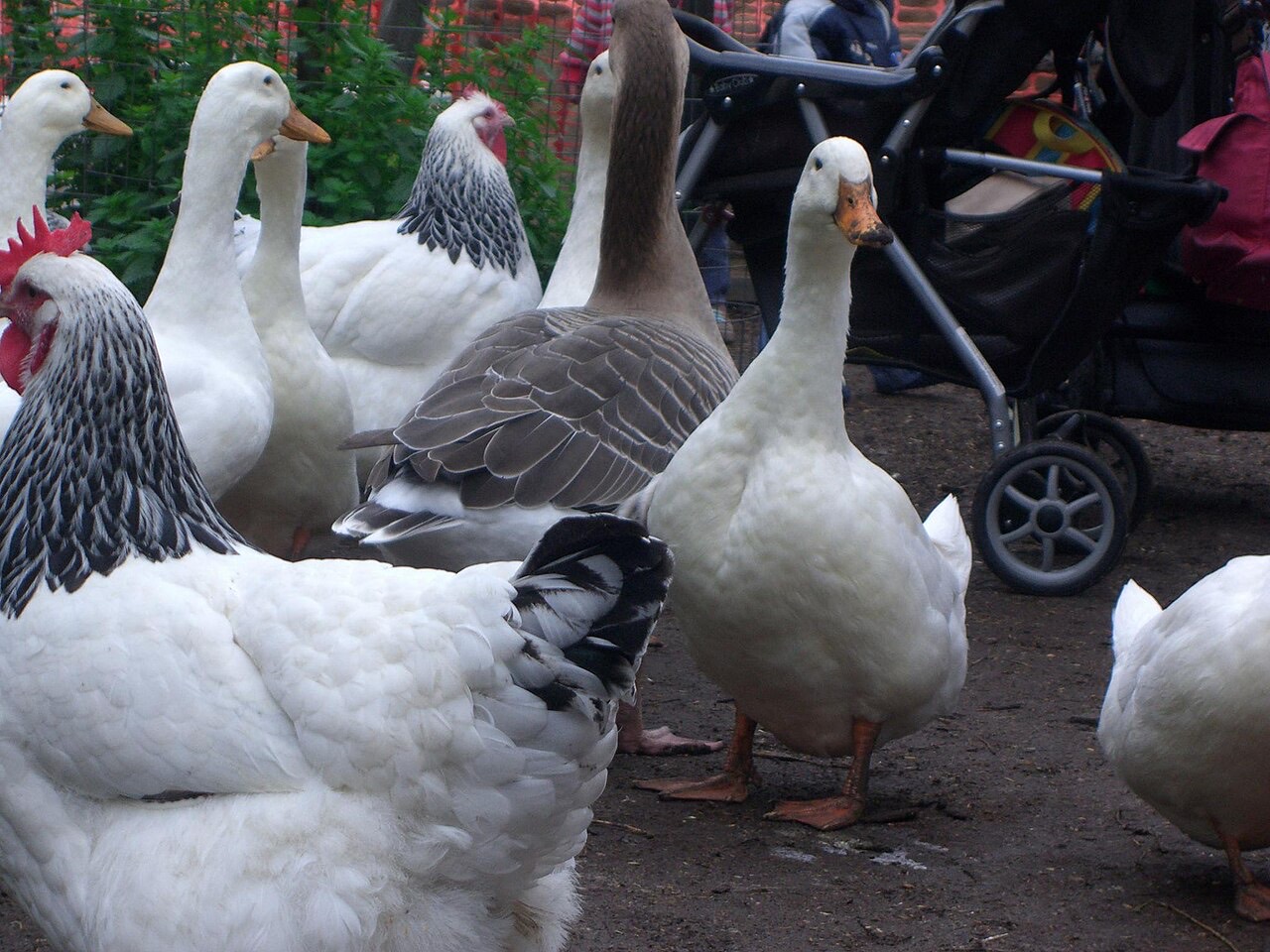
Domestic ducks are farmed mainly as two distinct lineages: breeds descended from the mallard (Anas platyrhynchos), such as Pekin and Khaki Campbell, and the Muscovy duck (Cairina moschata), a separate species valued for lean meat in many regions. Like other poultry, ducks are monogastric birds with a single-chambered stomach (proventriculus and gizzard) rather than a ruminant digestive system, but they are distinguished by webbed feet, waterproof plumage, and a strong association with water.
Duck-keeping ranges from smallholder flocks that forage across ponds, waterways, and homestead land, to specialised commercial operations raising birds for meat or table eggs in housed systems with little or no open water. Access to water for bathing and foraging is a defining feature of many traditional and free-range duck enterprises, even where it is not required for growth or egg production.
Overview
Duck production divides broadly into egg-laying breeds selected for high table-egg output and meat breeds selected for rapid growth and carcass yield, alongside dual-purpose and traditional breeds common in smallholder systems. Muscovy ducks, genetically distinct from mallard-derived breeds, are prized in various regions for lean meat and quieter behaviour.
Breeds and types
| Group | Examples | Main use |
|---|---|---|
| Egg-laying breeds | Khaki Campbell, Indian Runner | Table eggs |
| Meat breeds | Pekin, Aylesbury | Meat |
| Muscovy (separate species) | Muscovy duck | Meat; often free-ranged |
Breed and genetic diversity is documented internationally, including through FAO’s Domestic Animal Diversity Information System (DAD-IS), which records poultry breeds and their conservation status by country.
Nutrition and feeding
Commercial duck diets are formulated to meet energy, protein, and micronutrient requirements by age and production stage, following similar principles to other poultry feeding programmes. Ducks with access to ponds, waterways, or flooded paddies can supplement formulated feed by foraging for aquatic plants, invertebrates, and waste grain, though intensive systems typically rely on complete rations delivered with reliable drinking water.
Health and welfare
Duck health and welfare depend on clean water for drinking and bathing, adequate space and shelter, protection from predators, and biosecurity measures that limit disease introduction and spread. Because waterfowl can act as natural reservoir hosts for some avian influenza viruses, surveillance and biosecurity are a particular focus of duck health programmes in many countries.
Production context
Beyond meat, eggs, and down, ducks are valued in some cropping regions for their role in rice-duck integrated farming, where flocks are released into flooded paddies to feed on weeds, insects, and molluscs while depositing manure that returns nutrients to the field. Elsewhere, duck production is organised more like other poultry sectors, with system choice shaped by land, water access, and market demand.
Relationships
Evidence-backed connections in the knowledge graph.
Commonly raised in
Scope & limitations
Geographic scope: Global overview; breeds, systems, and regulations vary widely by country and region.
Climate context: Ducks are kept from tropical wetlands to temperate regions; water availability and climate shape system choice and management.
- This is a general species overview, not breed-, system-, or region-specific husbandry guidance.
- Health, medicine, and welfare practices are governed by local regulation and veterinary advice and are not detailed here.
Sources
This article draws on the following authoritative sources. See our sources & methodology for how they are selected.
- [1]FAO — Food and Agriculture Organization (opens in a new tab)Authoritative
Food and Agriculture Organization of the United Nations (FAO)
Cited for: Duck production systems and global role
- Type:
- Intergovernmental organization
- Jurisdiction:
- Global
- Accessed:
- 2026-07-12
- [2]DAD-IS — Domestic Animal Diversity Information System (opens in a new tab)Authoritative
FAO Commission on Genetic Resources for Food and Agriculture
Cited for: Duck breeds and genetic diversity
- Type:
- Official registry
- Jurisdiction:
- Global
- Accessed:
- 2026-07-12
- [3]WOAH — World Organisation for Animal Health (opens in a new tab)Authoritative
World Organisation for Animal Health (WOAH)
Cited for: Animal health and welfare standards
- Type:
- Intergovernmental organization
- Jurisdiction:
- Global
- Accessed:
- 2026-07-12
- [4]National Academies Press — Nutrient Requirements series (opens in a new tab)High
National Research Council, U.S. National Academies
Cited for: Nutrient requirement references
- Type:
- Peer-reviewed literature
- Jurisdiction:
- Global
- Accessed:
- 2026-07-12