Livestock · Livestock
Guinea Fowl
Numida meleagris
Also known as: Guinea hen, Pintade
Guinea fowl are hardy, ground-dwelling poultry farmed for meat and eggs and valued for their active foraging on insects and other invertebrates. Widely kept in free-range and mixed smallholder systems, they are also raised commercially for meat.
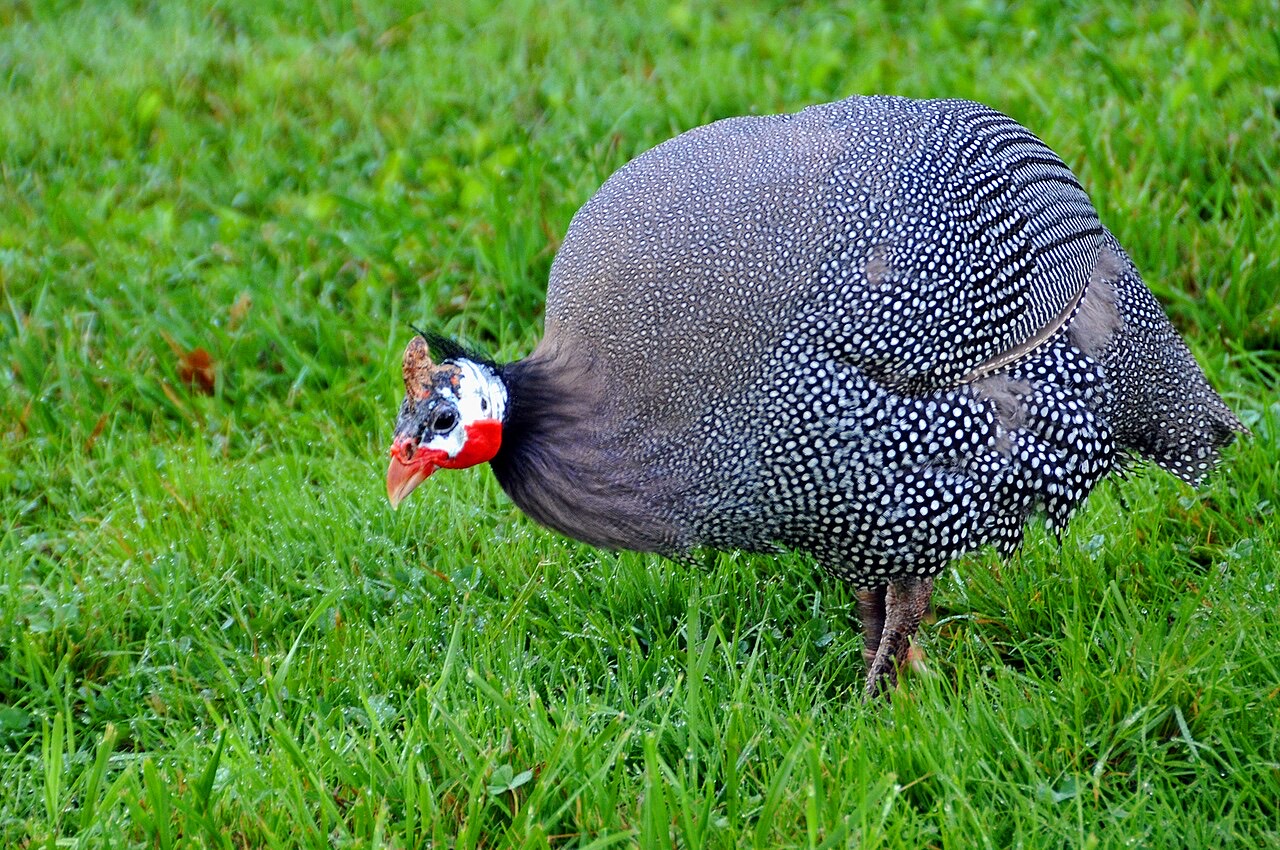
The helmeted guinea fowl (Numida meleagris), domesticated from a wild African species, is a hardy, ground-dwelling poultry bird raised across Africa, Europe, and beyond for meat and eggs. Guinea fowl are notably vigilant and vocal, and are frequently kept alongside other poultry or livestock for their alarm-calling behaviour as well as their production value.
A distinctive feature of guinea fowl husbandry is their active foraging on insects, other invertebrates, and some plant material, which has led to their traditional use in mixed farms as a check on certain garden and field insect pests. This foraging behaviour also means guinea fowl require careful integration with cropping activities to avoid unwanted damage to seedlings.
Overview
Guinea fowl are raised both for direct production of meat and eggs and for their foraging behaviour, which is valued in mixed farms and gardens as a means of reducing certain insect pest populations.
Types and uses
- Meat production
- Guinea fowl raised primarily for their distinctive, leaner meat.
- Egg production
- Smaller-scale laying for household or niche markets.
- Free-range pest-foraging role
- Birds kept partly for their foraging on insects and invertebrates in yards, gardens, and mixed farms.
Nutrition and feeding
Guinea fowl are omnivorous foragers, consuming insects, seeds, and green plant material when free-ranging, supplemented with formulated grain-based poultry rations, particularly for confined or commercial birds.
Health and welfare
Guinea fowl are generally hardy and disease-resistant relative to some other poultry, but free-range systems still require attention to predator protection, biosecurity, and appropriate shelter.
Production context
Guinea fowl have a long-standing role in mixed smallholder farms, particularly in Africa, where their foraging is traditionally valued alongside meat and egg production and their alertness helps deter some predators from poultry yards.
Relationships
Evidence-backed connections in the knowledge graph.
Commonly raised in
Feeds on
Related topics
Scope & limitations
Geographic scope: Global overview, with strong traditional roles in African and mixed smallholder systems; farming scale and regulation vary by region.
Climate context: Guinea fowl are hardy across a range of climates and are commonly kept in free-range systems in warm and temperate regions alike.
- This is a general species overview, not a system- or region-specific production guide.
- Health, medicine, and welfare practices are governed by local regulation and veterinary advice and are not detailed here.
Sources
This article draws on the following authoritative sources. See our sources & methodology for how they are selected.
- [1]FAO — Food and Agriculture Organization (opens in a new tab)Authoritative
Food and Agriculture Organization of the United Nations (FAO)
Cited for: Guinea fowl production and smallholder role
- Type:
- Intergovernmental organization
- Jurisdiction:
- Global
- Accessed:
- 2026-07-12
- [2]DAD-IS — Domestic Animal Diversity Information System (opens in a new tab)Authoritative
FAO Commission on Genetic Resources for Food and Agriculture
Cited for: Guinea fowl genetic resources and diversity
- Type:
- Official registry
- Jurisdiction:
- Global
- Accessed:
- 2026-07-12
- [3]USDA ARS — Agricultural Research Service (opens in a new tab)Authoritative
USDA Agricultural Research Service (ARS)
Cited for: Poultry nutrition and production research
- Type:
- Government agency
- Jurisdiction:
- United States
- Accessed:
- 2026-07-12
- [4]WOAH — World Organisation for Animal Health (opens in a new tab)Authoritative
World Organisation for Animal Health (WOAH)
Cited for: Animal health and welfare standards
- Type:
- Intergovernmental organization
- Jurisdiction:
- Global
- Accessed:
- 2026-07-12