Machinery · Agricultural machinery
Cultivator
A cultivator uses rows of shanks, tines, or sweeps to stir and loosen shallow soil, used either as a secondary tillage tool for seedbed preparation or, mounted between crop rows, for mechanical weed control during the growing season.
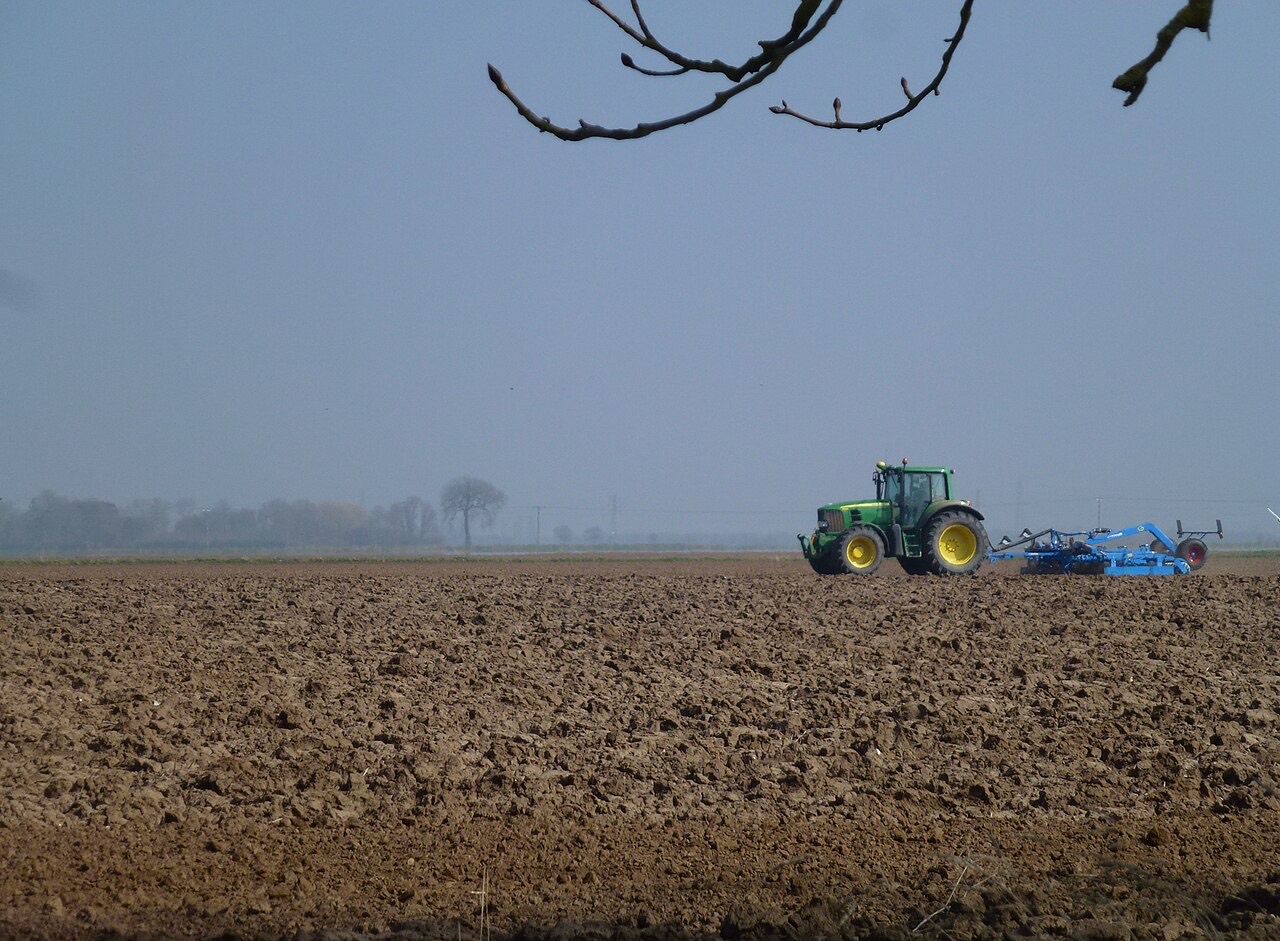
A cultivator is a general-purpose shallow-tillage implement built around a toolbar carrying shanks, tines, or sweeps that stir the soil surface without the more complete inversion of a moldboard plough or the disc action of a disc harrow. The term covers two related but distinct uses: field cultivators, which prepare or refine a seedbed before planting, and row-crop cultivators, which are guided between growing crop rows to control weeds and loosen surface soil during the season.
Because cultivation disturbs soil less aggressively than primary tillage, it is often used as one of the final steps before planting to level and firm a seedbed, or as a repeated in-season pass in row crops to manage weeds where herbicide use is limited, supplemented, or avoided.
What a cultivator is
A cultivator is defined less by a single fixed design than by its function: stirring and loosening shallow soil with rigid or spring-loaded shanks, tines, or sweeps. This flexible category spans implements used purely for seedbed preparation and implements precisely guided between rows of a standing crop.
How it works
- Shanks, tines, or sweeps mounted on a toolbar are drawn through the topsoil
- The tools loosen compacted or crusted soil and cut or uproot weeds
- In row-crop use, shields or guidance systems keep tools working between rows without damaging the crop
- Working depth and tool spacing are adjusted for the soil condition and crop stage
Role in the production cycle
As a secondary tillage tool, cultivation refines the soil surface after primary tillage, breaking clods and levelling the field ahead of planting. As an in-season row-crop tool, cultivation loosens surface crusting, aerates the topsoil, and removes weeds that compete with the crop for light, water, and nutrients.
Mechanical cultivation is a core practice in organic production systems, where herbicide use is restricted or excluded, and is also used in conventional systems to supplement or reduce reliance on herbicides.
Types and variations
- Field cultivator
- Wide toolbar with spring-loaded shanks, used for secondary tillage and seedbed levelling.
- Row-crop cultivator
- Narrower tool sets guided between crop rows for in-season weed control and soil aeration.
- Rotary cultivator (rotary tiller)
- Powered, rotating tines that intensively mix soil, often used on smaller areas or for finer seedbed preparation.
Considerations
Cultivation depth, timing, and frequency affect weed-control efficacy, soil moisture conservation, and the risk of disturbing crop roots or compacting soil at a consistent depth over repeated passes. Row-crop cultivation also requires accurate guidance to avoid damaging the growing crop.
Relationships
Evidence-backed connections in the knowledge graph.
Farming systems
Related topics
Scope & limitations
Geographic scope: General overview of cultivators as used in seedbed preparation and mechanical weed control worldwide. Design and use vary by crop, soil, and farming system.
- This entry describes cultivator function and types in general terms; it does not specify working depths or cultivation schedules, which are crop- and region-specific.
- Weed-control effectiveness depends on weed species, growth stage, and soil moisture not detailed here.
Sources
This article draws on the following authoritative sources. See our sources & methodology for how they are selected.
- [1]Iowa State University Extension and Outreach (opens in a new tab)High
Iowa State University Extension and Outreach
Cited for: Cultivator function and mechanical weed control
- Type:
- University extension service
- Jurisdiction:
- United States (Iowa)
- Accessed:
- 2026-07-12
- [2]USDA ARS — Agricultural Research Service (opens in a new tab)Authoritative
USDA Agricultural Research Service (ARS)
Cited for: Tillage and cultivation research context
- Type:
- Government agency
- Jurisdiction:
- United States
- Accessed:
- 2026-07-12
- [3]AHDB — Agriculture and Horticulture Development Board (opens in a new tab)High
Agriculture and Horticulture Development Board (AHDB)
Cited for: Seedbed preparation guidance context
- Type:
- Government agency
- Jurisdiction:
- United Kingdom
- Accessed:
- 2026-07-12
- [4]FAO — Food and Agriculture Organization (opens in a new tab)Authoritative
Food and Agriculture Organization of the United Nations (FAO)
Cited for: Role of cultivation in crop production systems
- Type:
- Intergovernmental organization
- Jurisdiction:
- Global
- Accessed:
- 2026-07-12