Plant Disease · Plant disease
Damping-off
Multiple genera (e.g. Pythium, Rhizoctonia, Fusarium spp.)
Also known as: Seedling blight
Damping-off is a seedling disease complex caused by several soil-borne fungi and oomycetes, mainly Pythium, Rhizoctonia, and Fusarium species. It kills seeds before or shortly after emergence and is one of the most widespread causes of poor stand establishment across many crops.
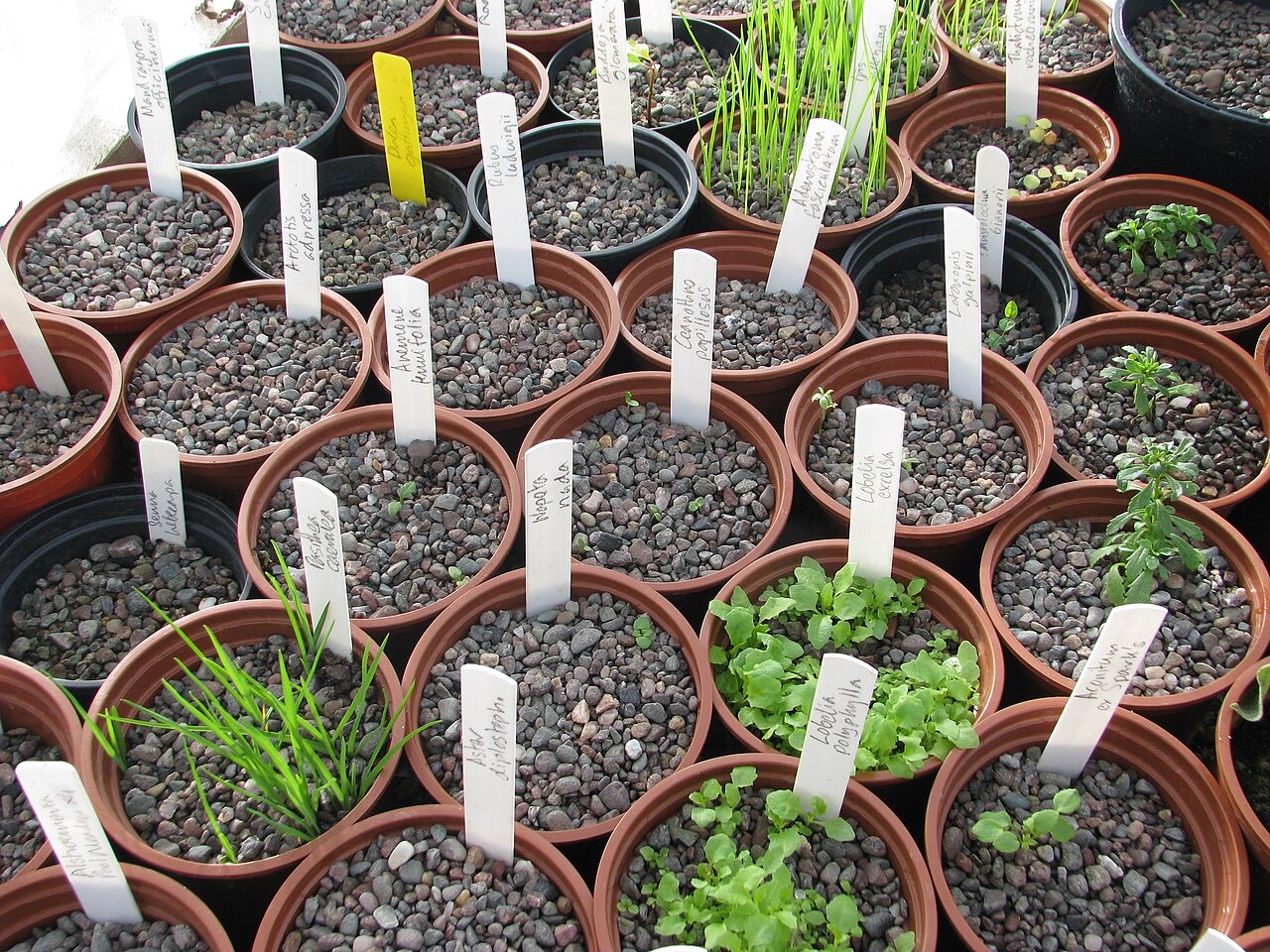
Damping-off is not caused by a single organism but describes a shared outcome, failed or collapsed seedlings, produced by several soil-borne fungi and oomycetes acting alone or together. The most frequently implicated genera are Pythium and, in some cases, Phytophthora (oomycetes), along with Rhizoctonia and Fusarium (true fungi).
Because these organisms differ in biology and in the soil conditions that favour them, damping-off is best understood as a disease complex affecting seeds and young seedlings of a very wide range of crops, from field crops such as soybean and sugar beet to vegetables such as cucumber and lettuce.
Identification
Damping-off can appear as pre-emergence damping-off, where seeds rot in the soil and never emerge, or as post-emergence damping-off, where seedlings emerge but then develop a water-soaked or constricted lesion at the soil line and collapse, often described as a "wire stem" appearance. Stand gaps and uneven emergence are the most visible field symptom.
Biology and disease cycle
Pythium species are oomycetes that thrive in saturated, poorly drained soils and produce swimming zoospores attracted to seeds and roots, making them especially damaging under wet conditions. Rhizoctonia solani is a true fungus that survives as mycelium or resting structures called sclerotia, does not require free water to infect, and often damages the stem near the soil line. Fusarium species survive as durable resting spores and frequently act as secondary invaders on tissue already weakened by other stresses.
| Genus | Type | Favoured conditions |
|---|---|---|
| Pythium | Oomycete | Saturated, poorly drained, or waterlogged soils |
| Rhizoctonia | Fungus | Broad range; does not require free water |
| Fusarium | Fungus | Often secondary, on already-stressed seedlings |
Affected hosts
Because the causal organisms individually have broad host ranges, damping-off affects the seedlings of a very wide range of field, vegetable, and horticultural crops. Soybean, sugar beet, cucumber, and lettuce are commonly affected, though the specific organism or organisms responsible vary by crop, soil, and region.
Risk factors
- Cool, wet soils that slow germination and prolong seedling exposure
- Poorly drained or compacted soils that remain saturated after rain or irrigation
- Planting too deep, or into a poor seedbed that delays emergence
- Low-vigour or poor-quality seed
- Dense seeding rates that increase humidity around emerging seedlings
Prevention and monitoring
Because damping-off can arise from several different organisms whose favoured conditions differ, effective management typically starts with correct diagnosis and then addresses the specific soil and seeding conditions involved.
- Improve soil drainage and avoid compaction ahead of planting
- Avoid overwatering and allow appropriate soil drying between irrigations where practical
- Use high-quality, vigorous seed at the recommended depth and rate
- Delay planting until soil temperatures favour rapid germination where possible
- Rotate with non-host or less-susceptible crops and manage crop debris
Official extension guidance
1 resource indexed from public extension publishers. Each was written for a particular place; read it at the source.
Turfgrass Diseases: Damping-Off Diseases (Causal Fungi: Pythium, Rhizoctonia, and Fusarium spp.)
Factsheet published by Penn State Extension for Pennsylvania. It addresses damping-off. The source is organised around “Symptoms and Signs”, “Disease Cycle” and “Disease Development”.
Penn State Extension · Disease management · publisher states 2024-02-26
These are pointers to guidance published by others. Each was written for a particular place and season and is revised by its publisher; read it at the source, and check it applies where you farm.
Relationships
Evidence-backed connections in the knowledge graph.
Risk increases under
Related topics
Scope & limitations
Geographic scope: Global; damping-off occurs wherever susceptible crops are seeded, with the greatest risk in cool, wet, poorly drained soils and in nursery or greenhouse seedling production.
Climate context: Oomycete-driven damping-off is favoured by saturated, poorly drained soils; cool, wet conditions at planting that slow germination extend the window of seedling vulnerability.
- Damping-off is a symptom-based, multi-organism category; this overview cannot substitute for laboratory identification of the specific causal organism(s) present.
- The relative importance of individual causal genera varies substantially by crop, soil type, and region.
- Control-product recommendations are jurisdiction-specific and are deliberately not provided here.
Sources
This article draws on the following authoritative sources. See our sources & methodology for how they are selected.
- [1]CABI Digital Library — Crop Protection Compendium (opens in a new tab)High
CABI (Centre for Agriculture and Bioscience International)
Cited for: Damping-off causal organisms and disease biology
- Type:
- Reference database
- Jurisdiction:
- Global
- Accessed:
- 2026-07-12
- [2]EPPO Global Database (opens in a new tab)Authoritative
European and Mediterranean Plant Protection Organization (EPPO)
Cited for: Pathogen nomenclature and distribution
- Type:
- Reference database
- Jurisdiction:
- Global
- Accessed:
- 2026-07-12
- [3]UC Statewide Integrated Pest Management Program (UC IPM) (opens in a new tab)High
University of California Agriculture and Natural Resources (UC ANR)
Cited for: Identification and management principles
- Type:
- University extension service
- Jurisdiction:
- United States (California)
- Accessed:
- 2026-07-12
- [4]Iowa State University Extension and Outreach (opens in a new tab)High
Iowa State University Extension and Outreach
Cited for: Field crop seedling disease diagnosis and risk factors
- Type:
- University extension service
- Jurisdiction:
- United States (Iowa)
- Accessed:
- 2026-07-12
- [5]University of Minnesota Extension — Crop and pest resources (opens in a new tab)High
University of Minnesota Extension
Cited for: Seedling and damping-off disease complexes
- Type:
- University extension service
- Jurisdiction:
- United States (Minnesota)
- Accessed:
- 2026-07-12
Related topics
Crops
- Amaranth
- Anise
- Black Cumin
- Camelina
- Caraway
- Carrot
- Chamomile
- Chia
- Chinese Cabbage
- Cucumber
- Daikon
- Fenugreek
- Finger Millet
- Foxtail Millet
- Hausa Potato
- Italian Ryegrass
- Jute Mallow
- Kenaf
- Lettuce
- Malabar Spinach
- Pak Choi
- Perennial Ryegrass
- Proso Millet
- Purslane
- Rocket
- Soybean
- Stevia
- Sugar beet
- Swiss Chard
- Tall Fescue
- Tannia
- Turnip
- Upland Cotton
- Wasabi
- Water Spinach
- Waterleaf