Plant Disease · Plant disease
Tobacco Mosaic Virus
Tobacco mosaic virus (genus Tobamovirus)
Also known as: TMV
Tobacco mosaic virus is one of the most stable and best-studied plant viruses, causing mottled, mosaic-patterned leaves and stunting in tobacco, tomato, pepper, and other plants. Unlike many plant viruses, it spreads mainly through mechanical contact rather than insect vectors.
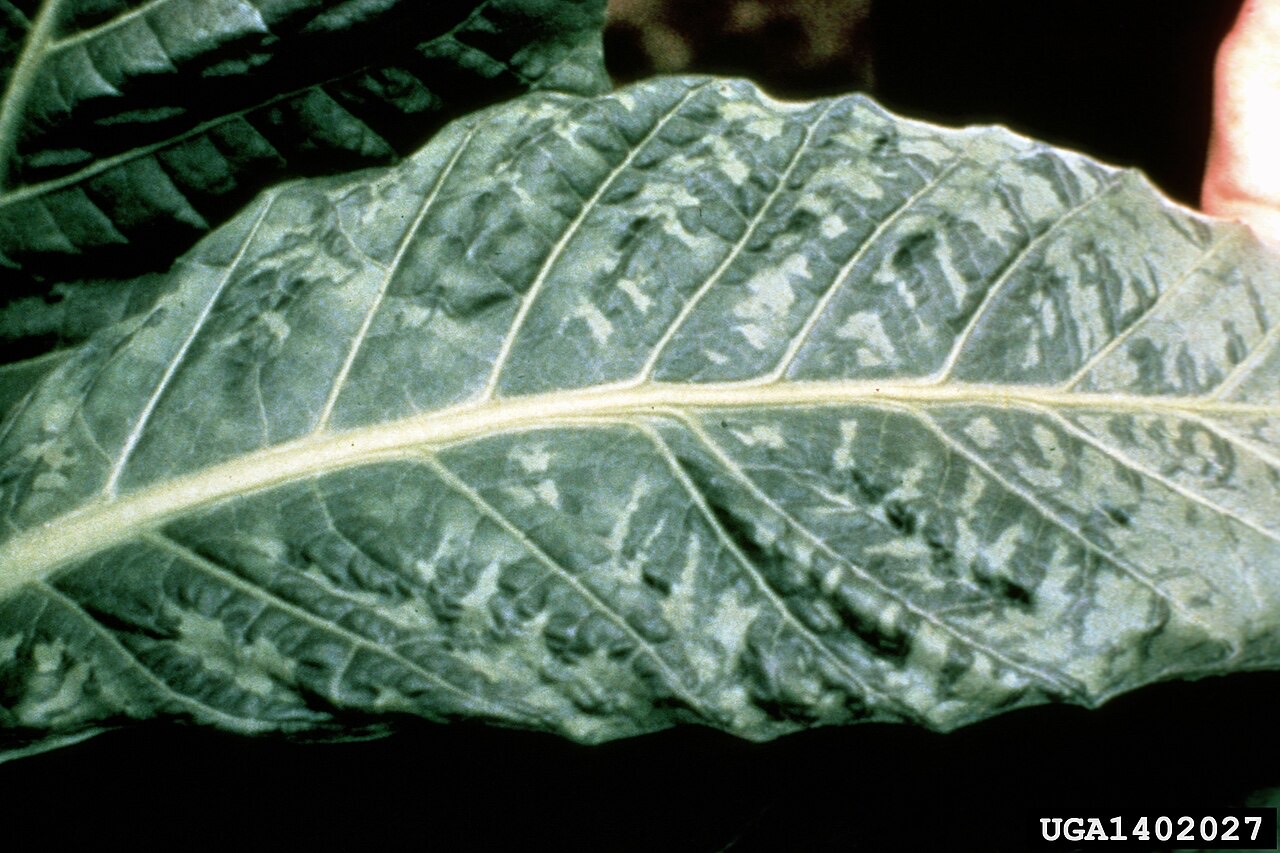
Tobacco mosaic virus (TMV) is a Tobamovirus notable for the extreme physical stability of its rod-shaped particles, which allow it to remain infectious for long periods outside a living plant, including in dried leaf debris, contaminated soil, and on tools or hands. It infects tobacco, tomato, pepper, and a range of other host plants.
Unusually among economically important plant viruses, TMV is not primarily spread by insects. Instead, it moves mechanically through contact, entering plants through small wounds created during routine handling such as pruning, tying, grafting, or harvesting, which makes worker practices a central part of managing its spread.
Identification
Infected plants typically show a mottled mosaic pattern of light and dark green (or yellow-green) patches on leaves, sometimes with leaf distortion, narrowing, or blistering, along with stunted growth and reduced yield. Symptom severity can vary considerably with plant variety, virus strain, and growing conditions, and symptoms can be masked at high temperatures.
Biology and transmission
TMV particles are unusually stable and resistant to degradation, which allows the virus to persist in dried plant material, cured tobacco products, contaminated soil, and on surfaces such as tools, stakes, and hands for extended periods. Infection occurs when the virus, present in sap or on a contaminated surface, is introduced into a plant through even minor wounds created during normal handling.
- Contaminated hands and tools during pruning, tying, or grafting are a major route of spread
- Contact with tobacco products can transfer the virus to susceptible crops such as tomato and pepper
- Low rates of seed transmission can occur through virus-contaminated seed coats
- Unlike many plant viruses, TMV is not significantly spread by insect vectors
Affected hosts
Tobacco is the namesake host, but tomato and sweet pepper are also economically important hosts, along with numerous other cultivated and wild plants. Susceptibility and symptom severity vary by variety, and some tomato and pepper varieties carry resistance genes that reduce or prevent disease development.
Risk factors
- Frequent plant handling, such as pruning, tying, or grafting, without hygiene precautions
- Workers handling tobacco products before working with susceptible crops
- Reuse of contaminated stakes, ties, tools, or growing media between crops
- Use of seed or transplants from an infected source
- Susceptible varieties lacking resistance genes
Prevention and monitoring
Because there is no way to cure a plant once infected with TMV, and because the virus is so persistent in the environment, prevention centres on hygiene, resistant varieties, and removing sources of infection rather than reacting after symptoms appear.
- Choose resistant or tolerant varieties where available
- Wash hands and disinfect tools between plants, especially during pruning, tying, or grafting
- Avoid handling tobacco products before or while working with susceptible crops
- Use certified virus-free seed and transplants
- Remove and destroy infected plants and avoid reusing contaminated stakes or growing media
Relationships
Evidence-backed connections in the knowledge graph.
Affects
Risk increases under
Scope & limitations
Geographic scope: Global; tobacco mosaic virus occurs wherever susceptible hosts are grown, with risk strongly tied to handling practices rather than to a specific climate.
Climate context: Temperature can influence symptom expression, with high temperatures sometimes masking visible mosaic symptoms; the virus itself is mechanically transmitted and not primarily weather-driven.
- This is a general overview; symptom severity and host range vary by virus strain and plant variety.
- There is no chemical treatment that cures an already-infected plant; management is preventive.
- Diagnosis based on symptoms alone can be unreliable, since other viruses and disorders can produce similar mosaic patterns.
Sources
This article draws on the following authoritative sources. See our sources & methodology for how they are selected.
- [1]CABI Digital Library — Crop Protection Compendium (opens in a new tab)High
CABI (Centre for Agriculture and Bioscience International)
Cited for: Virus biology, transmission, and host range
- Type:
- Reference database
- Jurisdiction:
- Global
- Accessed:
- 2026-07-12
- [2]EPPO Global Database (opens in a new tab)Authoritative
European and Mediterranean Plant Protection Organization (EPPO)
Cited for: Pathogen nomenclature and distribution
- Type:
- Reference database
- Jurisdiction:
- Global
- Accessed:
- 2026-07-12
- [3]UC Statewide Integrated Pest Management Program (UC IPM) (opens in a new tab)High
University of California Agriculture and Natural Resources (UC ANR)
Cited for: Identification and management principles
- Type:
- University extension service
- Jurisdiction:
- United States (California)
- Accessed:
- 2026-07-12
- High
Cited for: Taxonomic classification within genus Tobamovirus
- Type:
- Reference database
- Jurisdiction:
- Global
- Accessed:
- 2026-07-12