Plant Disease · Plant disease
Bacterial Leaf Spot
Xanthomonas spp. and Pseudomonas syringae pv. species
Also known as: Bacterial spot
Bacterial leaf spot is a disease of tomato and pepper caused mainly by Xanthomonas and Pseudomonas bacteria, producing small, water-soaked leaf and fruit lesions. It spreads readily in wet, warm conditions and through contaminated seed, water, and equipment.
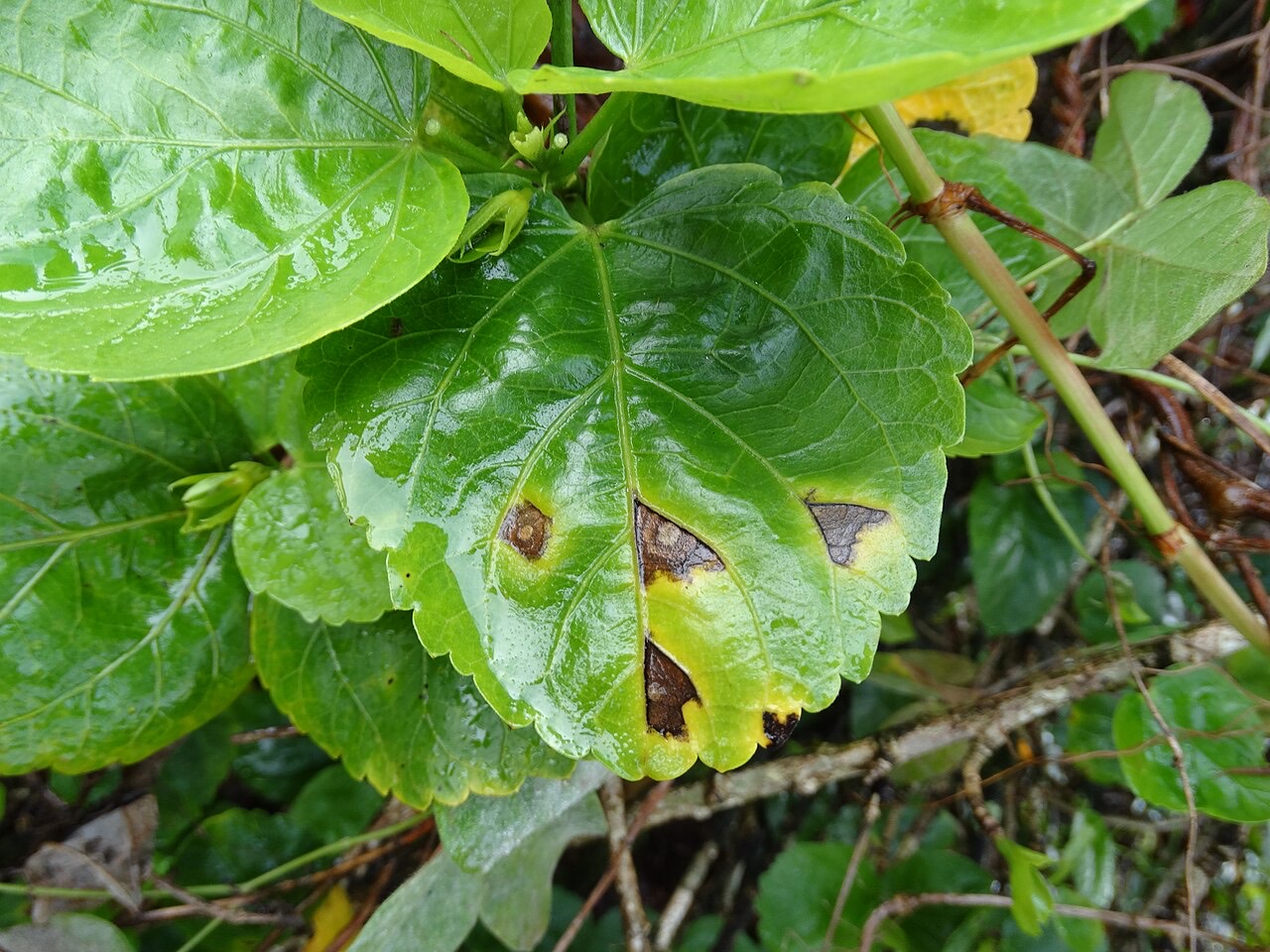
Bacterial leaf spot of tomato and pepper is caused mainly by several species of Xanthomonas, and in some regions by Pseudomonas syringae pathovars, that infect leaves, stems, and fruit. Unlike fungal or oomycete diseases, bacterial spot spreads through water and contact rather than through airborne spores.
The disease can cause significant defoliation and reduced marketable yield, particularly where warm, wet weather coincides with susceptible growth stages, and it is notoriously difficult to eliminate once established because bacteria can persist in seed, soil debris, and volunteer plants.
Identification
Bacterial leaf spot begins as small, water-soaked spots on leaves that enlarge and turn brown to black, frequently surrounded by a yellow halo. Heavily spotted leaves can yellow and drop, reducing canopy cover and fruit protection. On fruit, infection produces small, raised, scab-like spots that can affect marketability even though the fruit interior is usually unaffected.
Biology and disease cycle
The causal bacteria enter leaves and fruit mainly through natural openings such as stomata and through wounds, multiplying in the water-soaked tissue before lesions become visible. Because the bacteria need free moisture to move and infect, disease development is closely tied to rain, dew, and irrigation practices that wet foliage.
- Rain splash and overhead irrigation
- Move bacteria from infected to healthy tissue and between plants
- Contaminated seed and transplants
- Can introduce the pathogen into a previously clean planting
- Crop debris and volunteer plants
- Allow bacteria to survive between seasons in the field
Affected hosts
Tomato and sweet pepper are the principal hosts of bacterial leaf spot, both susceptible to leaf, stem, and fruit infection. Related solanaceous crops and some weeds can also host the bacteria in certain regions, which can complicate management where these plants grow near production fields.
Risk factors
- Warm, wet, or highly humid weather, especially with wind-driven rain
- Overhead irrigation and working in fields while foliage is wet
- Use of infected seed or transplants
- Handling plants or equipment that move between infected and healthy areas
- Dense plantings with limited air movement
Prevention and monitoring
Because bacterial leaf spot spreads through water and contact rather than airborne spores, prevention focuses on starting with clean planting material, minimising foliage wetness, and limiting mechanical spread.
- Use certified, disease-free seed and transplants
- Choose resistant or tolerant varieties where available
- Avoid working in fields or handling plants while foliage is wet
- Use irrigation methods that minimise leaf wetting where practical
- Rotate away from tomato and pepper and remove infected debris and volunteer plants
Relationships
Evidence-backed connections in the knowledge graph.
Affects
Risk increases under
Scope & limitations
Geographic scope: Global; bacterial leaf spot occurs wherever tomato and pepper are grown, with the greatest severity in warm, wet, or humid production regions and seasons.
Climate context: Favoured by warm, wet, or humid conditions; splashing rain and overhead irrigation are the main drivers of within-field spread.
- This is a general overview; several closely related bacterial species and strains are involved, and the mix present varies by region.
- Bactericidal control options are more limited than for fungal diseases, and effectiveness depends heavily on local conditions and product registration.
- Control-product recommendations are jurisdiction-specific and are deliberately not provided here.
Sources
This article draws on the following authoritative sources. See our sources & methodology for how they are selected.
- [1]CABI Digital Library — Crop Protection Compendium (opens in a new tab)High
CABI (Centre for Agriculture and Bioscience International)
Cited for: Pathogen biology, host range, and disease cycle
- Type:
- Reference database
- Jurisdiction:
- Global
- Accessed:
- 2026-07-12
- [2]EPPO Global Database (opens in a new tab)Authoritative
European and Mediterranean Plant Protection Organization (EPPO)
Cited for: Pathogen nomenclature and distribution
- Type:
- Reference database
- Jurisdiction:
- Global
- Accessed:
- 2026-07-12
- [3]UC Statewide Integrated Pest Management Program (UC IPM) (opens in a new tab)High
University of California Agriculture and Natural Resources (UC ANR)
Cited for: Identification and management principles
- Type:
- University extension service
- Jurisdiction:
- United States (California)
- Accessed:
- 2026-07-12
- [4]Cornell CALS — Plant pathology and crop resources (opens in a new tab)High
Cornell University College of Agriculture and Life Sciences
Cited for: Vegetable crop risk factors and sanitation guidance
- Type:
- University extension service
- Jurisdiction:
- United States (New York)
- Accessed:
- 2026-07-12