Fertilizer · Fertilizer
Vermicompost
Also known as: Worm compost, Vermicast
Vermicompost is organic matter processed by earthworms into a finely textured, biologically active material, typically with somewhat more readily available nutrients and a richer microbial community than conventional thermophilic compost.
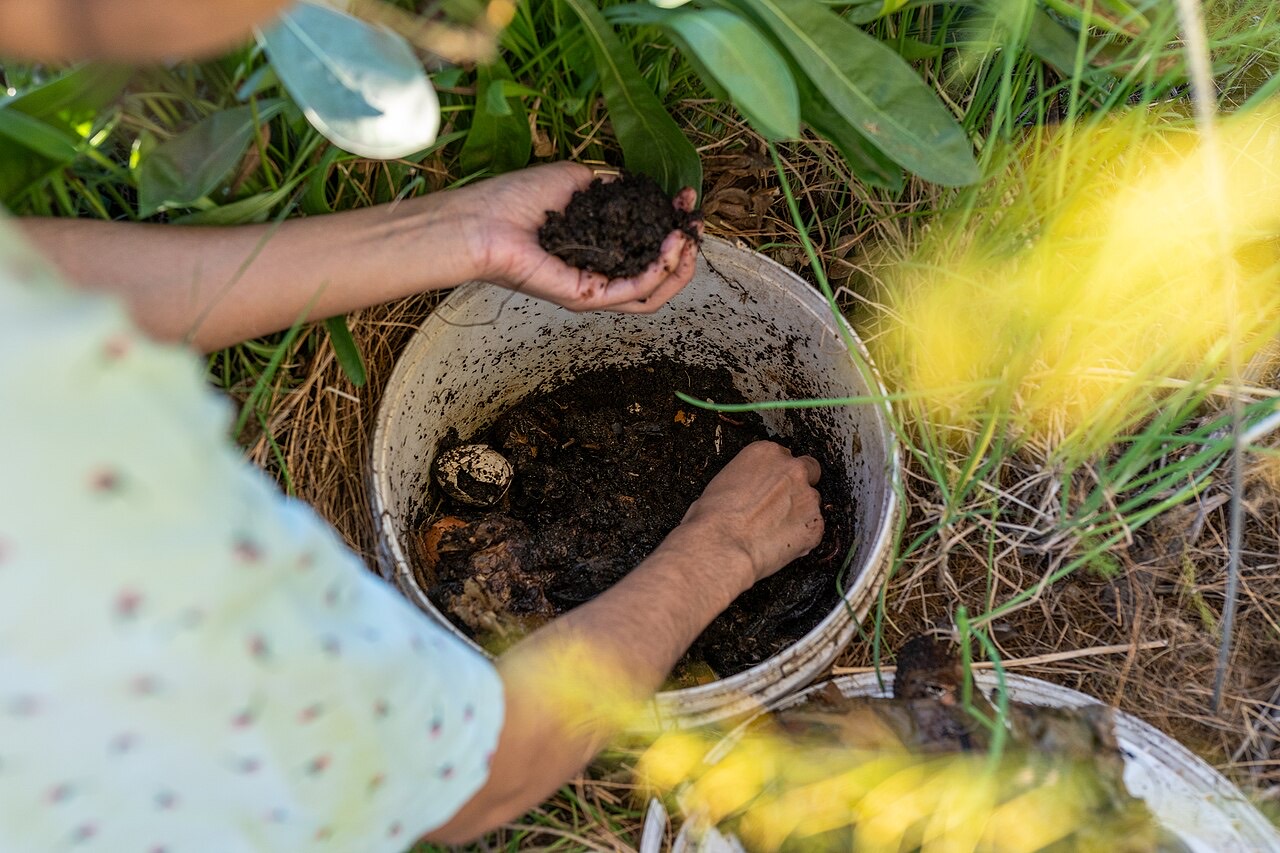
Vermicompost is produced when earthworms, commonly species such as Eisenia fetida, consume organic feedstock and excrete it as finely textured castings. The process occurs at ambient rather than elevated temperatures and typically yields a material with a notably fine, uniform structure.
Because the feedstock passes through the worm digestive system, vermicompost often has a higher proportion of nutrients in plant-available forms, along with a diverse and active microbial population, compared with the original raw material or with some conventional compost.
Composition and analysis
Vermicompost composition depends on the organic feedstock fed to the worms and on the conditions of the vermicomposting process. Its physical structure is typically finer and more uniform than conventional compost, and its nutrient concentrations, while still low relative to mineral fertilizers, are often somewhat higher in readily available forms.
- Nutrient content
- Low and variable; depends on feedstock and process
- Physical structure
- Fine, crumbly, and uniform castings
- Microbial content
- Typically high and diverse
- Nutrient forms
- A relatively higher share in readily plant-available forms than raw feedstock
Nutrients supplied
Vermicompost supplies nitrogen, phosphorus, and potassium at low, variable concentrations, along with a diverse microbial community and readily available forms of some nutrients resulting from processing by earthworms.
- Nitrogen, phosphorus, and potassium are present at low concentrations, similar in order of magnitude to other composts
- A relatively higher proportion of some nutrients may be in readily available form
- Contributes beneficial soil microorganisms along with organic matter
Use and benefits
Vermicompost is used in vegetable, horticultural, and nursery production, and in home and community gardening, where its fine texture, relatively available nutrients, and biological activity are valued for supporting plant establishment and soil health.
- Fine, uniform texture suits potting mixes, seedling production, and horticultural use
- Contributes a diverse soil microbial community
- Supports soil organic matter and structure similarly to other composts
Application principles
As with other organic amendments, vermicompost’s nutrient content and release should be considered as part of an overall nutrient budget rather than assumed to match any fixed analysis, since feedstock and processing vary between producers and batches.
Environmental considerations
Vermicompost generally carries lower risk of rapid nutrient loss than soluble mineral fertilizers, given its organic nutrient forms, but as with other organic amendments, excessive or poorly timed application can still contribute to nutrient runoff or leaching.
Tools for this
Each tool shows its formula, constants and sources, and starts empty — nothing is filled in from this page.
- Nutrient rate converter
Convert between a product rate and the nutrient rate it supplies, at a grade you enter.
- Fertilizer nutrient calculator
Convert a fertilizer mass and grade to nutrient mass, including P₂O₅ to P and K₂O to K.
Relationships
Evidence-backed connections in the knowledge graph.
Supplies nutrients
Scope & limitations
Geographic scope: Global overview of vermicompost as an organic amendment. Production scale, feedstocks, and use vary from small-scale gardening to commercial horticultural operations across regions.
Climate context: Vermicomposting proceeds within a moderate temperature range favourable to the worms involved, distinguishing it from the higher-temperature phase of conventional thermophilic composting.
- This entry describes vermicompost as a category; nutrient content varies by feedstock and process and is not quantified for any specific product.
- This is not an application rate recommendation for any crop or region.
- Claims of superiority over conventional compost vary by study and context and are not generalised here.
Sources
This article draws on the following authoritative sources. See our sources & methodology for how they are selected.
- [1]FAO — Food and Agriculture Organization (opens in a new tab)Authoritative
Food and Agriculture Organization of the United Nations (FAO)
Cited for: Organic amendments and vermicomposting practice
- Type:
- Intergovernmental organization
- Jurisdiction:
- Global
- Accessed:
- 2026-07-12
- [2]USDA NRCS — Natural Resources Conservation Service (opens in a new tab)Authoritative
USDA Natural Resources Conservation Service (NRCS)
Cited for: Soil organic amendment effects on soil properties
- Type:
- Government agency
- Jurisdiction:
- United States
- Accessed:
- 2026-07-12
- [3]Cornell CALS — Plant pathology and crop resources (opens in a new tab)High
Cornell University College of Agriculture and Life Sciences
Cited for: Vermicomposting and compost quality guidance
- Type:
- University extension service
- Jurisdiction:
- United States (New York)
- Accessed:
- 2026-07-12
- [4]AHDB — Agriculture and Horticulture Development Board (opens in a new tab)High
Agriculture and Horticulture Development Board (AHDB)
Cited for: Organic amendment nutrient management context
- Type:
- Government agency
- Jurisdiction:
- United Kingdom
- Accessed:
- 2026-07-12