Fertilizer · Fertilizer
Compost
Also known as: Composted organic matter
Compost is decomposed organic matter produced by controlled aerobic breakdown of plant and other biodegradable residues, valued more for its contribution to soil organic matter, structure, and biological activity than for its comparatively low and variable nutrient content.
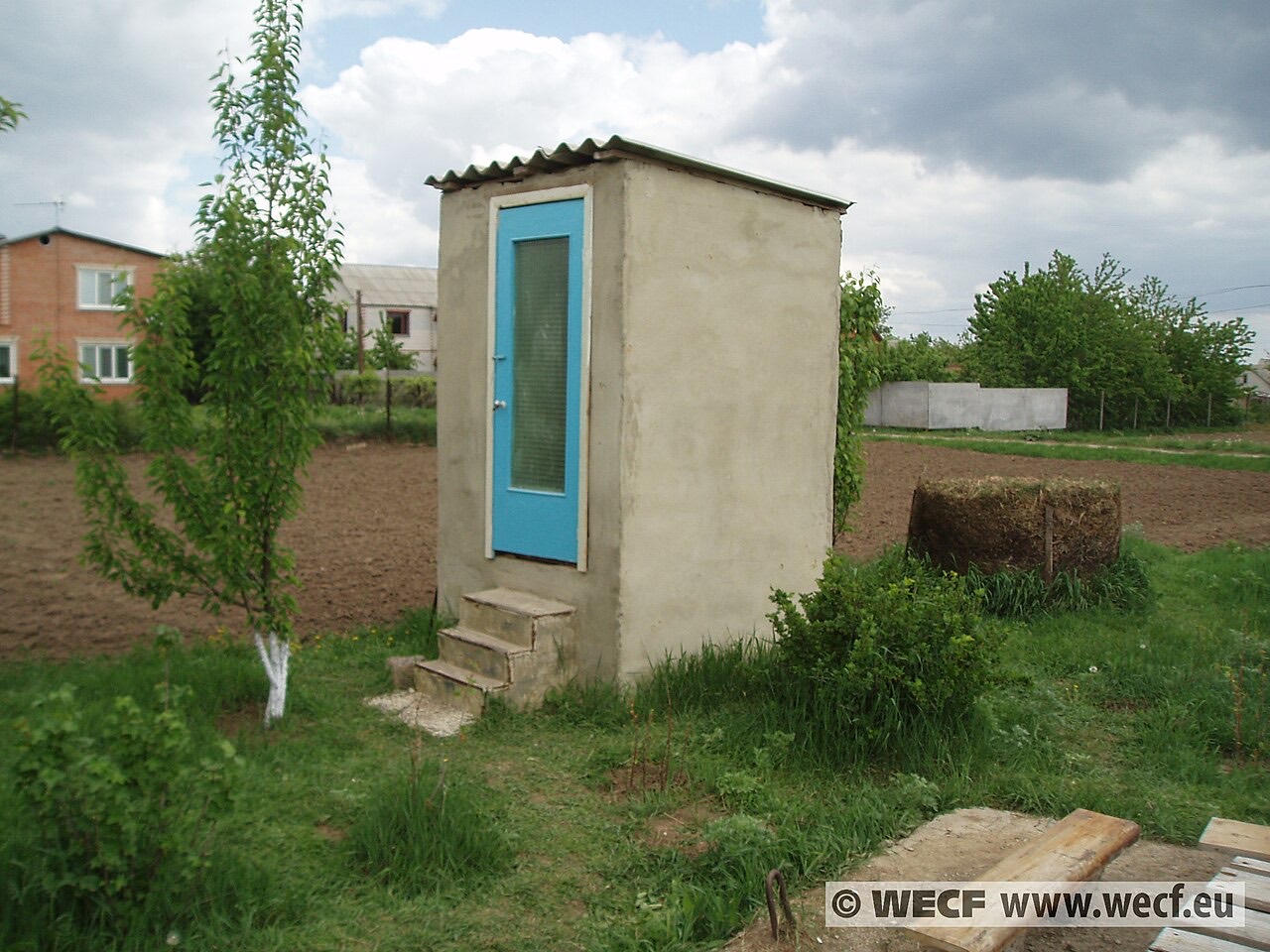
Compost is produced when microorganisms break down plant residues, food waste, or other organic materials under managed aerobic conditions, typically involving controlled moisture, aeration, and a period of elevated temperature that stabilises the material and reduces pathogens and weed seed viability.
Compared with mineral fertilizers, compost supplies nutrients at low and variable concentrations, released gradually as the organic matter continues to decompose in soil. Its principal agronomic value lies as much in building soil organic matter, improving structure, and supporting soil biological activity as in direct nutrient supply.
Composition and analysis
Compost composition depends heavily on its feedstock, such as plant residues, yard waste, or food scraps, and on the composting process and degree of maturity. Nutrient analysis is far lower and more variable than mineral fertilizers, and is typically stated as a range rather than a fixed grade.
- Nutrient content
- Low and variable; typically well under 2% each of N, P₂O₅, and K₂O
- Organic matter content
- High; the primary contribution of the material
- Nutrient form
- Bound in organic matter, released as decomposition continues
- Variability
- Depends strongly on feedstock, process, and maturity
Nutrients supplied
Compost supplies nitrogen, phosphorus, and potassium at low concentrations, along with secondary nutrients and micronutrients, most of them held within organic matter and released gradually as soil organisms continue to decompose the material after application.
- Nitrogen, phosphorus, and potassium are supplied at low, variable concentrations
- Nutrients are released gradually through ongoing decomposition rather than immediately
- Trace elements are often present, depending on feedstock
Use and benefits
Compost is applied to build soil organic matter, improve soil structure and water-holding capacity, and support soil biological activity, in addition to contributing some nutrients. It is widely used in vegetable, horticultural, and other cropping systems, including organic production.
- Builds soil organic matter over repeated applications
- Improves soil structure, aeration, and water-holding capacity
- Supports soil microbial and biological activity
Application principles
Because nutrient content and release rate vary so widely between compost batches, general practice is to test compost nutrient content where possible and account for gradual nutrient release when planning an overall fertility program, rather than treating it as equivalent to a mineral fertilizer of known analysis.
Environmental considerations
Well-matured compost generally poses lower risk of rapid nutrient loss than soluble mineral fertilizers, since its nutrients are released gradually, but excessive or poorly timed application can still contribute to nutrient runoff or leaching, particularly of phosphorus and, once mineralised, nitrate.
Official extension guidance
1 resource indexed from public extension publishers. Each was written for a particular place; read it at the source.
Compost Production and Use in Sustainable Farming Systems
Factsheet published by NC State Extension for North Carolina. It addresses compost. The source is organised around “What’s Happening in There?”, “Making Compost” and “Balance the Carbon-To-Nitrogen (C:N) Ratio”.
NC State Extension · Nutrient management, Cover crops · publisher states 2024-05-10
These are pointers to guidance published by others. Each was written for a particular place and season and is revised by its publisher; read it at the source, and check it applies where you farm.
Tools for this
Each tool shows its formula, constants and sources, and starts empty — nothing is filled in from this page.
- Nutrient rate converter
Convert between a product rate and the nutrient rate it supplies, at a grade you enter.
- Fertilizer nutrient calculator
Convert a fertilizer mass and grade to nutrient mass, including P₂O₅ to P and K₂O to K.
Relationships
Evidence-backed connections in the knowledge graph.
Supplies nutrients
Scope & limitations
Geographic scope: Global overview of compost as an organic soil amendment. Feedstocks, composting methods, and typical nutrient content vary widely by region and system.
Climate context: Decomposition rate, and therefore nutrient release from compost, is faster under warm, moist soil conditions than under cold or dry conditions.
- This entry describes compost as a category; nutrient content and release rate vary widely by feedstock, process, and maturity and are not quantified for any specific product.
- This is not an application rate recommendation for any crop or region.
- Compost quality and potential contaminants depend on feedstock and process; sourcing and testing practices are not detailed here.
Sources
This article draws on the following authoritative sources. See our sources & methodology for how they are selected.
- [1]FAO — Food and Agriculture Organization (opens in a new tab)Authoritative
Food and Agriculture Organization of the United Nations (FAO)
Cited for: Composting practices and organic amendment use
- Type:
- Intergovernmental organization
- Jurisdiction:
- Global
- Accessed:
- 2026-07-12
- [2]USDA NRCS — Natural Resources Conservation Service (opens in a new tab)Authoritative
USDA Natural Resources Conservation Service (NRCS)
Cited for: Soil organic matter and compost effects on soil properties
- Type:
- Government agency
- Jurisdiction:
- United States
- Accessed:
- 2026-07-12
- [3]Cornell CALS — Plant pathology and crop resources (opens in a new tab)High
Cornell University College of Agriculture and Life Sciences
Cited for: Compost production and quality guidance
- Type:
- University extension service
- Jurisdiction:
- United States (New York)
- Accessed:
- 2026-07-12
- [4]AHDB — Agriculture and Horticulture Development Board (opens in a new tab)High
Agriculture and Horticulture Development Board (AHDB)
Cited for: Organic amendment nutrient management context
- Type:
- Government agency
- Jurisdiction:
- United Kingdom
- Accessed:
- 2026-07-12