Livestock · Livestock
Farmed Fish
Also known as: Aquaculture finfish, Food fish (e.g. tilapia, carp, catfish, salmon)
Farmed fish are finfish species such as tilapia, carp, and salmon raised in ponds, cages, tanks, or recirculating systems for food. Aquaculture is one of the fastest-growing sources of animal protein worldwide, with production systems and feeding strategies that vary widely by species and region.
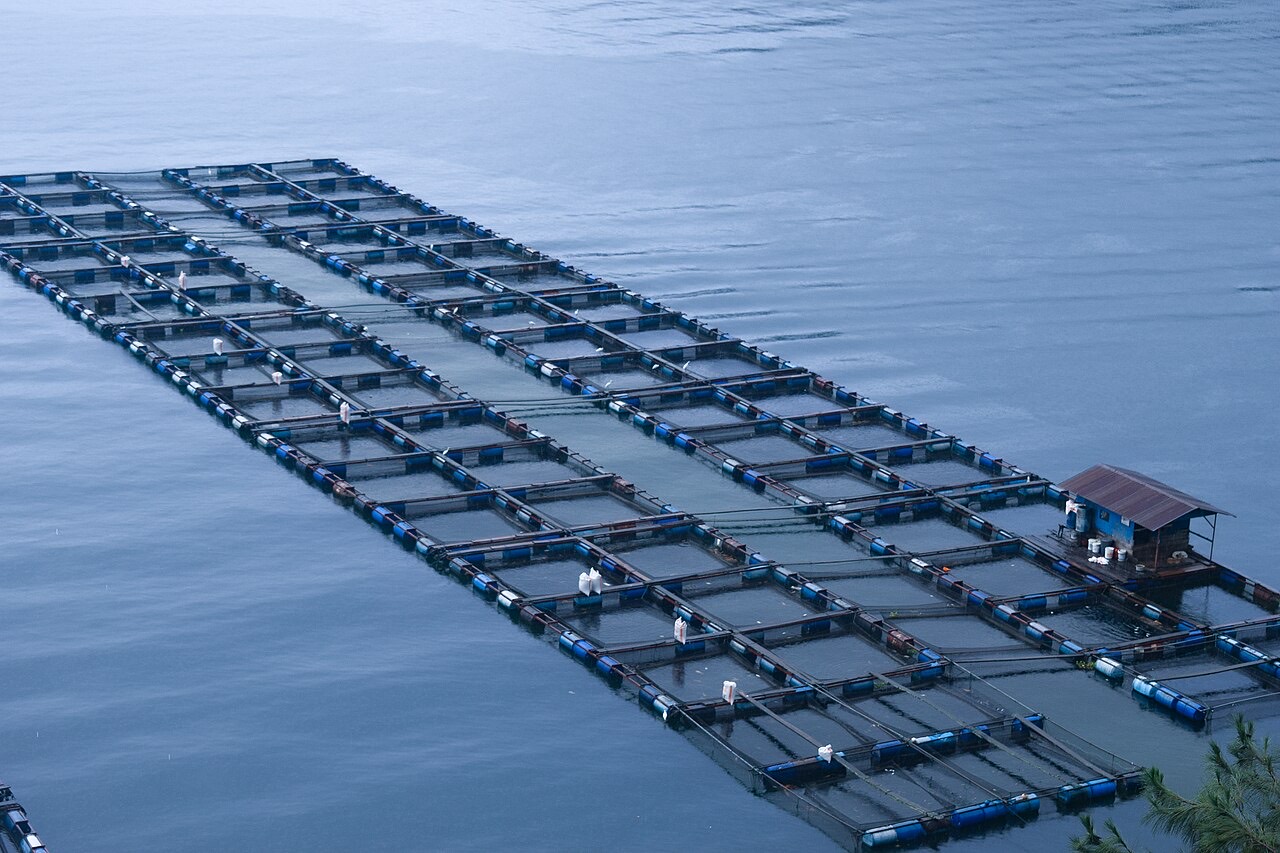
Farmed fish encompass a wide range of finfish species — including tilapia, various carps, catfish, and salmon, among many others — raised under managed conditions rather than caught from wild populations. Species selection and system design depend heavily on local water resources, climate, and market demand, so aquaculture looks very different in a small earthen pond raising tilapia than in a marine cage system raising salmon.
Unlike terrestrial livestock, farmed fish are entirely dependent on the quality of the water they live in, which must supply oxygen and remove waste in addition to whatever role feed plays in nutrition. This makes water-quality management as central to aquaculture as feeding and health management are to other livestock sectors.
Overview
Aquaculture spans an enormous range of species and systems, from extensive pond polyculture integrated with crop or livestock farming, to intensive cage culture in open water, to highly controlled recirculating systems. The choice of species and system depends on water availability and quality, climate, capital investment, and target markets.
Species and systems
- Pond culture
- Earthen or lined ponds, often used for species such as tilapia and carp, sometimes integrated with crop or livestock production.
- Cage and pen culture
- Net enclosures in lakes, rivers, or coastal waters, used for species including salmon and some tilapia and carp production.
- Recirculating aquaculture systems (RAS)
- Land-based tanks that filter and reuse water, allowing production with reduced water use and greater environmental control regardless of local climate.
Species and system choice is tied closely to local water resources, climate, and infrastructure; there is no single standard aquaculture system used worldwide.
Feeding and water quality
Farmed fish are fed formulated diets, natural pond productivity (plankton and other organisms), or a combination, depending on species and system. Herbivorous and omnivorous species such as tilapia and carp can make substantial use of plant-based feed ingredients and natural pond food webs, while carnivorous species such as salmon require higher levels of protein and fish oil or alternative concentrated ingredients. Regardless of feed type, maintaining adequate dissolved oxygen, appropriate temperature, and low levels of ammonia and other wastes is essential to fish health and growth.
Health and welfare
Fish health and welfare depend on water quality, stocking density, biosecurity to limit the introduction and spread of pathogens, and appropriate handling during grading, transport, and harvest.
Production context
Aquaculture has grown rapidly as a source of animal protein and now supplies a large share of the fish consumed globally, alongside wild capture fisheries. Integrated systems that combine fish culture with crop or livestock production, such as rice–fish farming, can make efficient use of land, water, and nutrients, while feed sourcing, effluent management, and disease control remain key considerations that vary by system and region.
Relationships
Evidence-backed connections in the knowledge graph.
Commonly raised in
Related topics
Scope & limitations
Geographic scope: Global overview; species, systems, regulations, and water-resource contexts vary widely by region.
Climate context: Water temperature strongly affects farmed-fish species selection, growth rates, and system design, from cold-water salmon culture to warm-water tilapia and carp culture.
- This is a general, species-general overview of farmed finfish, not species-specific husbandry or system-design guidance.
- Health, treatment, and environmental-compliance practices are governed by local and international regulation and are not detailed here.
Sources
This article draws on the following authoritative sources. See our sources & methodology for how they are selected.
- [1]FAO — Food and Agriculture Organization (opens in a new tab)Authoritative
Food and Agriculture Organization of the United Nations (FAO)
Cited for: Global aquaculture production and systems
- Type:
- Intergovernmental organization
- Jurisdiction:
- Global
- Accessed:
- 2026-07-12
- [2]WOAH — World Organisation for Animal Health (opens in a new tab)Authoritative
World Organisation for Animal Health (WOAH)
Cited for: Aquatic animal health standards
- Type:
- Intergovernmental organization
- Jurisdiction:
- Global
- Accessed:
- 2026-07-12
Cited for: Aquaculture research and integrated systems
- Type:
- Research institute
- Jurisdiction:
- Global
- Accessed:
- 2026-07-12
- [4]USDA ARS — Agricultural Research Service (opens in a new tab)Authoritative
USDA Agricultural Research Service (ARS)
Cited for: Aquaculture feed and production research
- Type:
- Government agency
- Jurisdiction:
- United States
- Accessed:
- 2026-07-12