Crop · Specialty crop
Aloe vera
Aloe vera (syn. Aloe barbadensis)
Also known as: Aloe barbadensis
Aloe vera is a drought-tolerant perennial succulent grown commercially for the gel and latex contained in its thick leaves, used as a raw material by the cosmetic, personal-care, and food and beverage industries.
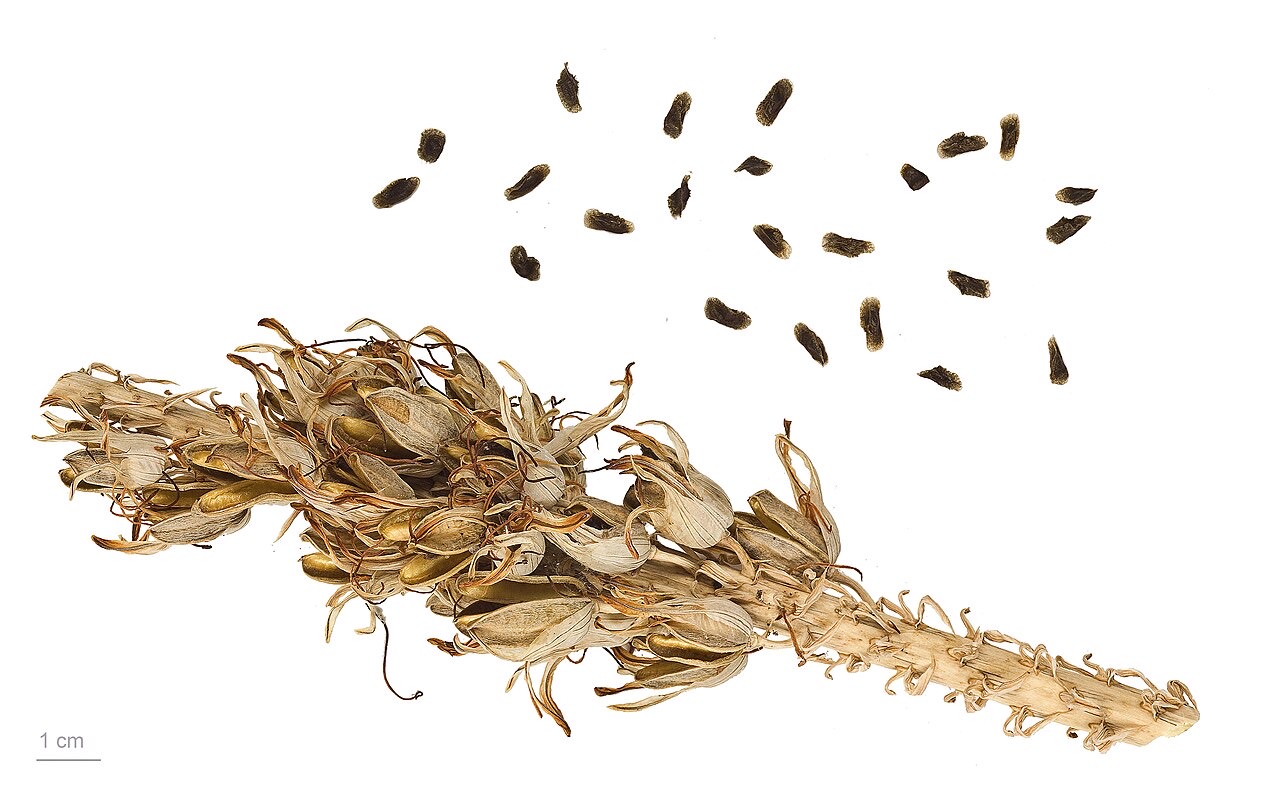
Aloe vera is a rosette-forming succulent with thick, fleshy leaves that store water, an adaptation to its native semi-arid habitat. Commercial cultivation harvests these leaves for processing into gel, powder, and extract products supplied to industry.
This entry describes aloe vera as an agricultural crop — its botany, climate and soil requirements, cultivation, and role as a raw-material crop for cosmetic, personal-care, and food-industry manufacturing. Any medicinal or health-efficacy claims associated with aloe vera are outside the scope of this reference and are subject to separate regulatory requirements.
Overview
Aloe vera is grown commercially in warm, dry to semi-arid regions worldwide, as a field crop or, in cooler climates, under protected cultivation, supplying leaves for processing into gel, powder, and extract ingredients.
Because the plant tolerates drought and poor soils well, it is sometimes grown on marginal land less suited to conventional food crops, though yields and leaf quality respond to good management and reliable, if modest, water supply.
Botanical classification
- Family
- Asphodelaceae
- Genus and species
- Aloe vera
- Growth habit
- Stemless or short-stemmed perennial succulent, forming a rosette of thick, water-storing leaves and propagating readily by offsets
- Harvested tissue
- Mature leaves, processed for the clear inner gel (mucilage) and the yellow latex found beneath the leaf rind
Origin and distribution
Aloe vera is believed to have originated on the Arabian Peninsula or in nearby parts of Africa, adapted to arid and semi-arid environments, and has been cultivated and traded for centuries before spreading through introduction and naturalization to warm regions worldwide.
Commercial production today spans arid and semi-arid regions across the Americas, Asia, Africa, and parts of Europe.
Climate requirements
Aloe vera is well adapted to hot, dry, and semi-arid climates, tolerating extended periods of low rainfall and high temperatures better than most cultivated crops, reflecting its succulent, water-storing leaf structure.
The plant has limited cold and frost tolerance, and prolonged exposure to freezing temperatures can damage or kill leaves and, in severe cases, the whole plant.
Soil requirements
Aloe vera requires very well-drained soils, such as sandy and chalky soils, reflecting its native habitat on rocky and sandy semi-arid terrain; it tolerates alkaline and low-fertility soils better than many crops.
Establishment and crop management
Plantings are established from offsets (basal shoots) separated from established plants, set into raised beds or ridges in regions with heavier soils to further improve drainage.
- Propagation from healthy offsets taken from established plants
- Raised bed or ridge planting in heavier soils to maximize drainage
- Wide spacing to allow rosette expansion and airflow around the crown
- Minimal-input management reflecting the crop’s tolerance of low fertility and drought
Nutrient considerations
Aloe vera has modest nutrient requirements compared with most cultivated crops, consistent with its adaptation to low-fertility semi-arid soils; potassium and nitrogen support leaf growth and gel yield where soils are limiting.
Water and irrigation
Aloe vera is often grown with minimal irrigation given its drought tolerance, though periodic watering during establishment and dry periods supports leaf size and gel yield in commercial production.
Because the plant is highly sensitive to waterlogging, irrigation is applied sparingly and infrequently relative to most horticultural crops, with drainage prioritized over frequent watering.
Common diseases and pests
Anthracnose can cause leaf spotting and lesions under humid conditions, and root and crown rot are the most significant disease risks, typically triggered by excess soil moisture. Scale insects and mealybugs are common pests that colonize leaf bases and can weaken plants if left unmanaged.
Management relies on well-drained sites and careful irrigation to limit disease pressure, monitoring, and — where justified — locally authorized control products applied according to their labels.
Harvest
Outer, mature leaves are cut by hand at intervals as they reach suitable size, allowing the rosette to continue producing new leaves for repeated harvest over the life of the planting.
Uses
- Leaf gel processed into raw material for cosmetic and personal-care products
- Leaf gel and extracts used as ingredients in some food and beverage products
- Leaf latex processed for industrial and specialty applications
- Ornamental and landscape use in arid and semi-arid regions
Botanical identity
Species- Accepted name
- Aloe vera
- Family
- Asphodelaceae
- Genus
- Aloe
- Harvested part
- leaf
- Agricultural use
- industrial raw material
- Crop group
- Industrial crops
What the authorities say
- Plants of the World Online
- Aloe vera
- The name Aloe vera is a homonym: more than one published name matches it exactly, and they resolve to different taxa. The accepted one was selected; Aloe vera Mill..
Botanical identity here is what the consulted taxonomic authorities publish, on the date they were read. Where authorities disagree, both readings are shown rather than one being chosen silently.
What AgricultureID holds for this crop
- 2 soil references
- 2 climate references
Not held
- No crop calendar records — source exists not mapped
- No published cultivars — not researched
- No official variety registrations — source exists not mapped
- No verified extension resources — source exists not ingested
- No pests and diseases naming this crop as a host — source exists not ingested
- No farm economics observations — source exists not mapped
- No market price series — source exists not mapped
- No related crops — not applicable
An absence here means this corpus holds no such record, not that none exists.
How to read figures on this page
Production, area and trade figures for any crop change from season to season and are compiled by FAO and by national agricultural statistics agencies. Take current numbers from those primary sources, dated to the period you mean, rather than from a secondary summary — including this one.
Crop water requirements are estimated from reference evapotranspiration and local climate data, following methods published by FAO and national agricultural agencies. A requirement quoted without the reference method and the local climate behind it is not a number that can be applied to a field.
Tools for this
Each tool shows its formula, constants and sources, and starts empty — nothing is filled in from this page.
- Seed-rate calculator
Convert a target plant stand into a seed rate, allowing for germination and establishment.
- Row spacing calculator
Work out in-row spacing and plants per metre of row for a target density.
- Production, area and yield calculator
Relate a harvested area and a yield to a production total, in either direction.
- Growing degree-days calculator
Accumulate heat units against a base temperature.
Relationships
Evidence-backed connections in the knowledge graph.
Susceptible to
Suitable soils
Climate sensitivity
Farming systems
Related topics
Scope & limitations
Geographic scope: Global overview of production across arid and semi-arid regions on several continents.
Climate context: Hot, dry-adapted succulent with strong drought and heat tolerance; limited cold and frost tolerance.
- This entry addresses aloe vera solely as an agricultural crop grown for cosmetic-, personal-care-, and food-industry raw material; medicinal or health-efficacy claims are outside its scope and are subject to separate regulatory requirements.
- Production statistics are less comprehensively tracked globally than for major food crops and vary by regional data source.
Sources
This article draws on the following authoritative sources. See our sources & methodology for how they are selected.
- [1]FAO — Food and Agriculture Organization (opens in a new tab)Authoritative
Food and Agriculture Organization of the United Nations (FAO)
Cited for: Global aloe vera cultivation context
- Type:
- Intergovernmental organization
- Jurisdiction:
- Global
- Accessed:
- 2026-07-12
- [2]FAOSTAT — FAO statistical database (opens in a new tab)Authoritative
Food and Agriculture Organization of the United Nations (FAO)
Cited for: Production and area statistics where tracked
- Type:
- Intergovernmental organization
- Jurisdiction:
- Global
- Accessed:
- 2026-07-12
- Authoritative
Cited for: Classification and nomenclature
- Type:
- Reference database
- Jurisdiction:
- United States
- Accessed:
- 2026-07-12
- [4]CABI Digital Library — Crop Protection Compendium (opens in a new tab)High
CABI (Centre for Agriculture and Bioscience International)
Cited for: Aloe vera disease and pest compendium data
- Type:
- Reference database
- Jurisdiction:
- Global
- Accessed:
- 2026-07-12