Fertilizer · Fertilizer
Agricultural lime
Also known as: Aglime, Ground limestone, Calcitic or dolomitic lime
Agricultural lime is finely ground limestone applied to raise soil pH and supply calcium, and magnesium if dolomitic, functioning primarily as a soil amendment rather than a nutrient fertilizer in the conventional sense.
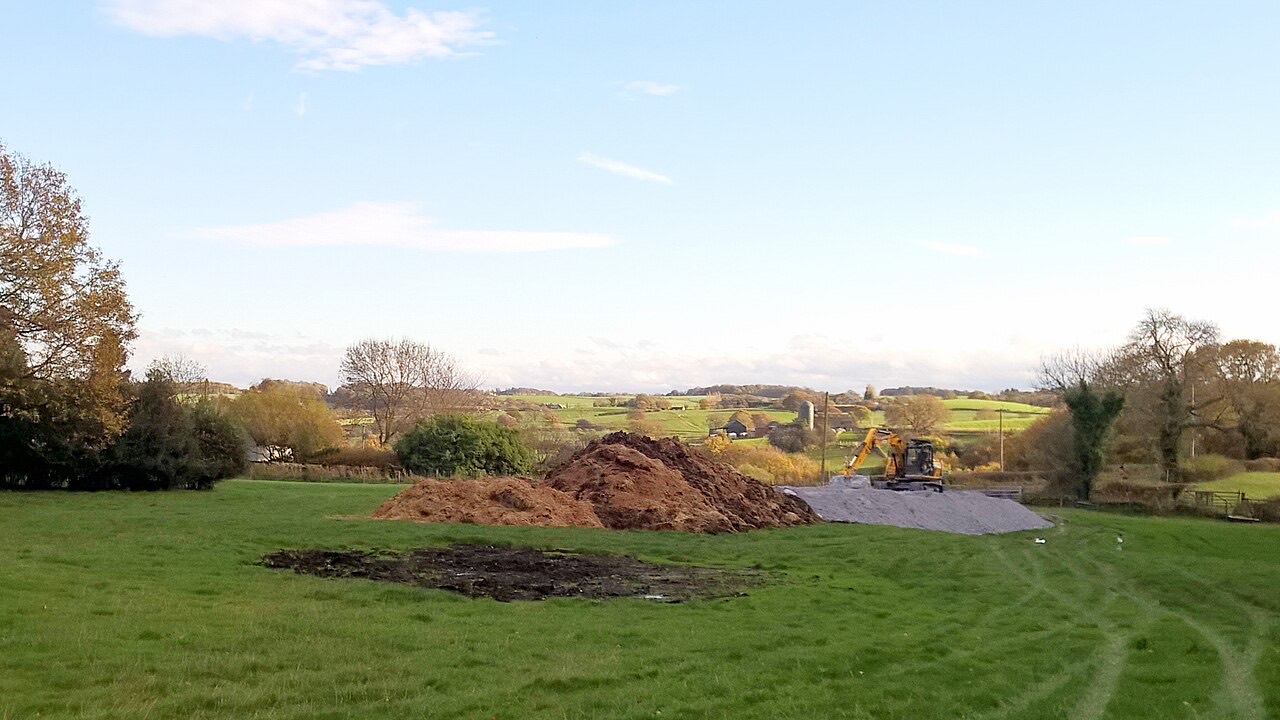
Agricultural lime is ground calcitic limestone (predominantly calcium carbonate) or dolomitic limestone (containing both calcium and magnesium carbonate), applied to acidic soils to neutralise excess acidity and raise soil pH toward a range better suited to a planned crop.
Because its primary agronomic role is neutralising soil acidity rather than delivering a concentrated dose of an essential nutrient, agricultural lime is generally regarded as a soil amendment rather than a fertilizer in the strict sense, even though it does supply calcium, and magnesium in the dolomitic form.
Composition and analysis
Agricultural lime is produced by crushing and grinding limestone rock. Calcitic lime is predominantly calcium carbonate, while dolomitic lime contains both calcium and magnesium carbonate in varying proportions depending on the source rock. Its neutralising value and fineness of grind both affect how effectively and quickly it reacts in soil.
- Calcitic lime
- Predominantly calcium carbonate (CaCO₃)
- Dolomitic lime
- Calcium and magnesium carbonate (CaMg(CO₃)₂), source rock-dependent
- Neutralising value
- A laboratory measure of a lime product’s acid-neutralising capacity relative to pure calcium carbonate
- Fineness of grind
- Finer particles react faster; coarser particles react more slowly over a longer period
Nutrients supplied
Agricultural lime supplies calcium, and magnesium in dolomitic forms, though these releases occur gradually as the carbonate reacts with soil acidity rather than as an immediately soluble nutrient dose. Its main agronomic function is neutralising acidity rather than supplying nutrients on a comparable timescale to soluble fertilizers.
- Calcium is released as the carbonate reacts with soil acidity
- Dolomitic lime additionally supplies magnesium over the same timeframe
- Not a source of nitrogen, phosphorus, or potassium
Use and benefits
Agricultural lime is applied to raise the pH of acidic soils toward a range that improves nutrient availability and reduces aluminum and manganese toxicity risk, benefiting acid-sensitive crops such as alfalfa and soybean, and is chosen as calcitic or dolomitic depending on whether soil testing indicates a magnesium need alongside the pH correction.
- Raises soil pH, improving availability of several macro- and micronutrients on acidic soils
- Reduces aluminum and manganese toxicity risk on strongly acidic soils
- Dolomitic lime is chosen where soil testing also indicates a magnesium need
Application principles
Lime rates are generally determined from a soil test that accounts for both the current pH and the soil’s buffering capacity, since two soils at the same pH can require different lime rates depending on clay and organic matter content. Because lime reacts slowly, applications are typically made well ahead of the crop that needs the corrected pH.
Environmental considerations
Appropriately applied lime generally has limited direct environmental downside beyond the resources used in mining, grinding, and transport, though over-liming can push pH excessively high and reduce availability of iron, zinc, manganese, and phosphorus in the same way that naturally alkaline soils can.
Official extension guidance
1 resource indexed from public extension publishers. Each was written for a particular place; read it at the source.
Factsheet published by Ohio State University Extension for Ohio. It addresses lime. The source is organised around “Comparing Lime Products”, “Determining Application Rate and Cost” and “Utilizing Lime Labels”.
Ohio State University Extension · Crop establishment, Nutrient management, Farm management · publisher states no date; reachable 2026-08-27
These are pointers to guidance published by others. Each was written for a particular place and season and is revised by its publisher; read it at the source, and check it applies where you farm.
Tools for this
Each tool shows its formula, constants and sources, and starts empty — nothing is filled in from this page.
- Nutrient rate converter
Convert between a product rate and the nutrient rate it supplies, at a grade you enter.
- Fertilizer nutrient calculator
Convert a fertilizer mass and grade to nutrient mass, including P₂O₅ to P and K₂O to K.
Relationships
Evidence-backed connections in the knowledge graph.
Scope & limitations
Geographic scope: Global overview of agricultural lime as a liming material; need and rates depend heavily on regional soil acidity, which varies with rainfall and parent material.
Climate context: Natural soil acidification from rainfall and leaching drives much of the ongoing demand for liming in high-rainfall regions.
- This entry does not recommend a universal target pH or lime rate; both are soil-, crop-, and region-specific.
- Lime reaction speed depends on particle fineness and soil conditions and is not quantified here.
- Agricultural lime is treated here as a soil amendment rather than a conventional nutrient fertilizer, consistent with its primary agronomic role.
Sources
This article draws on the following authoritative sources. See our sources & methodology for how they are selected.
- Authoritative
Cited for: Liming materials and soil acidity management
- Type:
- Intergovernmental organization
- Jurisdiction:
- Global
- Accessed:
- 2026-07-12
- [2]USDA NRCS — Natural Resources Conservation Service (opens in a new tab)Authoritative
USDA Natural Resources Conservation Service (NRCS)
Cited for: Agricultural lime application and soil pH management
- Type:
- Government agency
- Jurisdiction:
- United States
- Accessed:
- 2026-07-12
- [3]Cornell CALS — Plant pathology and crop resources (opens in a new tab)High
Cornell University College of Agriculture and Life Sciences
Cited for: Lime requirement testing and buffering capacity
- Type:
- University extension service
- Jurisdiction:
- United States (New York)
- Accessed:
- 2026-07-12
- [4]AHDB — Agriculture and Horticulture Development Board (opens in a new tab)High
Agriculture and Horticulture Development Board (AHDB)
Cited for: Liming guidance for arable and forage crops
- Type:
- Government agency
- Jurisdiction:
- United Kingdom
- Accessed:
- 2026-07-12