Fertilizer · Fertilizer
Gypsum
Also known as: Calcium sulfate dihydrate
Gypsum is a naturally occurring or industrially recovered calcium sulfate mineral used both as a nutrient source, supplying calcium and sulfur without changing soil pH, and as a soil amendment to reclaim sodic soils and improve aggregate stability.
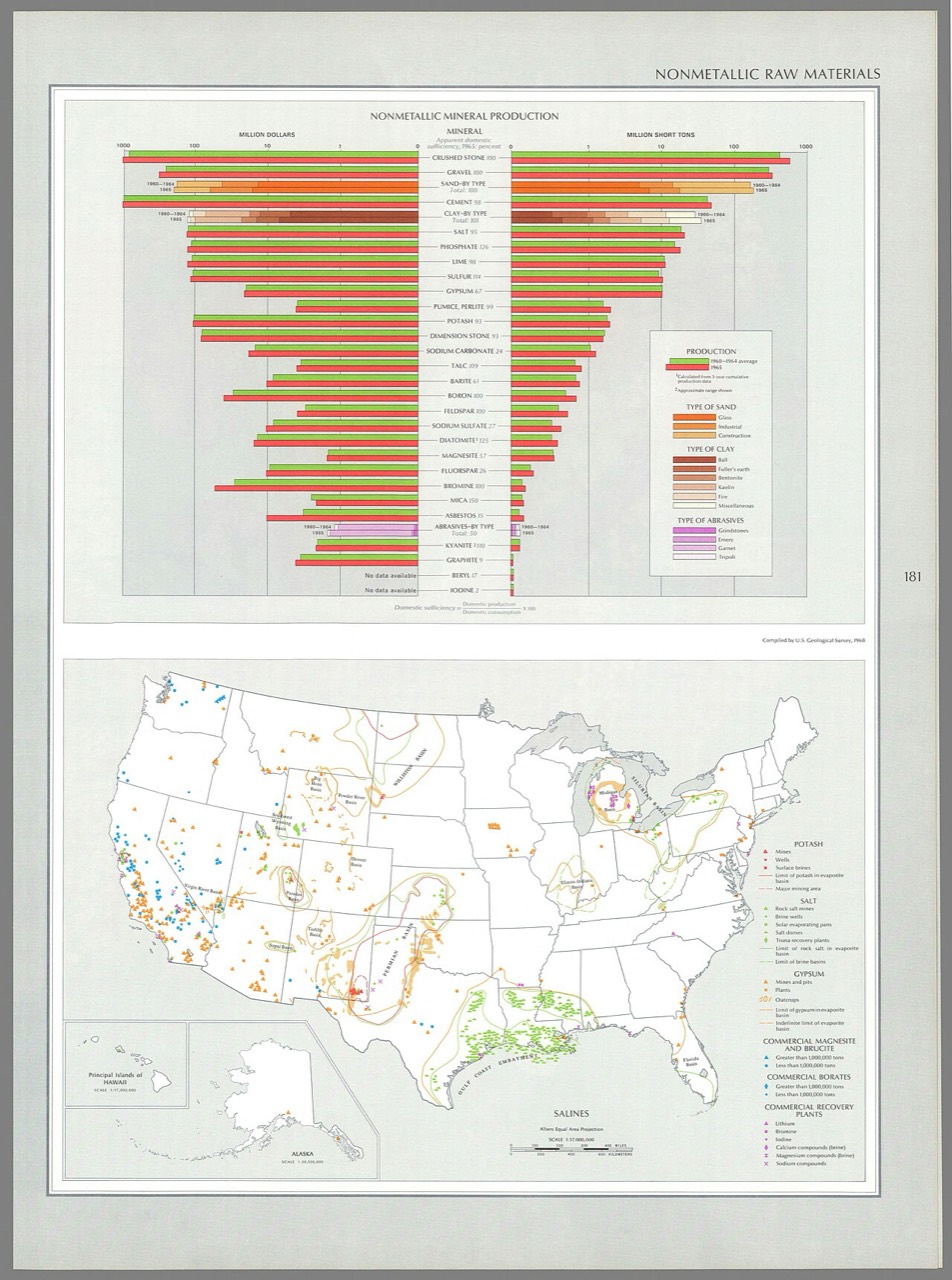
Gypsum (calcium sulfate dihydrate, CaSO₄·2H₂O) is mined from natural deposits or recovered as a by-product of certain industrial processes, then ground for agricultural use. It typically supplies around 23% calcium and 18% sulfur.
Unlike agricultural lime, gypsum does not neutralise soil acidity, because sulfate is not a base in the way carbonate is. This distinction is central to how gypsum is used: it is chosen specifically when calcium or sulfur is needed without raising soil pH, or when its calcium is used to displace exchangeable sodium in sodic soils.
Composition and analysis
Gypsum is calcium sulfate dihydrate, sourced from natural mineral deposits or recovered as a by-product of flue-gas desulfurisation or certain acid manufacturing processes. Agricultural gypsum products typically guarantee around 23% calcium and 18% sulfur.
- Mineral formula
- CaSO₄·2H₂O
- Calcium content
- Approximately 23% elemental calcium
- Sulfur content
- Approximately 18% elemental sulfur, as sulfate
- Effect on soil pH
- Negligible; sulfate is not a neutralising base like carbonate
Nutrients supplied
Gypsum supplies calcium and sulfate-sulfur in slightly soluble form, both immediately usable nutrients, while also acting on soil physical and chemical properties through the calcium ion’s effect on clay flocculation and sodium displacement.
- Calcium and sulfur are both supplied without a liming effect
- Slightly soluble, releasing nutrients gradually over time
- Calcium ions can displace exchangeable sodium on soil cation exchange sites
Use and benefits
Beyond supplying calcium and sulfur to crops such as groundnut, where calcium reaching the developing pod is a specific consideration, gypsum is widely used as a soil amendment to reclaim sodic soils, where displaced sodium is leached away, and to improve aggregate stability and reduce crusting on some soils.
- Corrects calcium or sulfur deficiency without altering soil pH
- Used to reclaim sodic soils by displacing exchangeable sodium
- Can improve aggregate stability and reduce surface crusting on some soils
Application principles
Where gypsum is used for sodic-soil reclamation, effective use generally requires adequate leaching water to carry displaced sodium below the root zone, and rates are typically based on a soil test of exchangeable sodium rather than a fixed figure.
Environmental considerations
Because gypsum does not affect soil pH, it can be used alongside pH-management programs without interference. Its use in sodic-soil reclamation depends on adequate drainage to carry leached sodium away; without sufficient drainage, reclamation is less effective.
Official extension guidance
1 resource indexed from public extension publishers. Each was written for a particular place; read it at the source.
Manure Storage Design and Safety Considerations with Gypsum Bedding
Factsheet published by Penn State Extension for Pennsylvania. It addresses gypsum. The source is organised around “Under-barn manure Storage”, “Operator-position during agitation” and “Wind Direction”.
Penn State Extension · Nutrient management, Storage · publisher states 2026-03-06
These are pointers to guidance published by others. Each was written for a particular place and season and is revised by its publisher; read it at the source, and check it applies where you farm.
Tools for this
Each tool shows its formula, constants and sources, and starts empty — nothing is filled in from this page.
- Nutrient rate converter
Convert between a product rate and the nutrient rate it supplies, at a grade you enter.
- Fertilizer nutrient calculator
Convert a fertilizer mass and grade to nutrient mass, including P₂O₅ to P and K₂O to K.
Relationships
Evidence-backed connections in the knowledge graph.
Scope & limitations
Geographic scope: Global overview of gypsum as a calcium and sulfur amendment, with particular relevance to sodic-soil reclamation in arid and semi-arid irrigated regions.
Climate context: Sodic-soil reclamation with gypsum depends on sufficient leaching water, making effectiveness closely tied to local rainfall or irrigation supply.
- This entry describes composition and general behaviour; it is not an application rate recommendation for any crop, soil, or region.
- Effectiveness for sodic-soil reclamation depends on adequate drainage and leaching water, which are not present everywhere.
- Gypsum sourced as an industrial by-product can vary in purity; local guidance should be consulted on suitable sources.
Sources
This article draws on the following authoritative sources. See our sources & methodology for how they are selected.
- [1]FAO — Food and Agriculture Organization (opens in a new tab)Authoritative
Food and Agriculture Organization of the United Nations (FAO)
Cited for: Gypsum use in soil fertility and reclamation
- Type:
- Intergovernmental organization
- Jurisdiction:
- Global
- Accessed:
- 2026-07-12
- [2]IFA — International Fertilizer Association (opens in a new tab)Moderate
International Fertilizer Association (IFA)
Cited for: Gypsum product characteristics
- Type:
- Standards body
- Jurisdiction:
- Global
- Accessed:
- 2026-07-12
- [3]USDA NRCS — Natural Resources Conservation Service (opens in a new tab)Authoritative
USDA Natural Resources Conservation Service (NRCS)
Cited for: Gypsum and sodic-soil reclamation practice
- Type:
- Government agency
- Jurisdiction:
- United States
- Accessed:
- 2026-07-12
- [4]Cornell CALS — Plant pathology and crop resources (opens in a new tab)High
Cornell University College of Agriculture and Life Sciences
Cited for: Calcium and sulfur amendment guidance
- Type:
- University extension service
- Jurisdiction:
- United States (New York)
- Accessed:
- 2026-07-12