Pest · Insect pest
Armyworms
Larvae of Spodoptera and Mythimna species (order Lepidoptera, family Noctuidae), distinct from the related fall armyworm (Spodoptera frugiperda)
Also known as: African armyworm, Oriental armyworm, Common armyworm
Armyworms are caterpillars, chiefly Spodoptera and Mythimna species, named for their habit of moving en masse across fields when local food is exhausted, causing rapid, severe defoliation in maize, rice, and sorghum.
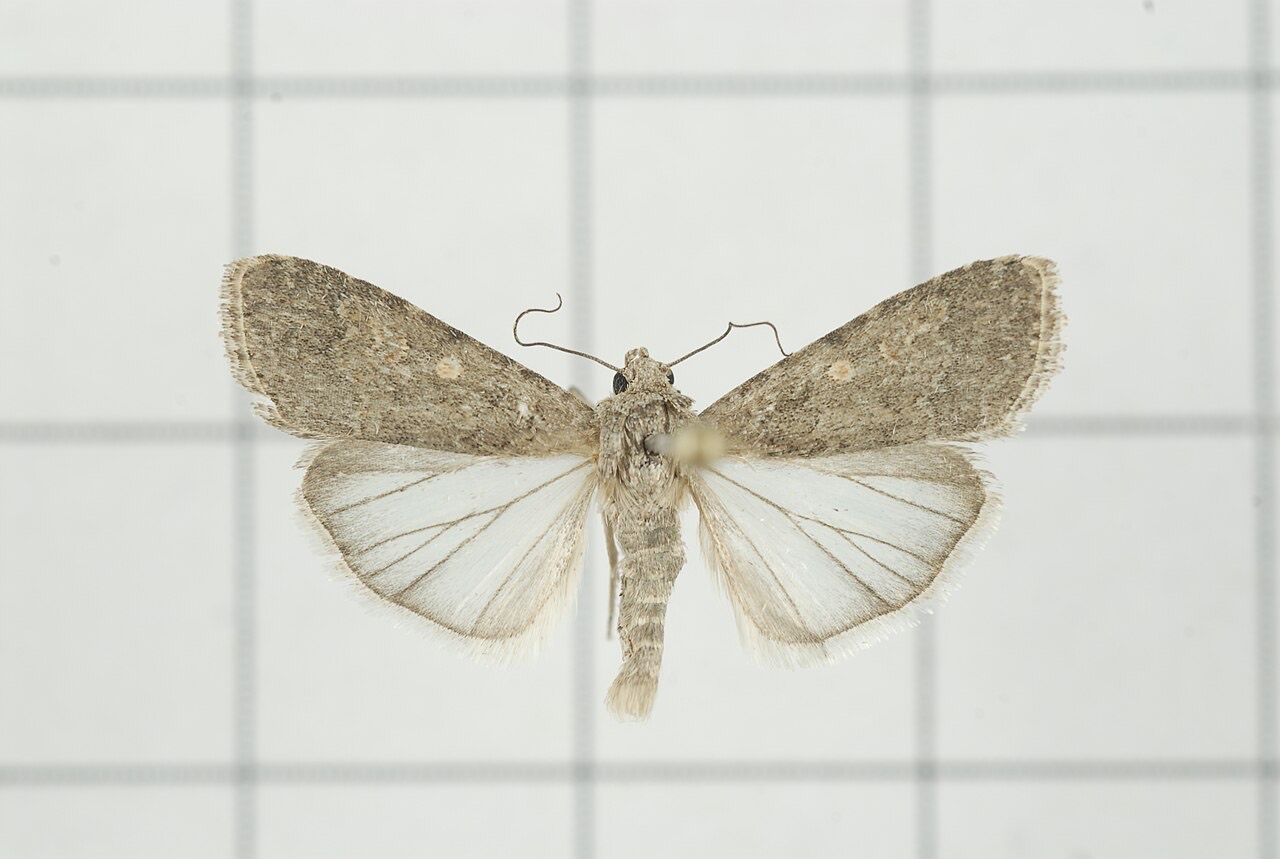
Armyworms are a group of caterpillars, distinct from but related to the fall armyworm, that share a striking behaviour: when populations are dense and local vegetation is stripped, larvae move together across the ground in large numbers in search of new food, sometimes crossing entire fields in a short time.
Outbreaks can develop quickly from moths that migrate in on weather systems, and because larvae feed mostly at night and hide in soil, litter, or plant bases during the day, damage is often first noticed only after substantial defoliation has already occurred.
Identification
Larvae are typically smooth, striped caterpillars ranging from green to brown or nearly black, reaching three to four centimetres at maturity, often with a pale stripe along each side. Adults are drab, night-flying moths rarely noticed except in large numbers after migratory flights.
The clearest field sign is rapid, extensive defoliation appearing over a short period, often with larvae found hiding under soil clods, in leaf litter, or at the base of plants during the day.
Biology and life cycle
Moths often arrive on wind systems associated with rainfall and lay egg masses on leaves. Larvae pass through several instars, feeding mostly at night, with the final instars responsible for the bulk of defoliation before larvae drop to the soil to pupate. Several generations can occur in a season under favourable conditions.
Damage and hosts
Dense larval populations can strip leaves from plants within days, and where food is exhausted, larvae move en masse to adjacent, still-green vegetation, extending damage across a field or between fields. Seed heads and stems may also be attacked once foliage is depleted.
Host crops include maize, rice, and sorghum, along with pasture grasses and other cereals.
Monitoring
Pheromone traps for adult moths, combined with field scouting for egg masses and young larvae, especially after rainfall events associated with moth migration, support early detection before defoliation becomes severe.
Management principles
Because armyworm populations can escalate quickly, management relies on early detection and rapid response within an integrated approach.
- Scout regularly, particularly after rain events linked to moth migration
- Conserve parasitoid wasps and flies, predatory bugs, and other natural enemies
- Use trenches or barriers to slow mass larval movement between fields where outbreaks occur
- Coordinate monitoring at a landscape scale, since outbreaks can affect neighbouring fields quickly
Relationships
Evidence-backed connections in the knowledge graph.
Risk increases under
Scope & limitations
Geographic scope: Found across cereal- and pasture-growing regions in Africa, Asia, and beyond; the dominant species, migration patterns, and outbreak frequency vary by region.
Climate context: Moth migration and egg-laying are often linked to rainfall events, and warm conditions afterward support rapid larval development and outbreak build-up.
- This entry covers armyworm species other than the fall armyworm, which is treated separately given its distinct global spread and impact.
- Thresholds and control-product recommendations are jurisdiction-specific and are not provided here.
Sources
This article draws on the following authoritative sources. See our sources & methodology for how they are selected.
- [1]CABI Digital Library — Crop Protection Compendium (opens in a new tab)High
CABI (Centre for Agriculture and Bioscience International)
Cited for: Biology, hosts, and distribution
- Type:
- Reference database
- Jurisdiction:
- Global
- Accessed:
- 2026-07-12
- [2]FAO — Food and Agriculture Organization (opens in a new tab)Authoritative
Food and Agriculture Organization of the United Nations (FAO)
Cited for: Outbreak monitoring and management context
- Type:
- Intergovernmental organization
- Jurisdiction:
- Global
- Accessed:
- 2026-07-12
- [3]CIMMYT — International Maize and Wheat Improvement Center (opens in a new tab)High
International Maize and Wheat Improvement Center (CIMMYT)
Cited for: Cereal pest-management research context
- Type:
- Research institute
- Jurisdiction:
- Global
- Accessed:
- 2026-07-12
- [4]USDA APHIS — Animal and Plant Health Inspection Service (opens in a new tab)Authoritative
USDA Animal and Plant Health Inspection Service (APHIS)
Cited for: Regulatory and distribution context
- Type:
- Government agency
- Jurisdiction:
- United States
- Accessed:
- 2026-07-12