Crop · Tree fruit crop
Lychee
Litchi chinensis
Also known as: Litchi
Lychee is an evergreen subtropical tree grown for its sweet, aromatic fruit. Unusually among subtropical trees, it has a genuine winter cool-period requirement to induce flowering, and its fruit is notable for rapid post-harvest quality decline.
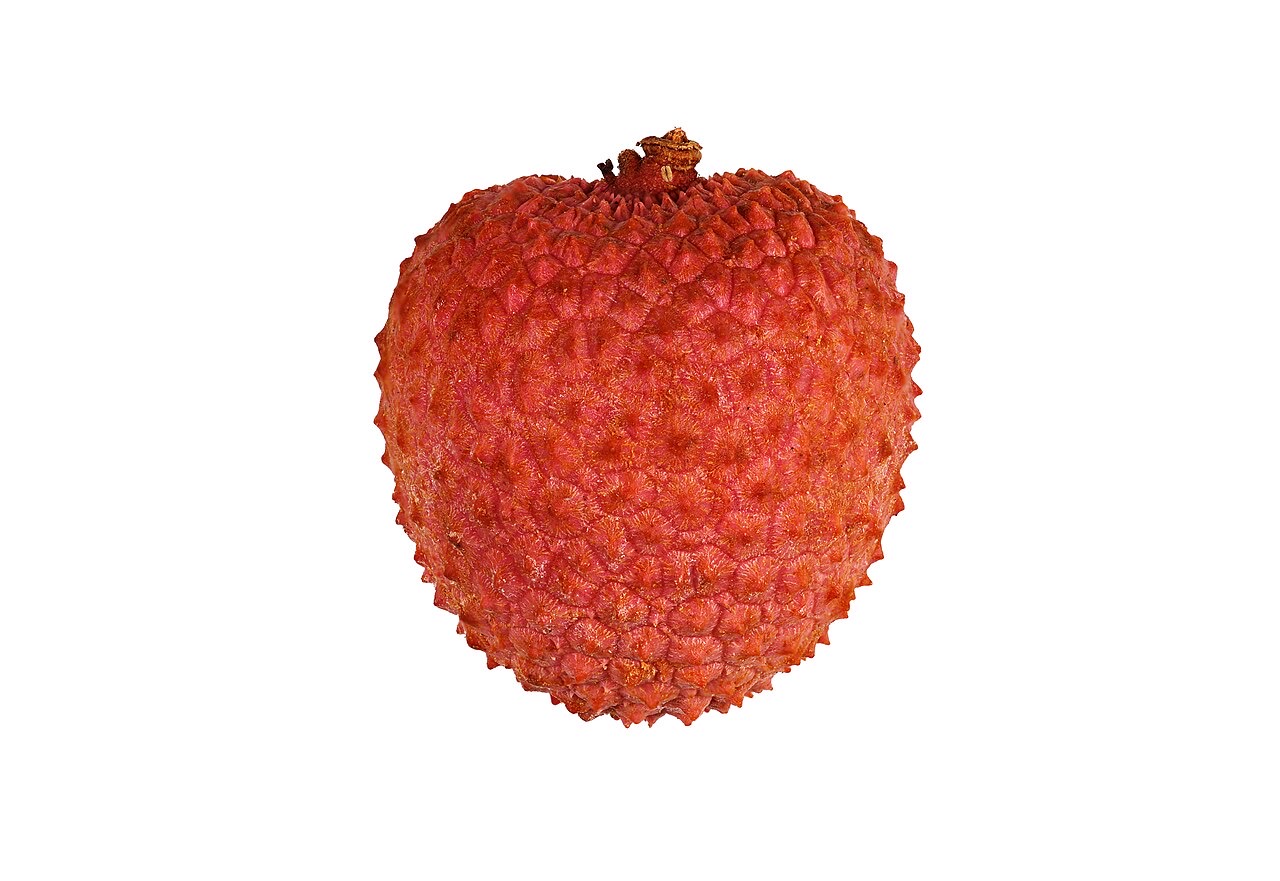
Lychee (Litchi chinensis) is a long-lived evergreen tree grown across subtropical and tropical-margin regions for its distinctive fresh fruit, valued for its fragrant, sweet flesh beneath a rough, colorful skin.
Lychee is notable among subtropical fruit trees for having a genuine, moderate requirement for a cool period, typically a run of cool nights in the weeks before bloom, in order to induce flowering. This places it in an unusual climatic niche: it needs warmth for general growth and fruiting, yet still depends on a cool induction period, which constrains where it can be grown reliably.
Overview
Lychee is grown as a long-lived evergreen tree in subtropical and tropical-margin climates, with orchards typically established from grafted trees to maintain cultivar characteristics such as fruit size, flavor, and seed size.
The crop is prized for its fresh fruit quality but presents distinct agronomic challenges, including its cool-period flowering requirement and the fruit’s tendency toward rapid postharvest skin browning, both of which shape production and marketing decisions.
Botanical classification
- Family
- Sapindaceae (soapberry family)
- Genus
- Litchi
- Principal species
- Litchi chinensis
- Growth habit
- Evergreen tree, commercially propagated by grafting, budding, or air-layering to maintain cultivar trueness
Origin and distribution
Lychee originates from southern China and neighboring parts of Southeast Asia, where it has been cultivated for a very long history, and has since spread to other subtropical and tropical-margin regions worldwide.
Climate requirements
Lychee requires warm temperatures for general vegetative growth and fruit development, but unusually for a warm-climate tree, it also has a genuine, moderate requirement for a cool period, typically a run of cool nights, in the weeks before bloom to induce flower initiation.
This combination means lychee is best suited to subtropical and tropical-margin zones that experience a distinct cool season without severe frost, since insufficient cool induction can result in poor flowering, while damaging cold can injure the tree itself.
Soil requirements
Lychee performs best on deep, well-drained loam and sandy soils. Good drainage is important, as the crop has poor tolerance of waterlogged conditions, which can lead to root stress and decline.
Orchard establishment and management
Establishing a lychee orchard begins with selecting cultivars suited to the local climate, particularly the reliability of a sufficient cool induction period for flowering, along with propagation material produced by grafting, budding, or air-layering to ensure trueness to type.
- Cultivar selection matched to local cool-season reliability for flower induction
- Propagation by grafting, budding, or air-layering to maintain cultivar characteristics
- Tree spacing and canopy management suited to the growing region and equipment
- Long-term orchard floor and canopy management across many productive years
Nutrient considerations
Nitrogen supports vegetative growth but must be timed carefully, since excessive vegetative flush near the flowering period can compete with flower induction. Potassium supports fruit size and quality, and boron is a micronutrient commonly monitored in lychee for its role in flowering and fruit set.
Water and irrigation
Lychee has some drought tolerance once established but benefits from consistent moisture during fruit development to support fruit size and reduce fruit cracking. Drip irrigation is commonly used in commercial plantings to apply water efficiently to the root zone.
Some growers manage soil moisture deliberately around the flower-induction period, reflecting the interaction between water status and the tree’s cool-period flowering physiology; specific practices are highly region- and cultivar-dependent.
Common diseases and pests
Anthracnose can affect lychee leaves, flowers, and fruit, particularly under warm, humid conditions, while root rot can affect trees on poorly drained sites.
The litchi stink bug (Tessaratoma papillosa) is a genuinely major, well-documented pest specific to lychee and related crops, feeding on flowers, young shoots, and developing fruit and capable of causing significant damage to flowering and fruit set where populations are high. Fruit flies and mealybugs are also common pests affecting fruit quality and marketability.
Management combines monitoring, orchard sanitation, and — where justified — locally authorized control products applied according to their labels, alongside cultural practices that reduce stink bug buildup.
Harvest
Lychee is harvested by hand, typically in clusters, once fruit reaches full color and sweetness, since the fruit does not continue to ripen significantly after picking. A key postharvest characteristic of lychee is that its skin browns quickly after harvest, so prompt cooling, careful handling, and rapid movement to market or cold storage are important to preserve fresh appearance and quality.
Uses
| Issue | Type | Primary concern |
|---|---|---|
| Litchi stink bug | Pest | Damage to flowers and developing fruit |
| Fruit flies | Pest | Fruit infestation affecting marketability |
| Anthracnose | Disease | Lesions on leaves, flowers, and fruit |
| Root rot | Disease | Root stress on poorly drained sites |
- Fresh-market eating fruit
- Dried lychee ("lychee nuts")
- Processed products including juice, canned, and preserved fruit
Botanical identity
Species- Accepted name
- Litchi chinensis
- Family
- Sapindaceae
- Genus
- Litchi
- Harvested part
- fruit
- Agricultural use
- human food
- Crop group
- Fruit
What the authorities say
- World Flora Online — Taxonomic Backbone
- Litchi chinensis
- Plants of the World Online
- Litchi chinensis
Botanical identity here is what the consulted taxonomic authorities publish, on the date they were read. Where authorities disagree, both readings are shown rather than one being chosen silently.
What AgricultureID holds for this crop
- 2 crop calendar records
- 2 soil references
- 2 climate references
Not held
- No published cultivars — not researched
- No official variety registrations — source exists not mapped
- No verified extension resources — source exists not ingested
- No pests and diseases naming this crop as a host — source exists not ingested
- No farm economics observations — source exists not mapped
- No market price series — source exists not mapped
- No related crops — not applicable
An absence here means this corpus holds no such record, not that none exists.
How to read figures on this page
Production, area and trade figures for any crop change from season to season and are compiled by FAO and by national agricultural statistics agencies. Take current numbers from those primary sources, dated to the period you mean, rather than from a secondary summary — including this one.
Crop water requirements are estimated from reference evapotranspiration and local climate data, following methods published by FAO and national agricultural agencies. A requirement quoted without the reference method and the local climate behind it is not a number that can be applied to a field.
Part of
Planting and harvest calendar
Usual sowing and harvest windows across 2 jurisdictions, covering litchi.
Tools for this
Each tool shows its formula, constants and sources, and starts empty — nothing is filled in from this page.
- Seed-rate calculator
Convert a target plant stand into a seed rate, allowing for germination and establishment.
- Row spacing calculator
Work out in-row spacing and plants per metre of row for a target density.
- Production, area and yield calculator
Relate a harvested area and a yield to a production total, in either direction.
- Growing degree-days calculator
Accumulate heat units against a base temperature.
Relationships
Evidence-backed connections in the knowledge graph.
Susceptible to
Suitable soils
Climate sensitivity
Irrigation methods
Machinery
Farming systems
Scope & limitations
Geographic scope: Global overview. Cool-period reliability, cultivar choice, and pest pressure are region- and site-specific.
Climate context: Subtropical to tropical-margin evergreen tree with a genuine cool-period requirement for flower induction, despite otherwise needing warm growing conditions.
- Cool-period length and timing needed for reliable flowering are cultivar- and site-specific and are not expressed here as fixed values.
- Regional pest pressure, including from the litchi stink bug, varies and should be confirmed against current local guidance.
- Production and cultivar-popularity statistics change over time and should be taken from primary datasets such as FAOSTAT.
Sources
This article draws on the following authoritative sources. See our sources & methodology for how they are selected.
- [1]FAO — Food and Agriculture Organization (opens in a new tab)Authoritative
Food and Agriculture Organization of the United Nations (FAO)
Cited for: Global lychee production and trade context
- Type:
- Intergovernmental organization
- Jurisdiction:
- Global
- Accessed:
- 2026-07-12
- [2]FAOSTAT — FAO statistical database (opens in a new tab)Authoritative
Food and Agriculture Organization of the United Nations (FAO)
Cited for: Production and area statistics
- Type:
- Intergovernmental organization
- Jurisdiction:
- Global
- Accessed:
- 2026-07-12
- [3]CABI Digital Library — Crop Protection Compendium (opens in a new tab)High
CABI (Centre for Agriculture and Bioscience International)
Cited for: Litchi stink bug and lychee disease compendium data
- Type:
- Reference database
- Jurisdiction:
- Global
- Accessed:
- 2026-07-12
- [4]UC Statewide Integrated Pest Management Program (UC IPM) (opens in a new tab)High
University of California Agriculture and Natural Resources (UC ANR)
Cited for: Integrated pest management guidance relevant to lychee pests
- Type:
- University extension service
- Jurisdiction:
- United States (California)
- Accessed:
- 2026-07-12
- Authoritative
Cited for: Classification and nomenclature
- Type:
- Reference database
- Jurisdiction:
- United States
- Accessed:
- 2026-07-12