Crop · Tree nut crop
Pecan
Carya illinoinensis
Also known as: Pecan nut
Pecan is a large deciduous nut tree native to North America, grown commercially for its oil-rich kernel used as a snack nut and in baking and confectionery.
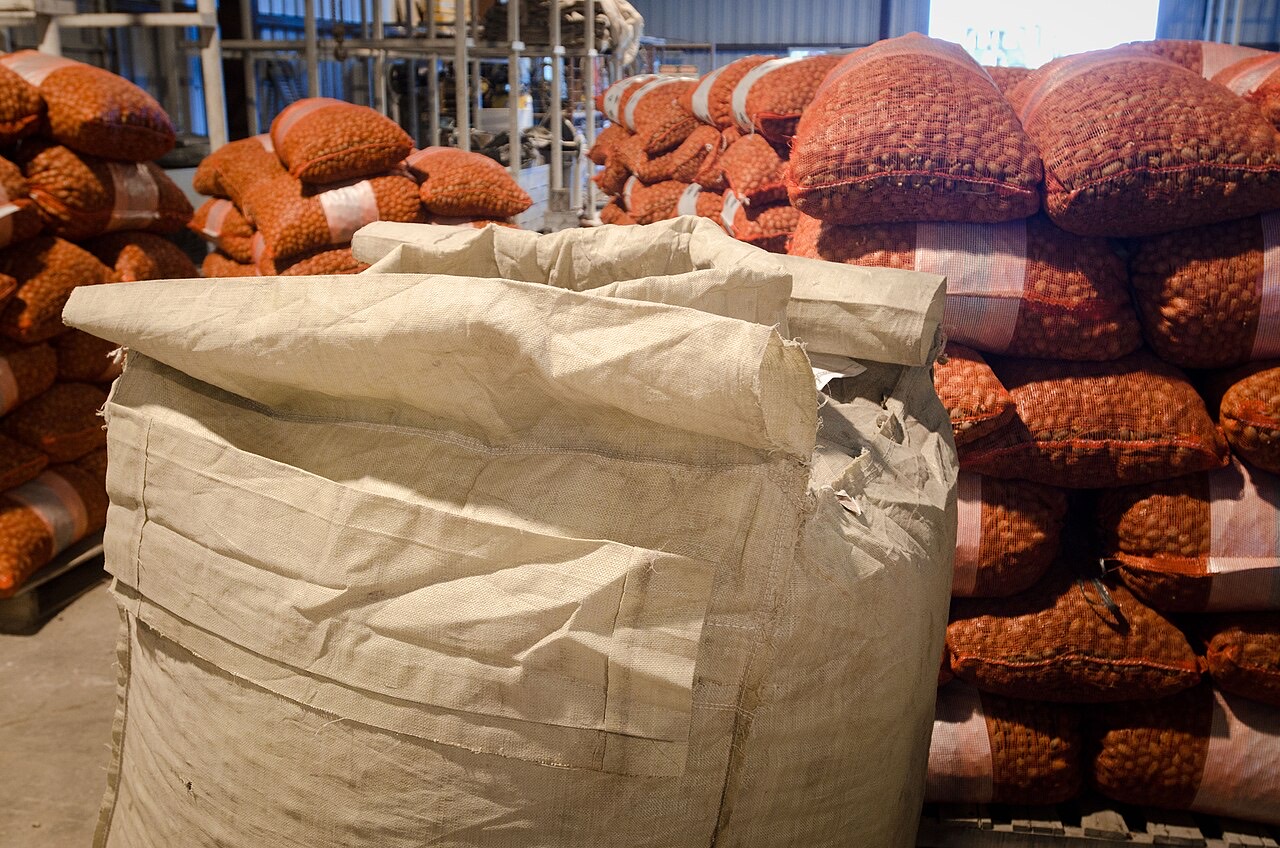
Pecan is a long-lived deciduous tree of the walnut family grown for its thin-shelled, oil-rich nut. Orchards are established from grafted cultivars selected for nut size, shell thickness, and disease tolerance, and trees may remain productive for many decades once established.
Commercial production is concentrated in warm-temperate and subtropical regions with hot summers, since nut fill and kernel quality depend on an extended period of summer heat following a winter chilling period that breaks bud dormancy.
Overview
Pecan trees are large, wind-pollinated, and monoecious, bearing separate male and female flowers on the same tree at different times, a trait called dichogamy that shapes cultivar pairing in orchard design. Most orchards mix cultivars with complementary flowering types to ensure adequate pollination.
Trees are slow to reach full bearing, often taking a decade or more, and commercial groves represent a long-term investment. Production ranges from large mechanized orchards to smaller diversified farms.
Botanical classification
- Family
- Juglandaceae (walnut family)
- Genus
- Carya
- Principal species
- Carya illinoinensis
- Growth habit
- Large deciduous tree bearing compound leaves and nuts enclosed in a four-valved husk
Origin and distribution
Pecan is native to river valleys of the south-central United States and northern Mexico, where wild trees were harvested long before formal cultivation began. Selection of superior seedling trees in the nineteenth century led to the grafted cultivars that underpin the modern industry.
The United States and Mexico account for most global production, with additional plantings established in South Africa, Australia, Peru, and other regions with suitable climates.
Climate and soil requirements
Pecan requires a period of winter chilling to break dormancy, followed by a long, hot growing season for nuts to fill properly; regions with insufficient summer heat produce poorly filled kernels. Late spring frosts during bud break and pollination can substantially reduce yield.
Deep, well-drained, fertile loams and sandy loams, historically river-bottom soils, support the extensive root systems these large trees require. Shallow, poorly drained, or compacted soils restrict rooting and increase susceptibility to root disease.
Cultivation and management
- Grafted cultivars selected for regional adaptation, alternate-bearing tendency, and pollination compatibility
- Orchard layout planned around complementary pollen-shed and flower-receptivity timing between cultivars
- Canopy and crop-load management to moderate the pronounced alternate-bearing (biennial yield) pattern common in pecan
- Long juvenile period before full production, requiring sustained orchard management over many years
Nutrient considerations
Nitrogen supports shoot and canopy growth, while zinc is widely recognized as a critical micronutrient for pecan; deficiency causes rosetting and reduced leaf and nut development in many production regions.
Water and irrigation
Pecan has a high water requirement during nut fill, and irrigation is standard in many production regions, particularly in drier climates. Water stress during this period can reduce kernel fill and nut quality.
Irrigation scheduling is based on local evapotranspiration estimates, soil moisture monitoring, and tree age, since young and mature trees differ substantially in water use.
Common diseases and pests
Anthracnose can affect foliage and nut husks under humid conditions, while root rot can weaken or kill trees on poorly drained sites. The pecan weevil is a significant nut-infesting pest in parts of the growing range, and aphids are common sap-feeding pests of foliage.
| Problem | Type | Notes |
|---|---|---|
| Anthracnose | Disease | Affects foliage and husks in humid conditions |
| Root rot | Disease | Favored by poor drainage and waterlogging |
| Pecan weevil | Pest | Larvae feed inside developing nuts |
| Aphids | Pest | Sap-feeding insects affecting foliage |
Harvest
Nuts mature in autumn as the husk splits and dries. Mechanical trunk shakers are widely used in commercial orchards to dislodge nuts, which are then collected from the orchard floor, cleaned, and dried to a moisture content suitable for storage.
Uses
- Shelled kernels eaten as a snack nut, raw or roasted
- Baking and confectionery, including pies, pralines, and baked goods
- Pecan oil pressed from kernels for culinary use
- Shells used in some regions as mulch, fuel, or an abrasive material
Botanical identity
Species- Accepted name
- Carya illinoinensis
- Family
- Juglandaceae
- Genus
- Carya
- Harvested part
- seed
- Agricultural use
- human food
- Crop group
- Nuts
What the authorities say
- World Flora Online — Taxonomic Backbone
- Carya illinoinensis
- Plants of the World Online
- Carya illinoinensis
Botanical identity here is what the consulted taxonomic authorities publish, on the date they were read. Where authorities disagree, both readings are shown rather than one being chosen silently.
What AgricultureID holds for this crop
- 2 soil references
- 2 climate references
Not held
- No crop calendar records — source exists not mapped
- No published cultivars — not researched
- No official variety registrations — source exists not mapped
- No verified extension resources — source exists not ingested
- No pests and diseases naming this crop as a host — source exists not ingested
- No farm economics observations — source exists not mapped
- No market price series — source exists not mapped
- No related crops — not applicable
An absence here means this corpus holds no such record, not that none exists.
How to read figures on this page
Production, area and trade figures for any crop change from season to season and are compiled by FAO and by national agricultural statistics agencies. Take current numbers from those primary sources, dated to the period you mean, rather than from a secondary summary — including this one.
Crop water requirements are estimated from reference evapotranspiration and local climate data, following methods published by FAO and national agricultural agencies. A requirement quoted without the reference method and the local climate behind it is not a number that can be applied to a field.
Tools for this
Each tool shows its formula, constants and sources, and starts empty — nothing is filled in from this page.
- Seed-rate calculator
Convert a target plant stand into a seed rate, allowing for germination and establishment.
- Row spacing calculator
Work out in-row spacing and plants per metre of row for a target density.
- Production, area and yield calculator
Relate a harvested area and a yield to a production total, in either direction.
- Growing degree-days calculator
Accumulate heat units against a base temperature.
Relationships
Evidence-backed connections in the knowledge graph.
Susceptible to
Suitable soils
Climate sensitivity
Irrigation methods
Managed with
Farming systems
Scope & limitations
Geographic scope: Global overview; major production in the United States and Mexico, with expanding production in South Africa, Australia, and Peru.
Climate context: Warm-temperate to subtropical deciduous tree crop requiring winter chilling and a long, hot growing season; sensitive to late spring frost.
- Nut fill, quality, and alternate-bearing patterns vary by cultivar and region and are not detailed exhaustively here.
- Production statistics change annually and should be taken from primary datasets such as FAOSTAT.
Sources
This article draws on the following authoritative sources. See our sources & methodology for how they are selected.
- Authoritative
Cited for: Classification and nomenclature
- Type:
- Reference database
- Jurisdiction:
- United States
- Accessed:
- 2026-07-12
- [2]USDA ARS — Agricultural Research Service (opens in a new tab)Authoritative
USDA Agricultural Research Service (ARS)
Cited for: Pecan research and disease information
- Type:
- Government agency
- Jurisdiction:
- United States
- Accessed:
- 2026-07-12
- [3]CABI Digital Library — Crop Protection Compendium (opens in a new tab)High
CABI (Centre for Agriculture and Bioscience International)
Cited for: Pecan pest and disease compendium data
- Type:
- Reference database
- Jurisdiction:
- Global
- Accessed:
- 2026-07-12
- [4]FAO — Food and Agriculture Organization (opens in a new tab)Authoritative
Food and Agriculture Organization of the United Nations (FAO)
Cited for: Global tree nut production context
- Type:
- Intergovernmental organization
- Jurisdiction:
- Global
- Accessed:
- 2026-07-12
- [5]FAOSTAT — FAO statistical database (opens in a new tab)Authoritative
Food and Agriculture Organization of the United Nations (FAO)
Cited for: Production and area statistics
- Type:
- Intergovernmental organization
- Jurisdiction:
- Global
- Accessed:
- 2026-07-12