Pest · Insect pest
Leaf Miners
Various species, notably Liriomyza spp. (Diptera: Agromyzidae); also Lepidoptera and other larvae
Also known as: Leafminer flies, Serpentine leafminers
Leaf miners are larvae from several unrelated insect groups that tunnel within leaf tissue, producing distinctive winding mines, and are common pests of vegetable crops, especially under protected cultivation.
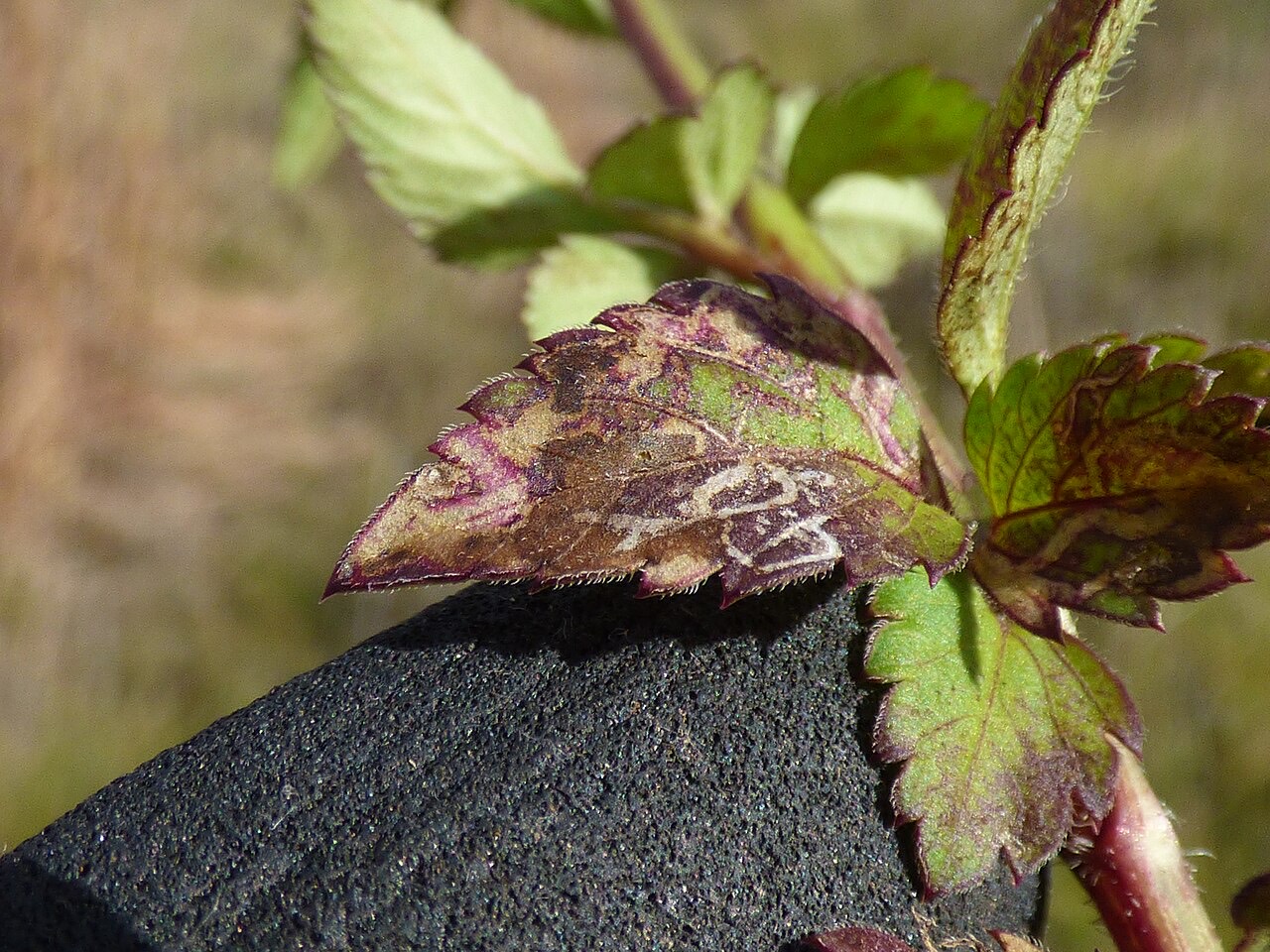
"Leaf miner" is a functional term rather than a single taxonomic group: it describes larvae from several different insect orders, most commonly small flies in the family Agromyzidae, but also some moths and beetles, that feed inside leaf tissue, tunneling between the upper and lower leaf surfaces and leaving visible winding or blotch-shaped mines.
Because larvae feed protected within the leaf for most of their development, they are difficult to reach with contact-based approaches, and management relies heavily on monitoring adult activity, conserving parasitoids, and cultural sanitation. Problems are often most severe in protected or greenhouse vegetable production, where warm, stable conditions favour rapid generations.
Identification
Mines appear as winding, serpentine tunnels or, in some species, larger blotch-shaped patches, depending on the species involved. Tiny puncture marks from adult feeding or egg-laying are often visible on the leaf surface, and larvae can sometimes be seen within a mine when the leaf is held up to light.
- Pale, winding or blotch-shaped tunnels visible on the leaf surface
- Small puncture marks from adult feeding or egg-laying
- Larvae visible within a mine when the leaf is held to the light
- Round exit or parasitoid emergence holes in older mines
Biology and life cycle
In many fly species, adult females puncture the leaf and lay eggs inside the tissue, while some moth species lay eggs on the leaf surface. Larvae hatch and tunnel within the leaf, feeding on the internal tissue between the upper and lower surfaces. Mature larvae often exit the mine to pupate in the soil or on the leaf surface, depending on species, and multiple generations are possible within a season, especially in warm greenhouse conditions.
Damage and hosts
Mines reduce photosynthetic leaf area and can cause premature leaf drop under heavy infestation. On crops grown for their leaves, such as spinach, or where fruit quality depends on healthy foliage, damage can be economically significant even at moderate mine densities.
Hosts include tomato, sweet pepper, and spinach among many other vegetable and ornamental crops.
Monitoring
Yellow sticky traps are widely used to monitor adult fly activity, alongside regular scouting of leaves for fresh mines and puncture marks. Checking older mines for parasitoid emergence holes gives an indication of natural biological control already in progress.
Management principles
Leaf miner management centres on conserving natural enemies and reducing conditions that allow populations to build unchecked.
- Conserve parasitoid wasps, which are often highly effective natural regulators
- Remove and destroy heavily mined leaves and plant debris to reduce carry-over
- Use yellow sticky traps to monitor and help reduce adult populations
- Maintain greenhouse or protected-culture sanitation and screening to exclude adults
- Avoid unnecessary broad-spectrum treatments that disrupt parasitoids
Relationships
Evidence-backed connections in the knowledge graph.
Affects
Risk increases under
Scope & limitations
Geographic scope: Global overview spanning several unrelated insect groups; species present, hosts, and severity vary considerably by region and production system.
Climate context: Warm, stable temperatures, common in protected and greenhouse production, favour faster development and more overlapping generations per season.
- This is a general overview of a functional pest group spanning multiple insect orders, not species-level guidance for a specific crop or region.
- Thresholds and control-product recommendations are jurisdiction-specific and are not provided here.
Sources
This article draws on the following authoritative sources. See our sources & methodology for how they are selected.
- [1]UC Statewide Integrated Pest Management Program (UC IPM) (opens in a new tab)High
University of California Agriculture and Natural Resources (UC ANR)
Cited for: Identification and IPM principles
- Type:
- University extension service
- Jurisdiction:
- United States (California)
- Accessed:
- 2026-07-12
- [2]CABI Digital Library — Crop Protection Compendium (opens in a new tab)High
CABI (Centre for Agriculture and Bioscience International)
Cited for: Biology, hosts, and distribution
- Type:
- Reference database
- Jurisdiction:
- Global
- Accessed:
- 2026-07-12
- [3]EPPO Global Database (opens in a new tab)Authoritative
European and Mediterranean Plant Protection Organization (EPPO)
Cited for: Species nomenclature and distribution
- Type:
- Reference database
- Jurisdiction:
- Global
- Accessed:
- 2026-07-12
- [4]University of Minnesota Extension — Crop and pest resources (opens in a new tab)High
University of Minnesota Extension
Cited for: Monitoring and management context
- Type:
- University extension service
- Jurisdiction:
- United States (Minnesota)
- Accessed:
- 2026-07-12