Pest · Insect pest
Thrips
Order Thysanoptera
Also known as: Thunderflies, Storm flies
Thrips are minute, slender insects that feed by piercing and rasping plant tissue. Several species also transmit damaging plant viruses, making monitoring and integrated management central to controlling their impact.
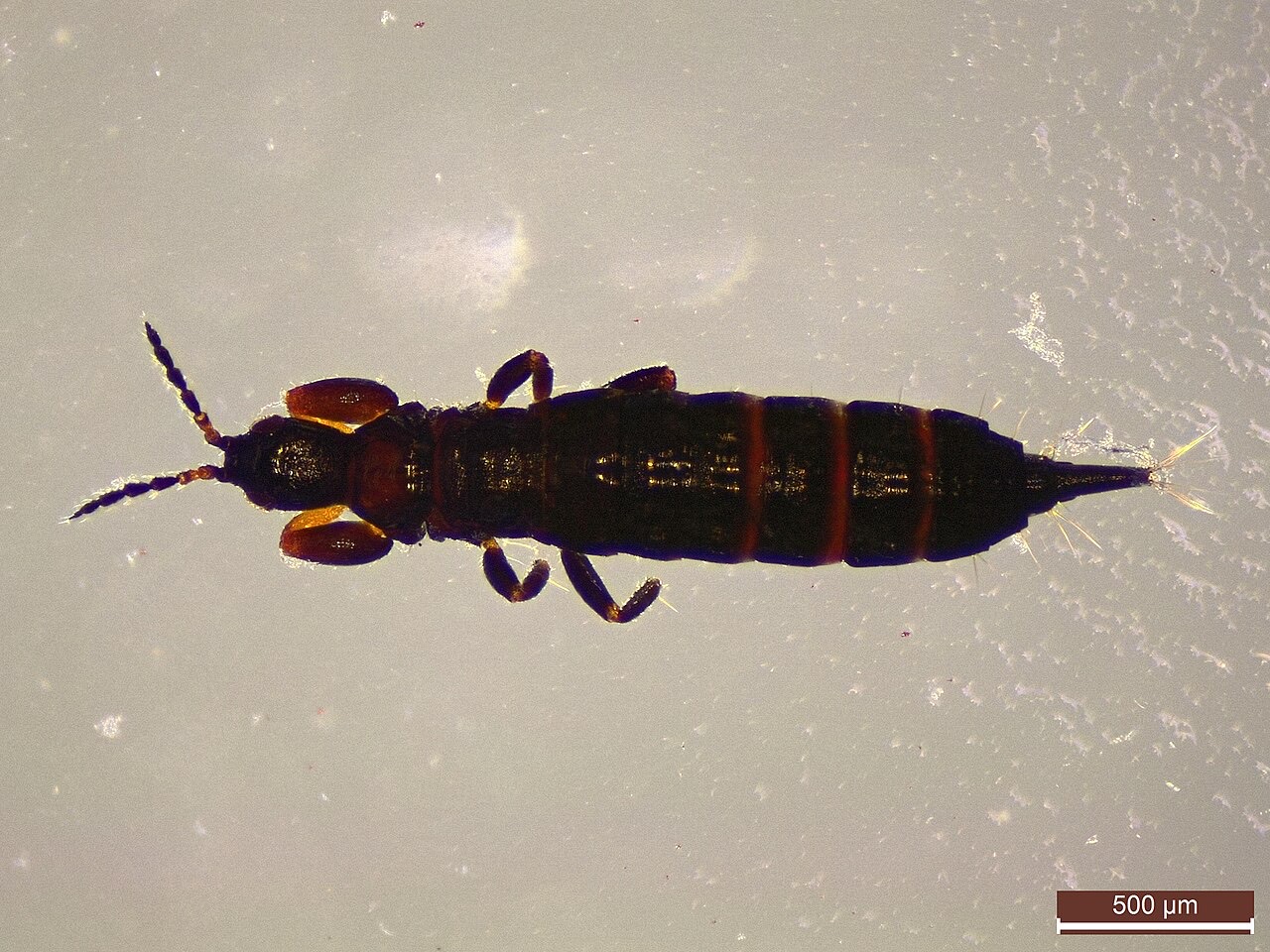
Thrips are a large order of tiny, elongate insects, most no more than one to two millimetres long, with characteristic narrow, fringed wings when winged forms are present. Hundreds of species are recognized worldwide, and a relatively small number are significant agricultural pests, feeding on vegetables, fruit, ornamentals, and field crops.
Beyond the direct injury caused by their feeding, some thrips species are efficient vectors of tospoviruses, a group of plant viruses that can cause severe losses in susceptible crops. This dual role — as both a feeding pest and a virus vector — makes thrips an important target of integrated pest management programs in many regions.
Identification
Thrips are slender, spindle-shaped insects that are easily overlooked without close inspection or a hand lens. Adults of many pest species are pale yellow to dark brown or black, and winged individuals have two pairs of narrow wings fringed with long hairs, a feature reflected in the order name Thysanoptera ("fringed wing").
- Silvery or bronzed stippling on leaf and fruit surfaces where cell contents have been removed
- Tiny black flecks of excrement (frass) on leaves
- Distorted, streaked, or discoloured flowers and growing points
- Insects visible when flowers or leaf whorls are shaken over a white surface
Biology and life cycle
Thrips develop through an egg stage, two active larval instars, and non-feeding prepupal and pupal stages before becoming adults. Eggs are typically inserted into plant tissue with a saw-like ovipositor, while the prepupal and pupal stages often occur in soil, leaf litter, or sheltered plant structures such as flowers.
- Egg
- Inserted into plant tissue; not visible without dissection.
- Larva (two instars)
- Active, feeding stage resembling a small, wingless adult.
- Prepupa and pupa
- Non-feeding, largely immobile stages, often found in soil or sheltered plant sites.
- Adult
- Winged or wingless depending on species; capable of dispersal and, in some species, virus transmission.
Many pest thrips can build populations quickly under favourable temperatures, and colonies often develop unnoticed within concealed sites such as flowers and leaf whorls before damage becomes obvious.
Damage and hosts
Thrips feeding punctures individual plant cells and removes their contents, leaving behind characteristic silvery or bronzed scarring as air replaces the emptied cells. Heavy feeding can distort leaves, flowers, and fruit, and feeding on growing points can stunt or deform new growth.
A smaller number of thrips species, including the western flower thrips, are recognized as efficient vectors of tospoviruses such as tomato spotted wilt virus. Transmission generally requires larvae to acquire the virus while feeding on an infected plant; the virus is then carried through to the adult stage, which can spread it further. Host crops affected by thrips and thrips-vectored viruses include a wide range of vegetables and ornamentals, with tomato and potato among the notable examples.
Monitoring
Because thrips are small and often hide within flowers, leaf whorls, and other sheltered plant parts, monitoring typically combines several methods rather than relying on visual inspection alone.
- Blue or yellow sticky traps placed within or above the canopy to catch dispersing adults
- Tapping or shaking flowers and foliage over a white surface or beat sheet to dislodge and count insects
- Direct inspection of flowers and new growth, where thrips often concentrate
- Tracking trends over time and comparing counts with locally established thresholds
Management principles
Thrips management fits within an integrated pest management framework that favours prevention and monitoring over reliance on any single tactic.
- Conserve natural enemies such as minute pirate bugs, predatory mites, and lacewings
- Remove or manage weeds and volunteer plants that can host thrips or the viruses they transmit
- Use virus-tested or certified planting material where thrips-vectored viruses are a concern
- Monitor regularly with traps and direct inspection, and use local thresholds to guide any response
Official extension guidance
1 resource indexed from public extension publishers. Each was written for a particular place; read it at the source.
Basic biology and management of onion thrips on field crops
Guide published by AHDB for Great Britain. It addresses onion. The source is organised around “Risk factors in field crops”, “Thrips identification” and “Onion thrips life cycle and crop damage”.
Agriculture and Horticulture Development Board · Pest management · publisher states no date; reachable 2026-08-27
These are pointers to guidance published by others. Each was written for a particular place and season and is revised by its publisher; read it at the source, and check it applies where you farm.
Relationships
Evidence-backed connections in the knowledge graph.
Related topics
Scope & limitations
Geographic scope: Global overview of a diverse insect order; pest species, virus relationships, hosts, and guidance vary by region.
Climate context: Thrips development and population growth accelerate in warm, dry conditions and slow in cool or wet weather.
- This is a general overview of a large and diverse insect order, not species-level guidance for a specific crop or region.
- Virus-vector relationships are specific to particular thrips species and viruses and are not exhaustively covered here.
- Thresholds and control-product recommendations are jurisdiction-specific and are not provided here.
Sources
This article draws on the following authoritative sources. See our sources & methodology for how they are selected.
- [1]UC Statewide Integrated Pest Management Program (UC IPM) (opens in a new tab)High
University of California Agriculture and Natural Resources (UC ANR)
Cited for: Thrips identification and IPM principles
- Type:
- University extension service
- Jurisdiction:
- United States (California)
- Accessed:
- 2026-07-12
- [2]CABI Digital Library — Crop Protection Compendium (opens in a new tab)High
CABI (Centre for Agriculture and Bioscience International)
Cited for: Thrips biology, hosts, and importance
- Type:
- Reference database
- Jurisdiction:
- Global
- Accessed:
- 2026-07-12
- [3]EPPO Global Database (opens in a new tab)Authoritative
European and Mediterranean Plant Protection Organization (EPPO)
Cited for: Species nomenclature and distribution
- Type:
- Reference database
- Jurisdiction:
- Global
- Accessed:
- 2026-07-12
- [4]University of Minnesota Extension — Crop and pest resources (opens in a new tab)High
University of Minnesota Extension
Cited for: Monitoring and management context
- Type:
- University extension service
- Jurisdiction:
- United States (Minnesota)
- Accessed:
- 2026-07-12
Related topics
Crops
- Abaca
- Avocado
- Bambara Groundnut
- Banana
- Basil
- Black Cumin
- Cape Gooseberry
- Cardamom
- Chamomile
- Chili pepper
- Chives
- Coriander
- Cowpea
- Cucumber
- Cumin
- Fennel
- Garlic
- Grape
- Grass Pea
- Groundnut
- Kiwifruit
- Leek
- Lentil
- Lupin
- Macadamia
- Mango
- Mangosteen
- Onion
- Persimmon
- Potato
- Purslane
- Safflower
- Stevia
- Strawberry
- Sweet Pepper
- Tea
- Tomato
- Upland Cotton
- Welsh Onion
- Yardlong Bean
- Yerba Mate