Crop · Vegetable crop
Leek
Allium ampeloprasum var. porrum
Also known as: Garden leek
Leek is a hardy allium vegetable grown for its blanched, cylindrical stem (shank), valued for good cold tolerance and a long harvest season compared with onion and garlic.
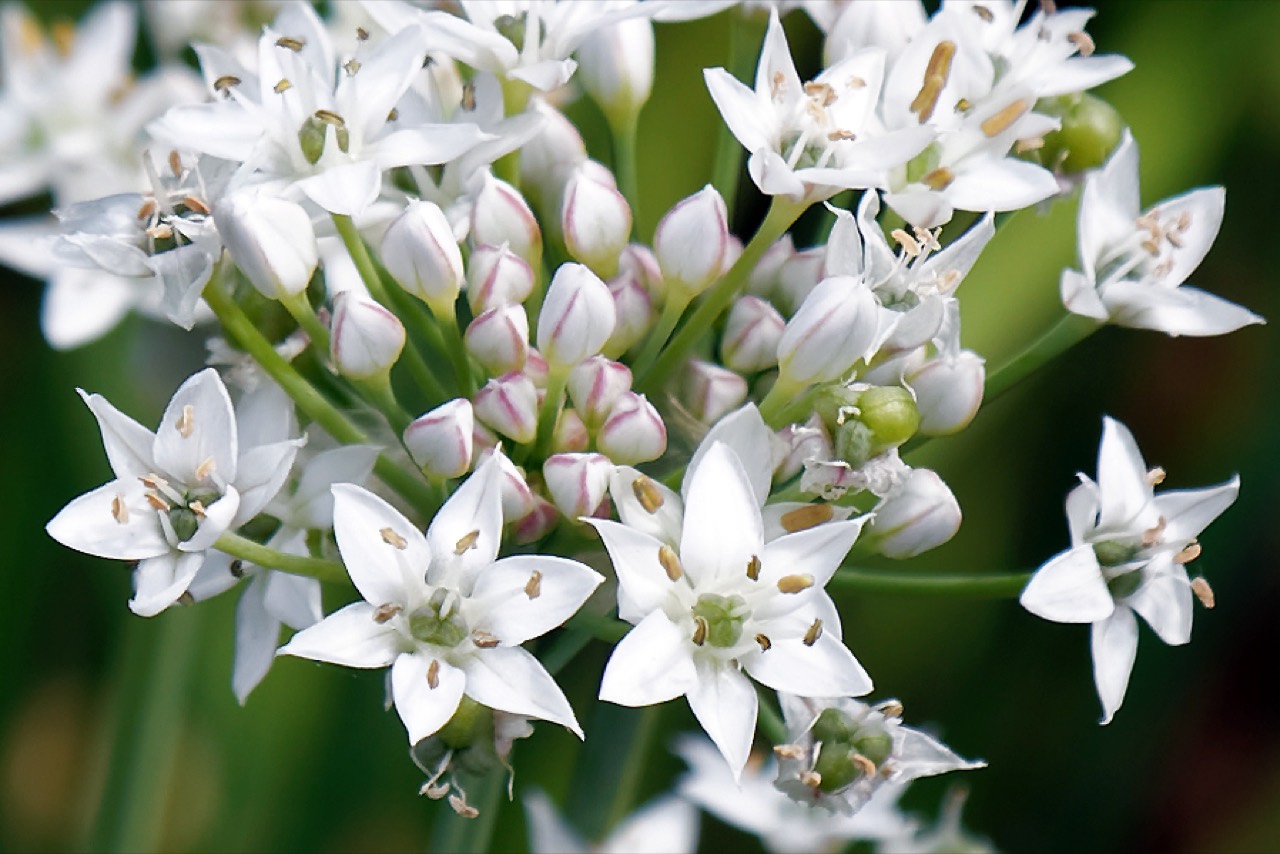
Leek is grown for its thick, cylindrical stem formed from tightly overlapping leaf bases, blanched by earthing up soil or otherwise excluding light from the lower stem during growth. It belongs to the same plant family as onion and garlic, sharing many of their pest and disease vulnerabilities.
Unlike onion and garlic, leek does not form a discrete bulb, and it is notably more cold-tolerant, allowing extended harvest through autumn and winter in many temperate regions. Like other biennial alliums, it flowers only after cold exposure the following season but is grown commercially as an annual for its stem.
Overview
Leek is grown for its long, thick stem, cultivated to maximize the length of the tender, blanched (white) portion by progressively earthing up soil, using collars, or planting into trenches as the plant grows.
Its strong cold tolerance relative to other alliums allows leek to be harvested over an extended season in many temperate climates, including through frosty conditions in some regions.
Botanical classification
- Family
- Amaryllidaceae (subfamily Allioideae; formerly classified in Alliaceae)
- Species
- Allium ampeloprasum
- Cultivar group
- Porrum group (leek)
- Growth habit
- Biennial monocot grown as an annual, forming a long cylindrical stem of overlapping leaf bases without a true bulb
Origin and distribution
Leek derives from wild Allium ampeloprasum populations native to the Mediterranean region, with cultivation dating back to antiquity and long-standing importance in European cuisines, particularly in parts of northern and western Europe where it remains a significant winter vegetable.
Climate requirements
Leek grows best under cool conditions and tolerates cold significantly better than onion and garlic, allowing many temperate producers to harvest the crop through autumn and into winter, in some regions even after light freezing.
Extended exposure to cold, however, can eventually trigger the plant's natural transition toward flowering the following season (bolting), so overwintering practices are matched to local climate and cultivar cold tolerance.
Soil requirements
Leek performs best on deep, moisture-retentive loams and silty loams that are friable enough to allow easy earthing up or trench planting for blanching the stem, with reasonable fertility to support long-season growth.
Establishment and crop management
Leek is typically established from transplants raised in seedbeds or trays, set out into trenches or with soil progressively drawn up around the stem over the season to maximize the length of the blanched portion.
- Cultivar selection matched to local season length and desired harvest window (summer, autumn, or overwintering types)
- Trench planting or progressive earthing up to blanch the stem
- Crop rotation with non-allium crops to manage soil-borne disease and pest carryover
- Consistent moisture supply to support steady, unchecked growth
Nutrient considerations
Sulfur is of particular relevance to alliums including leek, contributing to the characteristic flavor compounds of the group, alongside more conventional needs for nitrogen to support the extended vegetative growth period and potassium for stem quality.
Water and irrigation
Leek benefits from consistent soil moisture over its long growing season, since water stress can check growth and reduce the eventual stem length and diameter. Sprinkler irrigation is commonly used, alongside drip systems in some production regions.
Common diseases and pests
Downy mildew is a significant foliar disease of leek under cool, humid conditions, and gray mold can affect leaves and stems, particularly late in the season. Onion thrips are a key insect pest shared with other alliums, causing silvering damage to leaves, while leaf miners can also affect the crop in some regions.
Management combines resistant cultivars, crop rotation, monitoring, and — where justified — locally authorized control products applied according to their labels.
Harvest
Leek is harvested by lifting once the stem has reached the desired diameter and length, with harvest for many cultivars extending over an unusually long window, including, in cold-tolerant types, through autumn and winter in temperate regions.
Uses
- Fresh-market vegetable, eaten cooked in soups, stews, and many other dishes
- Flavoring base in a range of regional cuisines
- Processed and frozen products in some markets
- Minor use of the green tops in stock and flavoring preparations
Botanical identity
Species- Accepted name
- Allium ampeloprasum
- Family
- Amaryllidaceae
- Genus
- Allium
- Harvested part
- stem, leaf
- Agricultural use
- human food
- Crop group
- Vegetables
What the authorities say
- World Flora Online — Taxonomic Backbone
- Allium ampeloprasum
- Plants of the World Online
- Allium ampeloprasum
- The name Allium ampeloprasum is a homonym: more than one published name matches it exactly, and they resolve to different taxa. The accepted one was selected; Allium ampeloprasum Boiss.; Allium ampeloprasum Thunb..
Botanical identity here is what the consulted taxonomic authorities publish, on the date they were read. Where authorities disagree, both readings are shown rather than one being chosen silently.
What AgricultureID holds for this crop
- 50 crop calendar records
- 2 soil references
- 4 related crops
Not held
- No published cultivars — not researched
- No official variety registrations — source exists not mapped
- No verified extension resources — source exists not ingested
- No pests and diseases naming this crop as a host — source exists not ingested
- No climate references — not researched
- No farm economics observations — source exists not mapped
- No market price series — source exists not mapped
An absence here means this corpus holds no such record, not that none exists.
How to read figures on this page
Production, area and trade figures for any crop change from season to season and are compiled by FAO and by national agricultural statistics agencies. Take current numbers from those primary sources, dated to the period you mean, rather than from a secondary summary — including this one.
Crop water requirements are estimated from reference evapotranspiration and local climate data, following methods published by FAO and national agricultural agencies. A requirement quoted without the reference method and the local climate behind it is not a number that can be applied to a field.
Part of
Related crops
- Same genus
- Chives, Garlic, Onion, Welsh Onion
Planting and harvest calendar
Usual sowing and harvest windows across 50 jurisdictions, covering leek and leek — season 1 and leek — season 2 and leek — season 3.
Authorised inputs (France)
The French register records 43 currently authorised products whose authorised use names this crop, held by 27 authorisation holders. This is a count of what exists on the register, not a recommendation and not a shortlist.
By function
- Fongicide 23
- Insecticide 11
- Herbicide 8
- Acaricide 1
Targets named on the register
- Chenilles phytophages 9
- Mildiou(s) 8
- Maladies des taches brunes 7
- Rouille(s) 4
- Champignons (pythiacées) 4
- Thrips 3
Use scope is recorded as the register writes it. Collective terms cover several crops at once and are left unmapped rather than expanded, because expanding one entry into several would invent authorisations that were never granted.
Authorisation is specific to one jurisdiction, one legal object and one moment. It is not a recommendation, and it says nothing about how a product may be used: always read the current official label at the source before acting.
Tools for this
Each tool shows its formula, constants and sources, and starts empty — nothing is filled in from this page.
- Seed-rate calculator
Convert a target plant stand into a seed rate, allowing for germination and establishment.
- Row spacing calculator
Work out in-row spacing and plants per metre of row for a target density.
- Production, area and yield calculator
Relate a harvested area and a yield to a production total, in either direction.
- Growing degree-days calculator
Accumulate heat units against a base temperature.
Relationships
Evidence-backed connections in the knowledge graph.
Susceptible to
Irrigation methods
Machinery
Related topics
Scope & limitations
Geographic scope: Global overview. Agronomic details (timing, rates, varieties) are region-specific and vary widely.
Climate context: Cool-season allium notable for strong cold tolerance, supporting an extended autumn and winter harvest in many temperate regions.
- Cold tolerance and overwintering suitability vary by cultivar and should be confirmed against local winter severity.
- Production statistics change annually and should be taken from primary datasets such as FAOSTAT.
Sources
This article draws on the following authoritative sources. See our sources & methodology for how they are selected.
- [1]FAO — Food and Agriculture Organization (opens in a new tab)Authoritative
Food and Agriculture Organization of the United Nations (FAO)
Cited for: Role of leek in vegetable production systems
- Type:
- Intergovernmental organization
- Jurisdiction:
- Global
- Accessed:
- 2026-07-12
- [2]FAOSTAT — FAO statistical database (opens in a new tab)Authoritative
Food and Agriculture Organization of the United Nations (FAO)
Cited for: Production, area, and trade statistics
- Type:
- Intergovernmental organization
- Jurisdiction:
- Global
- Accessed:
- 2026-07-12
- Authoritative
Cited for: Classification and nomenclature
- Type:
- Reference database
- Jurisdiction:
- United States
- Accessed:
- 2026-07-12
- [4]CABI Digital Library — Crop Protection Compendium (opens in a new tab)High
CABI (Centre for Agriculture and Bioscience International)
Cited for: Allium disease and pest compendium data
- Type:
- Reference database
- Jurisdiction:
- Global
- Accessed:
- 2026-07-12
- [5]AHDB — Agriculture and Horticulture Development Board (opens in a new tab)High
Agriculture and Horticulture Development Board (AHDB)
Cited for: Regional leek and allium crop agronomy
- Type:
- Government agency
- Jurisdiction:
- United Kingdom
- Accessed:
- 2026-07-12