Crop · Cereal crop
Barley
Hordeum vulgare
Also known as: Common barley
Barley is a temperate cereal grown for malting, animal feed, and food uses, cultivated as winter or spring types across cool and semi-arid regions and generally noted for tolerating a somewhat broader range of growing conditions than wheat.
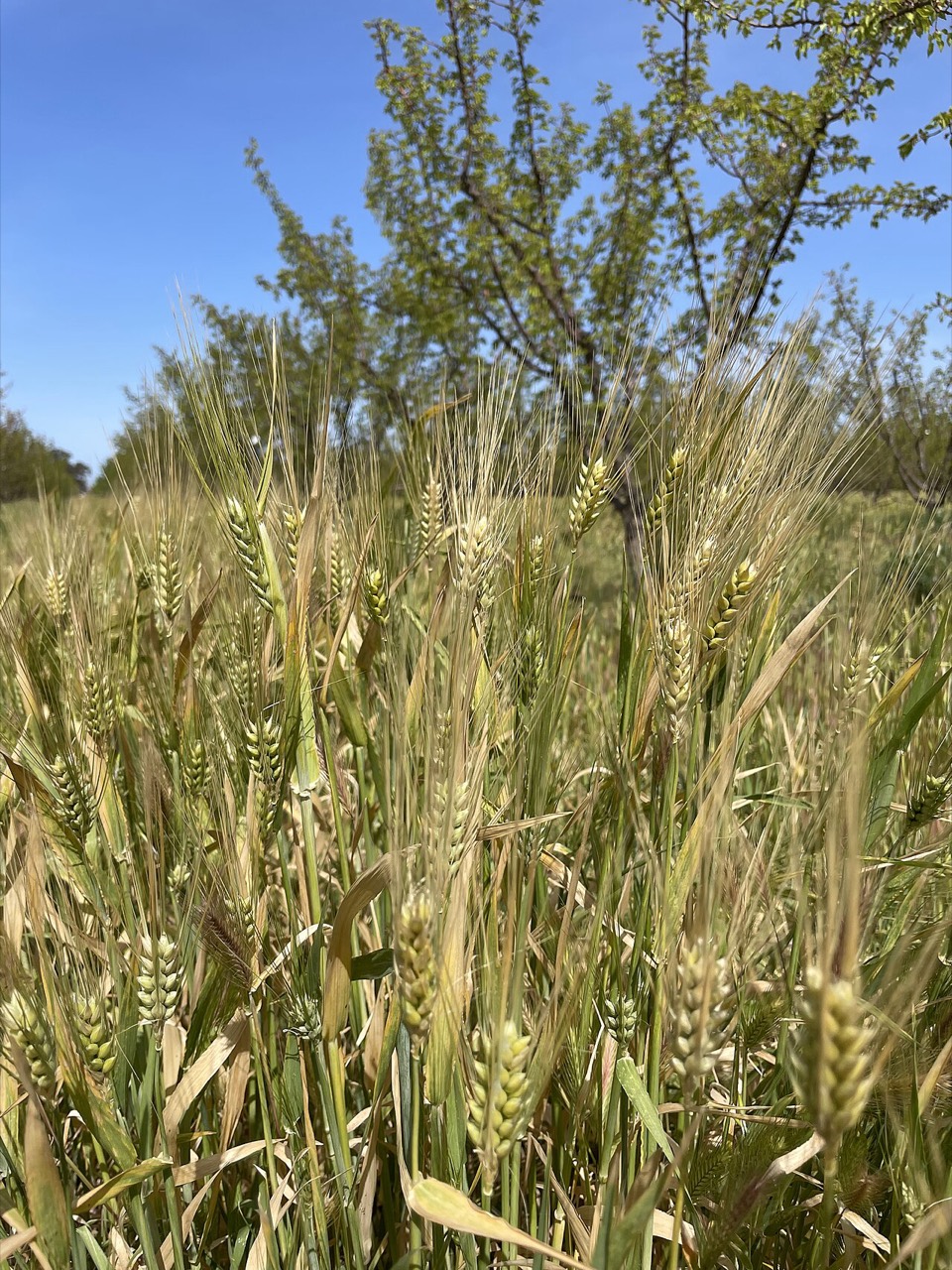
Barley is one of the earliest cereals domesticated by humans and remains an important crop for malting, livestock feed, and, in some regions, direct food use. It is closely related to wheat botanically, though the two crops differ in spike structure and typical end use.
Barley cultivars are classified as two-row or six-row according to the arrangement of fertile spikelets along the spike, a distinction that affects grain size, uniformity, and suitability for malting. Varieties are further divided into winter and spring types depending on their vernalization requirement.
Overview
Barley is a self-pollinating annual grass grown for both malting and animal feed, as well as for food use in some regions. Cultivars are classified as two-row or six-row according to the arrangement of fertile spikelets on the spike, a distinction that influences grain size and uniformity.
| End use | General requirement emphasis |
|---|---|
| Malting barley | Grain uniformity, germination capacity, and a protein content suited to malting, brewing, or distilling |
| Feed barley | Overall yield and energy content for livestock rations, with less stringent grain uniformity requirements |
| Food barley | Whole and processed products, such as pearled or hulless barley, used directly in human food |
Because growing conditions and end markets differ so widely, agronomic details such as sowing date, seeding rate, and variety choice are region-specific and should be based on local recommendations.
Botanical classification
- Family
- Poaceae (grass family)
- Genus and species
- Hordeum vulgare
- Spike type
- Two-row (one fertile spikelet per node) or six-row (three fertile spikelets per node)
- Growth habit
- Tillering annual grass producing a terminal spike
Origin and distribution
Barley was domesticated in the Fertile Crescent of the Near East alongside wheat and is considered one of the founder crops of Old World agriculture. It spread across Europe, Asia, and North Africa in antiquity and later reached the Americas and other regions.
Barley is now grown across a wide range of temperate and semi-arid regions.
Climate requirements
Like wheat, barley includes winter types, which are sown in autumn and require a period of cold to trigger flowering, and spring types, sown after the coldest part of the year in regions where winters are too severe for autumn establishment.
Barley is often considered somewhat more tolerant of drought, salinity, and marginal soils than wheat, though it remains sensitive to waterlogging and to heat stress during grain fill.
Soil requirements
Barley grows well on well-drained loams and clay loams and is generally regarded as more tolerant of moderately saline or marginal soils than some other cereals. It is sensitive to strongly acidic soils and to waterlogging, both of which restrict root growth.
Establishment and crop management
Barley is sown into much the same seedbed as other small grains, but its end use is settled before the crop is: malting barley is grown to a protein specification that feed barley is not, and a crop that misses that specification is sold into a different market at a different price. Nitrogen rate, variety choice and harvest timing all follow from which of the two is being aimed at.
- Variety selection matched to winter/spring type, end use (malting, feed, or food), and disease pressure
- Crop rotation to manage soil-borne diseases and weeds
- Seedbed preparation appropriate to the tillage system in use
- Timely weed management, since barley competes poorly with weeds during early growth
Nutrient considerations
Nitrogen management is particularly important for malting barley, since excessive grain protein can make grain unsuitable for malting even though it may still be acceptable for feed. Phosphorus and potassium support establishment and grain fill, with requirements depending on soil supply and target yield.
Water and irrigation
Barley is grown both rain-fed, including in a number of semi-arid regions where its relative drought tolerance is valued, and under irrigation. Water demand is highest around stem elongation, heading, and grain filling.
Common diseases and pests
Barley is affected by fungal diseases including powdery mildew, net blotch, and scald, whose importance varies by region and season, as well as by insect pests such as aphids, which can also transmit viruses.
Management combines resistant varieties, crop rotation, field monitoring, and, where warranted, locally authorized control measures used according to their labels.
Harvest
Barley is harvested once grain has matured and dried to a moisture content suitable for combining and safe storage. For malting barley, grain condition and germination capacity at harvest and during storage are especially important, since damaged or poorly dried grain may not meet malting specifications.
Uses
- Malting for beer brewing and spirit distilling
- Animal feed, including whole grain and processing by-products
- Food products such as pearled barley, barley flour, and hulless barley
- Straw used for livestock bedding or as a soil amendment
Botanical identity
Species- Accepted name
- Hordeum vulgare
- Family
- Poaceae
- Genus
- Hordeum
- Harvested part
- grain
- Agricultural use
- animal feed, human food, beverage
- Crop group
- Cereals
What the authorities say
- World Flora Online — Taxonomic Backbone
- Hordeum vulgare
- Plants of the World Online
- Hordeum vulgare
Botanical identity here is what the consulted taxonomic authorities publish, on the date they were read. Where authorities disagree, both readings are shown rather than one being chosen silently.
Traded as
This crop is traded as one commodity in this corpus.
What AgricultureID holds for this crop
- 146 crop calendar records
- 4 published cultivars
- 4 official variety registrations
- 2 verified extension resources
- 17 pests and diseases naming this crop as a host
- 2 soil references
- 34 farm economics observations
- 479 market price series
- 9 related crops
Not held
- No climate references — not researched
An absence here means this corpus holds no such record, not that none exists.
How to read figures on this page
Production, area and trade figures for any crop change from season to season and are compiled by FAO and by national agricultural statistics agencies. Take current numbers from those primary sources, dated to the period you mean, rather than from a secondary summary — including this one.
Crop water requirements are estimated from reference evapotranspiration and local climate data, following methods published by FAO and national agricultural agencies. A requirement quoted without the reference method and the local climate behind it is not a number that can be applied to a field.
Part of
Related crops
Planting and harvest calendar
Usual sowing and harvest windows across 146 jurisdictions, covering barley and barley two rows and barley two rows — season 1 and barley two rows — season 2 and barley — season 1 and barley — season 2 and fall-sown barley and hanfez and spring barley.
Cost of production, as forecast
United States national estimates for 2027, published by USDA Economic Research Service.
- Total costs listed
- 537.08 USD
- Dollars per planted acre
- Operating costs
- 204.98 USD
- Dollars per planted acre
- Allocated overhead
- 332.11 USD
- Dollars per planted acre
A forecast of what a crop will cost to grow is not a record of what it cost. It is the source’s expectation for a year that has not finished.
These are costs only. The source publishes no revenue alongside them, so no margin, profit or break-even price is derived from them here.
Official extension guidance
2 resources indexed from public extension publishers. Each was written for a particular place; read it at the source.
Guide published by AHDB for Great Britain. It addresses barley. The source is organised around “Introduction to barley growth and benchmarks”, “The growth stages of cereals” and “Key development phases and growth stages in barley”.
Agriculture and Horticulture Development Board · Crop establishment · publisher states no date; reachable 2026-08-27
Net blotch symptoms and management in barley
Guide published by AHDB for Great Britain. It addresses barley. The source is organised around “How net blotch affects barley yield and quality”, “Net blotch symptoms” and “Net blotch life cycle”.
Agriculture and Horticulture Development Board · Disease management · publisher states no date; reachable 2026-08-27
These are pointers to guidance published by others. Each was written for a particular place and season and is revised by its publisher; read it at the source, and check it applies where you farm.
Authorised inputs (France)
The French register records 357 currently authorised products whose authorised use names this crop, held by 66 authorisation holders. This is a count of what exists on the register, not a recommendation and not a shortlist.
By function
- Fongicide 175
- Herbicide 160
- Régulateur de croissance 19
- Stimul. Déf. Plantes - Maladies 1
- Subst. Croiss. 1
- Acaricide 1
Targets named on the register
- Rouille(s) 110
- Helminthosporiose et ramulariose 109
- Rhynchosporiose 108
- Oïdium(s) 97
- Fusarioses 45
- Piétin verse 29
Use scope is recorded as the register writes it. Collective terms cover several crops at once and are left unmapped rather than expanded, because expanding one entry into several would invent authorisations that were never granted.
Authorisation is specific to one jurisdiction, one legal object and one moment. It is not a recommendation, and it says nothing about how a product may be used: always read the current official label at the source before acting.
Tools for this
Each tool shows its formula, constants and sources, and starts empty — nothing is filled in from this page.
- Seed-rate calculator
Convert a target plant stand into a seed rate, allowing for germination and establishment.
- Row spacing calculator
Work out in-row spacing and plants per metre of row for a target density.
- Production, area and yield calculator
Relate a harvested area and a yield to a production total, in either direction.
- Growing degree-days calculator
Accumulate heat units against a base temperature.
Relationships
Evidence-backed connections in the knowledge graph.
Notable cultivars
Documented varieties tied to this species, with registry status and sources on each page. Not an exhaustive list.
- Golden PromiseGolden Promise is a semi-dwarf two-row spring malting barley derived by gamma-ray mutation of the cultivar Maythorpe, historically important in Scottish malting and whisky and now a widely used model genotype in barley research and transformation.
- Maris OtterMaris Otter is a two-row winter malting barley bred at the Plant Breeding Institute in Cambridge and introduced in the mid-1960s, long prized in traditional British cask-ale brewing and still grown for that niche market today.
- MorexMorex is a six-row spring malting barley released by the University of Minnesota in 1978 that became the North American six-row malting-quality standard and was later chosen as a reference cultivar for the barley genome.
- OpticOptic is a two-row spring malting barley from a British breeding programme that became the most widely grown spring malting variety in Britain in the mid-2000s before being superseded by newer cultivars.
Harvested commodities
The traded commodities harvested from this crop. A commodity is the harvested lot, described by its own quality, grading, and storage evidence — not by the agronomy of the plant.
Scope & limitations
Geographic scope: Global overview. Variety type (two-row or six-row, winter or spring, malting or feed) and management practices are region-specific and vary by climate and market.
Climate context: Cool-season cereal grown across temperate and semi-arid regions, often noted for tolerating a broader range of marginal soils and drought than some other cereals.
- Variety type selection and nitrogen management for malting quality are region- and market-specific and not reduced to universal values here.
- Production and trade statistics change annually and should be taken from primary datasets such as FAOSTAT.
- Malting quality standards vary by buyer and market and should be confirmed with local grain trade or brewing and distilling industry specifications.
Sources
This article draws on the following authoritative sources. See our sources & methodology for how they are selected.
- [1]FAO — Food and Agriculture Organization (opens in a new tab)Authoritative
Food and Agriculture Organization of the United Nations (FAO)
Cited for: Role of barley in global food and feed systems
- Type:
- Intergovernmental organization
- Jurisdiction:
- Global
- Accessed:
- 2026-07-12
- [2]FAOSTAT — FAO statistical database (opens in a new tab)Authoritative
Food and Agriculture Organization of the United Nations (FAO)
Cited for: Production, area, and trade statistics
- Type:
- Intergovernmental organization
- Jurisdiction:
- Global
- Accessed:
- 2026-07-12
- Authoritative
Cited for: Classification and nomenclature
- Type:
- Reference database
- Jurisdiction:
- United States
- Accessed:
- 2026-07-12
- [4]AHDB — Agriculture and Horticulture Development Board (opens in a new tab)High
Agriculture and Horticulture Development Board (AHDB)
Cited for: Regional barley agronomy and malting guidance
- Type:
- Government agency
- Jurisdiction:
- United Kingdom
- Accessed:
- 2026-07-12
- [5]USDA ARS — Agricultural Research Service (opens in a new tab)Authoritative
USDA Agricultural Research Service (ARS)
Cited for: Barley disease and pest research
- Type:
- Government agency
- Jurisdiction:
- United States
- Accessed:
- 2026-07-12
- [6]European Commission — Agriculture and rural development (opens in a new tab)Authoritative
European Commission, Directorate-General for Agriculture
Cited for: European Union barley production context
- Type:
- Government agency
- Jurisdiction:
- European Union
- Accessed:
- 2026-07-12