Crop · Vegetable crop
Zucchini
Cucurbita pepo
Also known as: Courgette, Summer squash
Zucchini is a fast-growing warm-season summer squash grown for its immature, tender fruit, valued for rapid, prolific production over a relatively short growing period.
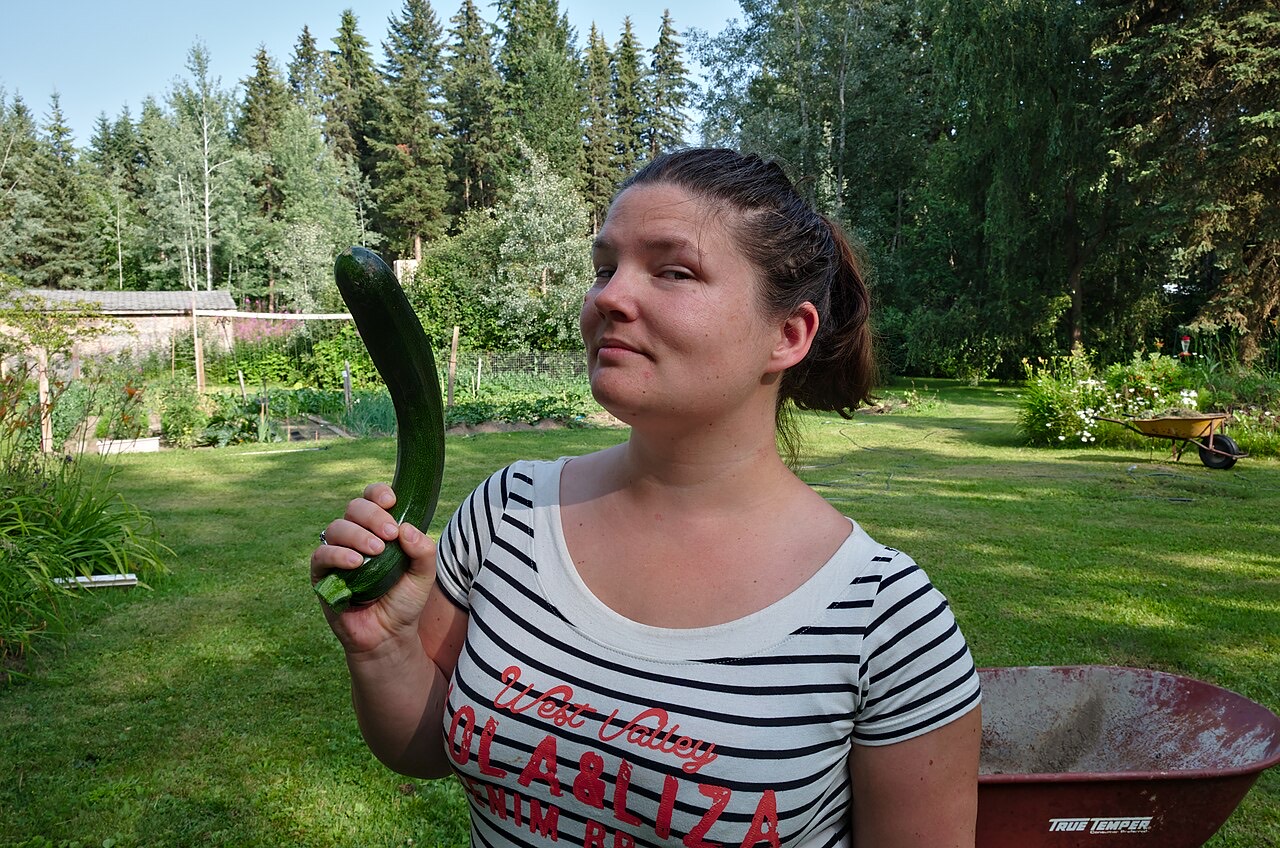
Zucchini is a type of summer squash within the species Cucurbita pepo, harvested while the fruit skin and seeds are still soft and immature, unlike winter squash and pumpkin types of the same species that are harvested mature with a hardened rind.
The crop grows rapidly under warm conditions, typically on a compact, bush-type plant rather than the long trailing vines of many other cucurbits, and produces fruit continuously over an extended harvest period once flowering begins.
Overview
Zucchini is grown as a warm-season annual valued for its short time from planting to first harvest and its high, continuous yield once fruiting begins, making it a widely grown crop in both commercial and home garden settings.
Its compact, bush-type growth habit distinguishes it from many other cucurbits and allows closer plant spacing than sprawling vine types.
Botanical classification
- Family
- Cucurbitaceae (gourd family)
- Genus
- Cucurbita
- Principal species
- Cucurbita pepo
- Growth habit
- Fast-growing annual with a compact bush habit, bearing separate male and female flowers on the same plant
Origin and distribution
Cucurbita pepo was domesticated in the Americas, with squash among the earliest crops cultivated there. The zucchini type as commonly known today was developed relatively recently, with much of its modern popularization associated with northern Italian breeding in the 19th century before spreading globally.
It is now grown widely across temperate and warm regions worldwide.
Climate requirements
Zucchini requires warm soil and air temperatures for germination and rapid growth, and is sensitive to frost and chilling injury. It grows quickly under warm conditions, often reaching first harvest within roughly a month and a half of sowing in favorable climates.
Field planting is timed to the local frost-free period, though protected culture and plastic mulches are used in some regions to extend the season.
Soil requirements
Zucchini performs best on fertile, well-drained loams with good moisture-holding capacity, supporting the rapid vegetative growth and continuous fruit production characteristic of the crop.
Establishment and crop management
Zucchini is established either by direct seeding after soil has warmed or from transplants for an earlier start, sown or set at a spacing suited to the compact bush habit of the crop.
- Cultivar selection for fruit shape, color, and days to maturity
- Rotation planning complicated by the crop's short cycle, which tempts a second cucurbit planting into the same ground in one season
- Adequate pollinator activity, since fruit set depends on pollen transfer between separate male and female flowers
- Frequent harvesting, since fruit left on the plant quickly overmatures and can reduce further fruit set
Nutrient considerations
Nitrogen supports the vigorous vegetative growth needed to sustain continuous fruiting, while potassium contributes to fruit development and quality over the harvest period.
Water and irrigation
Zucchini has high water demand during its rapid vegetative growth and fruiting period, and inconsistent moisture can reduce fruit quality and yield. Drip irrigation is widely used to supply consistent water directly to the root zone.
Common diseases and pests
Powdery mildew is one of the most common diseases affecting zucchini foliage, particularly later in the season, and verticillium wilt can affect the crop where susceptible hosts have been grown repeatedly on the same land. Aphids and whiteflies are notable insect pests, both directly and as virus vectors.
Management combines resistant cultivars, crop rotation, monitoring, and — where justified — locally authorized control products applied according to their labels.
Harvest
Zucchini fruit is harvested while still immature, small, and tender, with skin soft enough to pierce easily with a fingernail; fruit left to mature further develops a harder skin and larger, tougher seeds, reducing quality. Frequent picking, often every one to two days during peak season, is typical.
Uses
- Fresh-market vegetable, eaten cooked or raw
- Processed products including preserved and frozen forms
- Edible flowers used as a specialty food item in some cuisines
- Crop residues sometimes used as livestock feed or incorporated into soil
Botanical identity
Cultivar group- Accepted name
- Cucurbita pepo Zucchini Group
- Family
- Cucurbitaceae
- Genus
- Cucurbita
- Harvested part
- fruit
- Agricultural use
- human food
- Crop group
- Vegetables
What the authorities say
- World Flora Online — Taxonomic Backbone
- Cucurbita pepo
- Plants of the World Online
- Cucurbita pepo
Zucchini is a cultivated form of Cucurbita pepo harvested immature, the same species as many pumpkins and summer squashes. Published as a cultivar group so it does not claim the species that the pumpkin complex also draws on.
Botanical identity here is what the consulted taxonomic authorities publish, on the date they were read. Where authorities disagree, both readings are shown rather than one being chosen silently.
What AgricultureID holds for this crop
- 2 soil references
- 2 climate references
- 1 related crops
Not held
- No crop calendar records — source exists not mapped
- No published cultivars — not researched
- No official variety registrations — source exists not mapped
- No verified extension resources — source exists not ingested
- No pests and diseases naming this crop as a host — source exists not ingested
- No farm economics observations — source exists not mapped
- No market price series — source exists not mapped
An absence here means this corpus holds no such record, not that none exists.
How to read figures on this page
Production, area and trade figures for any crop change from season to season and are compiled by FAO and by national agricultural statistics agencies. Take current numbers from those primary sources, dated to the period you mean, rather than from a secondary summary — including this one.
Crop water requirements are estimated from reference evapotranspiration and local climate data, following methods published by FAO and national agricultural agencies. A requirement quoted without the reference method and the local climate behind it is not a number that can be applied to a field.
Part of
Related crops
- Same crop concept
- Pumpkin
Tools for this
Each tool shows its formula, constants and sources, and starts empty — nothing is filled in from this page.
- Seed-rate calculator
Convert a target plant stand into a seed rate, allowing for germination and establishment.
- Row spacing calculator
Work out in-row spacing and plants per metre of row for a target density.
- Production, area and yield calculator
Relate a harvested area and a yield to a production total, in either direction.
- Growing degree-days calculator
Accumulate heat units against a base temperature.
Relationships
Evidence-backed connections in the knowledge graph.
Susceptible to
Suitable soils
Climate sensitivity
Irrigation methods
Scope & limitations
Geographic scope: Global overview. Agronomic details (timing, rates, varieties) are region-specific and vary widely.
Climate context: Fast-growing warm-season vegetable; frost-sensitive with rapid growth and continuous fruiting under warm conditions.
- Harvest timing depends on fruit size and skin firmness at picking rather than a fixed day count, and preferences vary by market.
- Production statistics change annually and should be taken from primary datasets such as FAOSTAT.
Sources
This article draws on the following authoritative sources. See our sources & methodology for how they are selected.
- [1]FAO — Food and Agriculture Organization (opens in a new tab)Authoritative
Food and Agriculture Organization of the United Nations (FAO)
Cited for: Role of summer squash in vegetable production systems
- Type:
- Intergovernmental organization
- Jurisdiction:
- Global
- Accessed:
- 2026-07-12
- [2]FAOSTAT — FAO statistical database (opens in a new tab)Authoritative
Food and Agriculture Organization of the United Nations (FAO)
Cited for: Production, area, and trade statistics
- Type:
- Intergovernmental organization
- Jurisdiction:
- Global
- Accessed:
- 2026-07-12
- Authoritative
Cited for: Classification and nomenclature
- Type:
- Reference database
- Jurisdiction:
- United States
- Accessed:
- 2026-07-12
- [4]CABI Digital Library — Crop Protection Compendium (opens in a new tab)High
CABI (Centre for Agriculture and Bioscience International)
Cited for: Cucurbit disease and pest compendium data
- Type:
- Reference database
- Jurisdiction:
- Global
- Accessed:
- 2026-07-12
- [5]UC Statewide Integrated Pest Management Program (UC IPM) (opens in a new tab)High
University of California Agriculture and Natural Resources (UC ANR)
Cited for: Integrated pest management guidelines for summer squash
- Type:
- University extension service
- Jurisdiction:
- United States (California)
- Accessed:
- 2026-07-12