Crop · Vegetable crop
Okra
Abelmoschus esculentus
Also known as: Lady's finger, Gumbo
Okra is a warm-season fruiting vegetable grown for its ridged, mucilaginous seed pods, valued for strong heat and drought tolerance across tropical, subtropical, and warm-temperate regions.
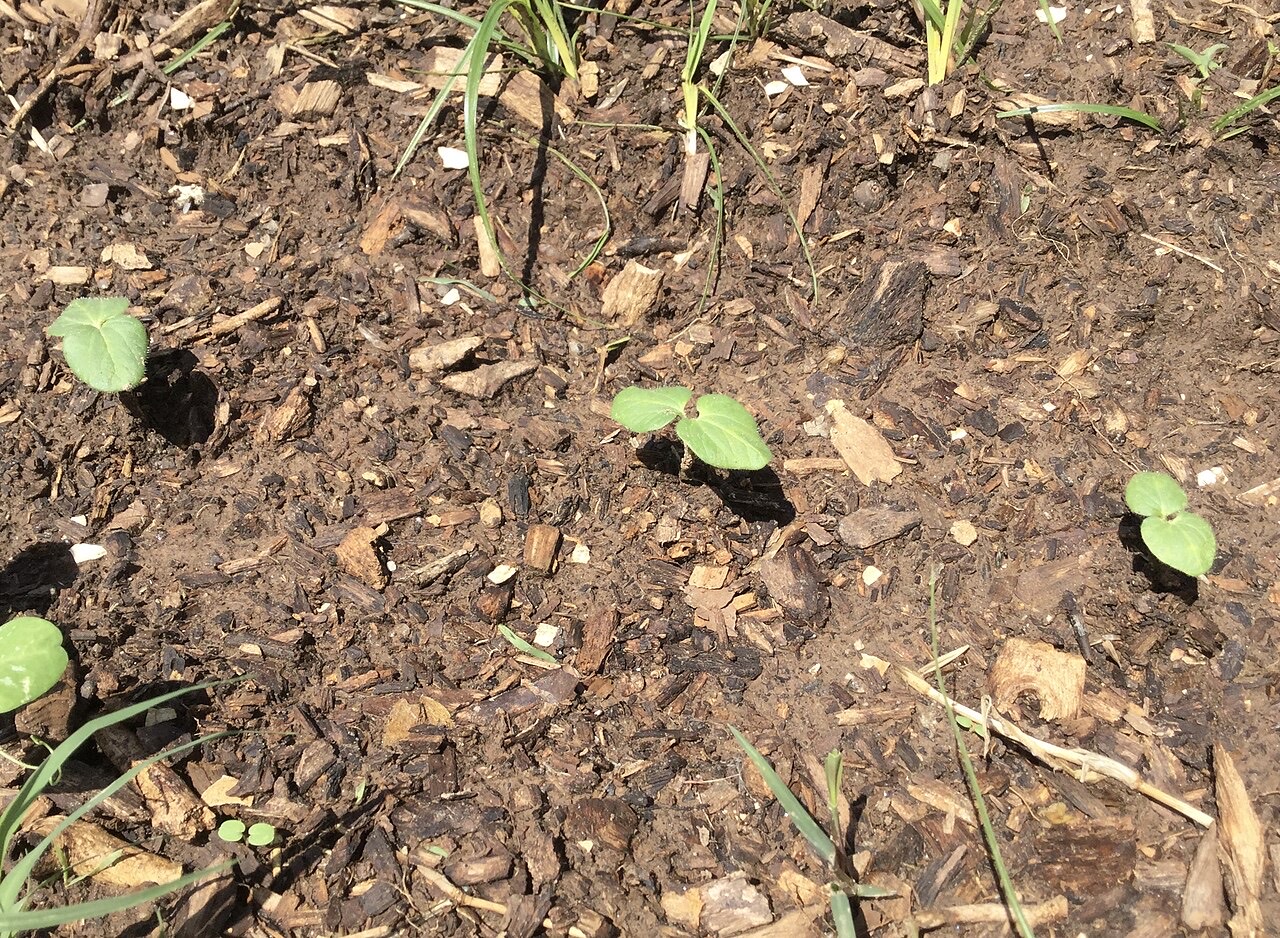
Okra is grown for its immature seed pods, harvested while young and tender, since older pods become fibrous and woody. It belongs to the mallow family, the same family as cotton, and shares that family's general tolerance for warm, sunny conditions.
The crop is notably heat- and drought-tolerant relative to many other vegetables, making it an important warm-season crop in tropical and subtropical smallholder systems as well as home gardens and specialty markets in temperate regions.
Overview
Okra is grown as a warm-season annual valued for continuous pod production over an extended harvest period once flowering begins, similar in this respect to other warm-season fruiting vegetables.
Production ranges from smallholder and home-garden cultivation in many tropical and subtropical countries to larger-scale commercial production supplying fresh and processing markets.
Botanical classification
- Family
- Malvaceae (mallow family)
- Genus
- Abelmoschus
- Principal species
- Abelmoschus esculentus (okra)
- Growth habit
- Upright, branching warm-season annual bearing ridged, tapering seed pods
Origin and distribution
Okra is believed to have originated in Africa, with a long history of cultivation there before spreading to Asia, the Middle East, and the Americas through historical trade and, in the case of the Americas, the transatlantic slave trade. It remains an important crop across many tropical and subtropical regions today.
Climate requirements
Okra requires warm to hot temperatures throughout its growing period and is notably tolerant of heat that would stress many other vegetable crops, along with reasonable tolerance of intermittent drought once established.
It is sensitive to cold and frost, so field planting is timed to the local frost-free period with soil already warmed.
Soil requirements
Okra tolerates a fairly wide range of soil types provided drainage is adequate, performing well on well-drained loams and sandy loams, and is comparatively forgiving of moderate soil fertility limitations.
Establishment and crop management
Okra is typically direct-seeded after soil has warmed, since seedlings are sensitive to cold soil, though transplants are used in some regions to gain an earlier start.
- Cultivar selection matched to pod shape, spine type, and local season length
- Crop rotation to manage soil-borne disease and pest carryover, particularly with other Malvaceae such as cotton
- Adequate plant spacing to support the crop's often tall, branching growth habit
- Frequent harvesting, since pods can quickly overmature and become fibrous
Nutrient considerations
Nitrogen supports vegetative growth and sustained pod production, while potassium contributes to pod quality over the extended harvest period typical of the crop.
Water and irrigation
Okra is grown both rain-fed and under irrigation, showing reasonable tolerance of short dry periods once established, though consistent moisture during flowering and pod development supports more reliable yield and pod quality. Drip irrigation is commonly used where available.
Common diseases and pests
Powdery mildew can affect foliage under favorable conditions, and fusarium wilt is a significant soil-borne disease risk in some regions. Aphids are a common pest, while stink bugs feed on developing pods and can affect quality.
Management combines resistant cultivars, crop rotation, monitoring, and — where justified — locally authorized control products applied according to their labels.
Harvest
Okra pods are harvested while young and tender, typically within a few days of flowering, since pods left longer on the plant quickly become fibrous and lose market quality. Frequent picking, often daily during peak season, is typical for continued production.
Uses
- Fresh and cooked vegetable, valued for its mucilaginous texture in many cuisines
- Dried, pickled, and frozen processed products
- Seed used in some regions as a coffee substitute or for oil extraction
- Fibrous stems used traditionally for cordage in some producing regions
Botanical identity
Species- Accepted name
- Abelmoschus esculentus
- Family
- Malvaceae
- Genus
- Abelmoschus
- Harvested part
- pod
- Agricultural use
- human food
- Crop group
- Vegetables
What the authorities say
- World Flora Online — Taxonomic Backbone
- Abelmoschus esculentus
- Plants of the World Online
- Abelmoschus esculentus
Botanical identity here is what the consulted taxonomic authorities publish, on the date they were read. Where authorities disagree, both readings are shown rather than one being chosen silently.
What AgricultureID holds for this crop
- 120 crop calendar records
- 1 verified extension resources
- 2 soil references
- 3 climate references
Not held
- No published cultivars — not researched
- No official variety registrations — source exists not mapped
- No pests and diseases naming this crop as a host — source exists not ingested
- No farm economics observations — source exists not mapped
- No market price series — source exists not mapped
- No related crops — not applicable
An absence here means this corpus holds no such record, not that none exists.
How to read figures on this page
Production, area and trade figures for any crop change from season to season and are compiled by FAO and by national agricultural statistics agencies. Take current numbers from those primary sources, dated to the period you mean, rather than from a secondary summary — including this one.
Crop water requirements are estimated from reference evapotranspiration and local climate data, following methods published by FAO and national agricultural agencies. A requirement quoted without the reference method and the local climate behind it is not a number that can be applied to a field.
Part of
Planting and harvest calendar
Usual sowing and harvest windows across 120 jurisdictions, covering okra and okra — season 1 and okra — season 2 and okra — season 3.
Official extension guidance
1 resource indexed from public extension publishers. Each was written for a particular place; read it at the source.
Factsheet published by NC State Extension for North Carolina. It addresses okra. The source is organised around “Cultivation Options in Okra”, “Herbicide Options in Okra” and “Herbicide Options in Okra”.
NC State Extension · Soil preparation, Weed management · publisher states no date; reachable 2026-08-27
These are pointers to guidance published by others. Each was written for a particular place and season and is revised by its publisher; read it at the source, and check it applies where you farm.
Tools for this
Each tool shows its formula, constants and sources, and starts empty — nothing is filled in from this page.
- Seed-rate calculator
Convert a target plant stand into a seed rate, allowing for germination and establishment.
- Row spacing calculator
Work out in-row spacing and plants per metre of row for a target density.
- Production, area and yield calculator
Relate a harvested area and a yield to a production total, in either direction.
- Growing degree-days calculator
Accumulate heat units against a base temperature.
Relationships
Evidence-backed connections in the knowledge graph.
Susceptible to
Suitable soils
Climate sensitivity
Irrigation methods
Scope & limitations
Geographic scope: Global overview. Agronomic details (timing, rates, varieties) are region-specific and vary widely.
Climate context: Warm-season vegetable with strong heat tolerance and reasonable drought tolerance; sensitive to cold and frost.
- Harvest frequency needed to keep pods tender is high and region- and cultivar-specific rather than fixed.
- Production statistics change annually and should be taken from primary datasets such as FAOSTAT.
Sources
This article draws on the following authoritative sources. See our sources & methodology for how they are selected.
- [1]FAO — Food and Agriculture Organization (opens in a new tab)Authoritative
Food and Agriculture Organization of the United Nations (FAO)
Cited for: Role of okra in warm-climate vegetable production
- Type:
- Intergovernmental organization
- Jurisdiction:
- Global
- Accessed:
- 2026-07-12
- [2]FAOSTAT — FAO statistical database (opens in a new tab)Authoritative
Food and Agriculture Organization of the United Nations (FAO)
Cited for: Production, area, and trade statistics
- Type:
- Intergovernmental organization
- Jurisdiction:
- Global
- Accessed:
- 2026-07-12
- Authoritative
Cited for: Classification and nomenclature
- Type:
- Reference database
- Jurisdiction:
- United States
- Accessed:
- 2026-07-12
- [4]CABI Digital Library — Crop Protection Compendium (opens in a new tab)High
CABI (Centre for Agriculture and Bioscience International)
Cited for: Okra disease and pest compendium data
- Type:
- Reference database
- Jurisdiction:
- Global
- Accessed:
- 2026-07-12
- [5]UC Statewide Integrated Pest Management Program (UC IPM) (opens in a new tab)High
University of California Agriculture and Natural Resources (UC ANR)
Cited for: Integrated pest management guidelines for okra
- Type:
- University extension service
- Jurisdiction:
- United States (California)
- Accessed:
- 2026-07-12