Crop · Spice crop
Cardamom
Elettaria cardamomum
Also known as: Green cardamom, True cardamom
Cardamom is a perennial, rhizomatous understorey herb of the ginger family grown for its dried seed capsules, one of the most highly valued spices by weight in global trade.
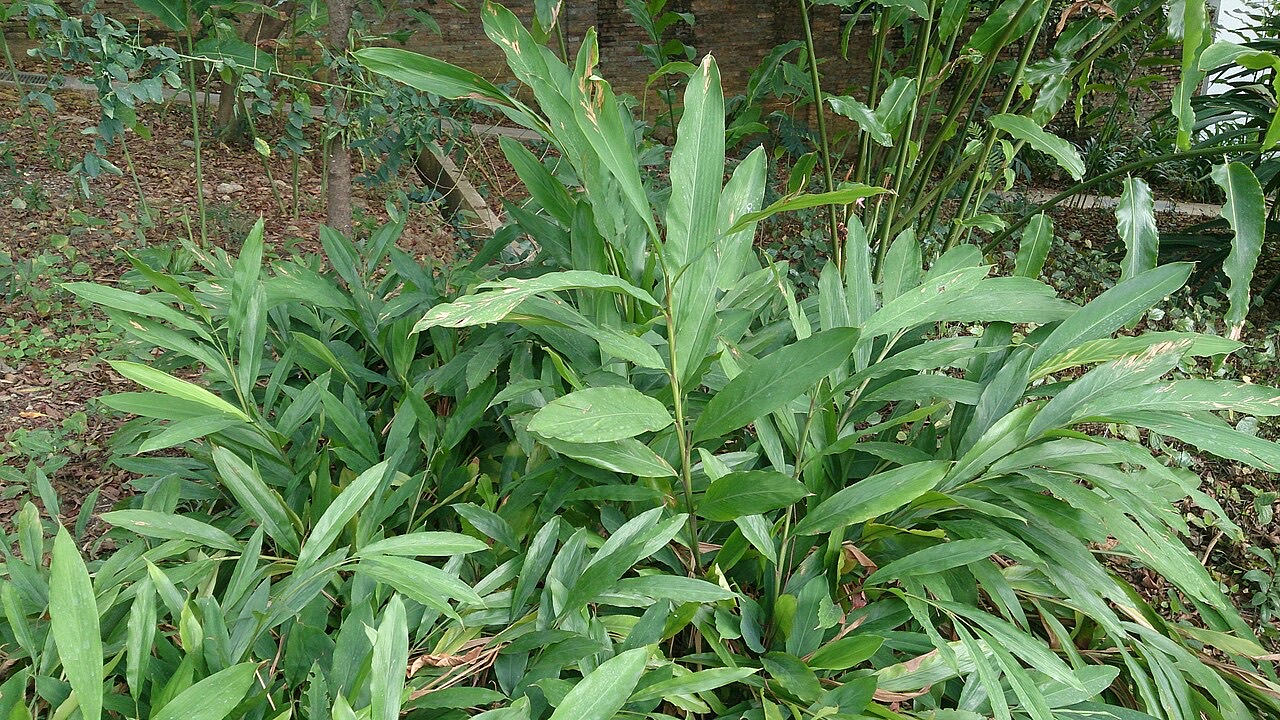
Cardamom is traditionally grown as an understorey crop beneath the shade of taller forest trees, reflecting its natural habitat in humid tropical evergreen forest. Cultivation combines elements of forest management with intensive perennial cropping.
The plant produces clumps of leafy pseudostems arising from underground rhizomes, with flowers and subsequent seed capsules borne on separate panicles near ground level.
Overview
Cardamom is grown mainly by smallholder farmers in a limited number of tropical mountain regions, most notably the Western Ghats of India and the highlands of Guatemala, both of which are major producers.
Because the crop is typically grown under a managed forest or shade-tree canopy, cardamom cultivation is closely tied to the management of the surrounding tree cover, which moderates temperature, humidity, and light.
Botanical classification
- Family
- Zingiberaceae (ginger family)
- Genus
- Elettaria
- Principal species
- Elettaria cardamomum
- Growth habit
- Perennial rhizomatous herb forming clumps of leafy pseudostems, with flowering panicles near the base bearing seed capsules
Origin and distribution
Cardamom is native to the evergreen forests of the Western Ghats of southern India and parts of Sri Lanka, where it has been harvested and later cultivated for centuries as a valuable spice.
India remains a leading producer, alongside Guatemala, which became a major producer following the crop’s introduction there in the twentieth century.
Climate and soil requirements
Cardamom requires a warm, humid tropical climate with well-distributed rainfall and partial shade, mimicking its native forest-understorey habitat. It has little tolerance for frost, drought, or strong direct sun.
Deep, well-drained loams rich in organic matter, typical of forested hill slopes, support healthy rhizome and root growth. Poor drainage significantly increases the risk of root and rhizome disease.
Cultivation and management
- Establishment from rhizome divisions or seedlings beneath a managed shade canopy
- Shade regulation through selective thinning of overstorey trees to balance light and humidity
- Mulching and organic matter addition to maintain soil moisture and fertility on sloped sites
- Periodic clump thinning and rhizome management to sustain productivity over the long term
Nutrient considerations
Nitrogen supports vigorous pseudostem and leaf growth, while potassium contributes to flowering and capsule development across the extended cropping cycle.
Water and irrigation
Cardamom requires consistently moist conditions and is grown mainly in regions with abundant, well-distributed rainfall; extended dry periods can reduce flowering and capsule set.
Supplemental sprinkler irrigation is used in some production areas during drier periods to maintain the humidity and soil moisture the crop requires.
Common diseases and pests
Rhizome and root rot are significant diseases in poorly drained cardamom plantations, and anthracnose-type leaf blight can affect foliage under humid conditions. Cardamom thrips is a major, well-documented pest causing characteristic scarring on developing capsules, and aphids are common sap-feeding pests that can also spread viral disease.
| Problem | Type | Notes |
|---|---|---|
| Root rot | Disease | Significant risk on poorly drained sites |
| Anthracnose | Disease | Leaf blight symptoms under humid conditions |
| Thrips | Pest | Major pest causing scarring on developing capsules |
| Aphids | Pest | Sap-feeding insects that can spread viral disease |
Harvest
Mature but unopened capsules are hand-picked in successive rounds as they ripen over an extended flowering season, then cured and dried to produce the familiar dried cardamom pods of trade.
Uses
- Whole dried capsules and their seeds used as a culinary spice in sweet and savory dishes
- Ground cardamom used in spice blends and baked goods
- Cardamom essential oil extracted for the flavor and fragrance industries
- Whole pods used in some regions to flavor beverages such as coffee and tea
Botanical identity
Species- Accepted name
- Elettaria cardamomum
- Family
- Zingiberaceae
- Genus
- Elettaria
- Harvested part
- seed, pod
- Agricultural use
- spice
- Crop group
- Spices and herbs
What the authorities say
- World Flora Online — Taxonomic Backbone
- Elettaria cardamomum
- Plants of the World Online
- Elettaria cardamomum
Botanical identity here is what the consulted taxonomic authorities publish, on the date they were read. Where authorities disagree, both readings are shown rather than one being chosen silently.
Traded as
This crop is traded as one commodity in this corpus.
No ingested price series for these commodities yet.
What AgricultureID holds for this crop
- 2 crop calendar records
- 2 soil references
- 2 climate references
Not held
- No published cultivars — not researched
- No official variety registrations — source exists not mapped
- No verified extension resources — source exists not ingested
- No pests and diseases naming this crop as a host — source exists not ingested
- No farm economics observations — source exists not mapped
- No market price series — source exists not mapped
- No related crops — not applicable
An absence here means this corpus holds no such record, not that none exists.
How to read figures on this page
Production, area and trade figures for any crop change from season to season and are compiled by FAO and by national agricultural statistics agencies. Take current numbers from those primary sources, dated to the period you mean, rather than from a secondary summary — including this one.
Crop water requirements are estimated from reference evapotranspiration and local climate data, following methods published by FAO and national agricultural agencies. A requirement quoted without the reference method and the local climate behind it is not a number that can be applied to a field.
Planting and harvest calendar
Usual sowing and harvest windows across 2 jurisdictions, covering cardamom — season 1 and cardamom — season 2.
Tools for this
Each tool shows its formula, constants and sources, and starts empty — nothing is filled in from this page.
- Seed-rate calculator
Convert a target plant stand into a seed rate, allowing for germination and establishment.
- Row spacing calculator
Work out in-row spacing and plants per metre of row for a target density.
- Production, area and yield calculator
Relate a harvested area and a yield to a production total, in either direction.
- Growing degree-days calculator
Accumulate heat units against a base temperature.
Relationships
Evidence-backed connections in the knowledge graph.
Susceptible to
Suitable soils
Irrigation methods
Managed with
Farming systems
Related topics
Harvested commodities
The traded commodities harvested from this crop. A commodity is the harvested lot, described by its own quality, grading, and storage evidence — not by the agronomy of the plant.
Scope & limitations
Geographic scope: Global overview; major production in India (Western Ghats) and Guatemala, with smaller production in other tropical regions.
Climate context: Tropical, humid, shade-adapted perennial understorey crop with no tolerance for frost or prolonged drought.
- Shade management and rhizome husbandry practices vary considerably by region and are not detailed exhaustively here.
- Production statistics change annually and should be taken from primary datasets such as FAOSTAT.
Sources
This article draws on the following authoritative sources. See our sources & methodology for how they are selected.
- [1]FAO — Food and Agriculture Organization (opens in a new tab)Authoritative
Food and Agriculture Organization of the United Nations (FAO)
Cited for: Global cardamom production context
- Type:
- Intergovernmental organization
- Jurisdiction:
- Global
- Accessed:
- 2026-07-12
- [2]FAOSTAT — FAO statistical database (opens in a new tab)Authoritative
Food and Agriculture Organization of the United Nations (FAO)
Cited for: Production and area statistics
- Type:
- Intergovernmental organization
- Jurisdiction:
- Global
- Accessed:
- 2026-07-12
- [3]CABI Digital Library — Crop Protection Compendium (opens in a new tab)High
CABI (Centre for Agriculture and Bioscience International)
Cited for: Cardamom disease and pest compendium data
- Type:
- Reference database
- Jurisdiction:
- Global
- Accessed:
- 2026-07-12
- Authoritative
Cited for: Classification and nomenclature
- Type:
- Reference database
- Jurisdiction:
- United States
- Accessed:
- 2026-07-12