Crop · Vegetable crop
Onion
Allium cepa
Also known as: Bulb onion, Common onion
Onion is a biennial Allium grown worldwide for its pungent, storable bulb, one of the most widely traded vegetable crops and a foundational culinary ingredient in most world cuisines.
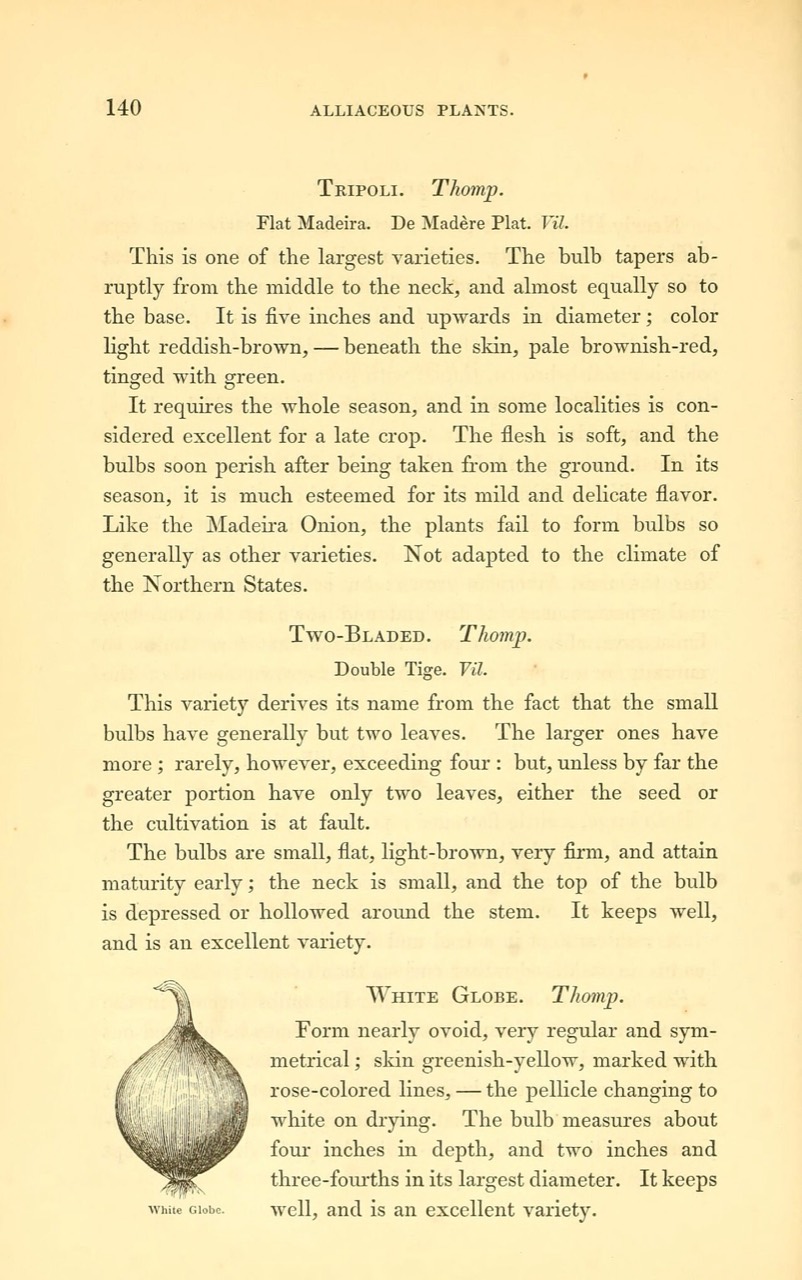
Onion is a bulb vegetable grown for its swollen, layered leaf bases, which are consumed fresh, cooked, and in a wide range of processed and dehydrated forms. It is a biennial by nature — flowering only in its second year — but is grown commercially as an annual, harvested for its bulb before flowering occurs.
Bulb formation is triggered by the interaction of day length and temperature, and cultivars are grouped as short-day, intermediate-day, or long-day types according to the photoperiod they require to bulb. Matching cultivar type to local latitude is a central agronomic decision in onion production.
Overview
Onion is propagated from seed, from small immature bulbs called sets, or from transplants, and each method carries different tradeoffs in cost, timing, and disease risk that are weighed locally. Its shallow, sparsely branched root system makes the crop comparatively sensitive to short-term water and nutrient shortages near the soil surface.
Because onion does not flower in its first year under normal commercial production, growers select cultivars primarily for bulb size, storage quality, pungency, and day-length response rather than for flowering traits.
Botanical classification
- Family
- Amaryllidaceae, subfamily Allioideae (formerly treated as Alliaceae)
- Genus and species
- Allium cepa
- Growth habit
- Biennial monocot forming a bulb of fleshy, concentric leaf bases; flowers in a spherical umbel only in the second season
- Root system
- Shallow, fibrous, and largely unbranched, with limited capacity to explore soil for water and nutrients
Origin and distribution
Onion is believed to have originated in Central Asia, with cultivation extending into prehistory across the Near East and Mediterranean before spreading throughout the Old World and, later, to the Americas. It is now grown on every populated continent under an unusually broad range of climates.
Climate requirements
Bulbing in onion is a photoperiod- and temperature-dependent response: short-day cultivars form bulbs under roughly 10–12 hours of daylight and are grown at lower latitudes, while long-day cultivars require 14–16 hours and are grown at higher latitudes, with intermediate-day types suited to the zone between. Growing a cultivar outside its adapted day-length range typically results in poor or premature bulbing.
Exposure to prolonged cold during early growth can induce premature flowering (bolting) before an economic bulb has formed, which is one reason planting timing is matched carefully to local temperature patterns.
Soil requirements
Onion performs best on well-drained, fertile sandy loams free of clods and compaction, which allow uniform bulb expansion and easy harvest. Because its root system is shallow, the crop is comparatively intolerant of both drought stress and waterlogging.
Establishment and crop management
Stand establishment method — direct-seeding, sets, or transplants — is chosen based on local labor, equipment, season length, and disease history. Because onion seedlings are slow-growing and narrow-leaved, weed competition during early establishment is a major management concern.
- Cultivar selection matched to local day length (short-, intermediate-, or long-day type)
- Crop rotation away from other Allium species to reduce soilborne disease carryover
- Effective early-season weed control given the crop’s slow, shallow-rooted establishment
- Adequate plant spacing to support uniform bulb size and airflow that reduces disease pressure
Nutrient considerations
Nitrogen supports leaf and bulb growth, while sulfur is notable in onion because it is a precursor of the flavor and pungency compounds characteristic of the crop. Phosphorus and potassium support root development and bulb quality. Actual requirements depend on soil supply, target yield, and cultivar.
Water and irrigation
Because of its shallow root system, onion generally requires frequent, light irrigation rather than infrequent deep watering, particularly during bulb bulking. Irrigation is commonly reduced or withheld in the weeks before harvest to encourage the neck to dry down and the bulb to cure properly.
Common diseases and pests
Downy mildew is one of the most damaging foliar diseases of onion in cool, humid conditions, and Fusarium basal rot is a significant soilborne disease affecting the bulb base. Thrips are the most important insect pest of onion in many regions, causing direct feeding damage and, in some areas, transmitting viruses.
Management combines resistant or tolerant cultivars, rotation away from other Alliums, field monitoring, and, where warranted, locally authorized control measures applied according to their labels.
Harvest
Maturity is signaled by the tops (foliage) yellowing, softening at the neck, and falling over. Bulbs are typically lifted, field-cured, and then dried further under controlled conditions before topping and storage, since proper curing strongly influences storage life.
Uses
- Fresh and cooked culinary use as a foundational aromatic in most world cuisines
- Dehydrated products such as onion powder, flakes, and granules
- Pickled and other processed onion products
- By-products and residues used in some regions as livestock feed or soil amendment
Botanical identity
Species- Accepted name
- Allium cepa
- Family
- Amaryllidaceae
- Genus
- Allium
- Harvested part
- bulb
- Agricultural use
- human food
- Crop group
- Vegetables
What the authorities say
- World Flora Online — Taxonomic Backbone
- Allium cepa
- Plants of the World Online
- Allium cepa
Botanical identity here is what the consulted taxonomic authorities publish, on the date they were read. Where authorities disagree, both readings are shown rather than one being chosen silently.
Traded as
This crop is traded as one commodity in this corpus.
What AgricultureID holds for this crop
- 229 crop calendar records
- 3 verified extension resources
- 2 soil references
- 1 climate references
- 353 market price series
- 4 related crops
Not held
- No published cultivars — not researched
- No official variety registrations — source exists not mapped
- No pests and diseases naming this crop as a host — source exists not ingested
- No farm economics observations — source exists not mapped
An absence here means this corpus holds no such record, not that none exists.
How to read figures on this page
Production, area and trade figures for any crop change from season to season and are compiled by FAO and by national agricultural statistics agencies. Take current numbers from those primary sources, dated to the period you mean, rather than from a secondary summary — including this one.
Crop water requirements are estimated from reference evapotranspiration and local climate data, following methods published by FAO and national agricultural agencies. A requirement quoted without the reference method and the local climate behind it is not a number that can be applied to a field.
Part of
Related crops
- Same genus
- Chives, Garlic, Leek, Welsh Onion
Planting and harvest calendar
Usual sowing and harvest windows across 229 jurisdictions, covering onion and onion — season 1 and onion — season 2 and onion — season 3 and onion — season 4 and onion — season 5.
Official extension guidance
3 resources indexed from public extension publishers. Each was written for a particular place; read it at the source.
Basic biology and management of onion thrips on field crops
Guide published by AHDB for Great Britain. It addresses onion. The source is organised around “Risk factors in field crops”, “Thrips identification” and “Onion thrips life cycle and crop damage”.
Agriculture and Horticulture Development Board · Pest management · publisher states no date; reachable 2026-08-27
Factsheet published by Penn State Extension for Pennsylvania. It addresses onion. The source is organised around “Onion Production”, “Production Considerations” and “Environmental Regulations”.
Penn State Extension · Farm management · publisher states 2020-10-23
Factsheet published by NC State Extension for North Carolina. It addresses onion. The source is organised around “Onion Thrips”, “Other Resources” and “Onion Thrips”.
NC State Extension · Pest management · publisher states 2024-06-12
These are pointers to guidance published by others. Each was written for a particular place and season and is revised by its publisher; read it at the source, and check it applies where you farm.
Authorised inputs (France)
The French register records 81 currently authorised products whose authorised use names this crop, held by 43 authorisation holders. This is a count of what exists on the register, not a recommendation and not a shortlist.
By function
- Fongicide 42
- Herbicide 28
- Insecticide 8
- Régulateur de croissance 3
Targets named on the register
- Mildiou(s) 19
- Bactériose(s) 8
- Pourriture grise et sclérotinioses 7
- Chenilles phytophages 5
- Rouille(s) 5
- Champignons (autres que pythiacées) 5
Use scope is recorded as the register writes it. Collective terms cover several crops at once and are left unmapped rather than expanded, because expanding one entry into several would invent authorisations that were never granted.
Authorisation is specific to one jurisdiction, one legal object and one moment. It is not a recommendation, and it says nothing about how a product may be used: always read the current official label at the source before acting.
Tools for this
Each tool shows its formula, constants and sources, and starts empty — nothing is filled in from this page.
- Seed-rate calculator
Convert a target plant stand into a seed rate, allowing for germination and establishment.
- Row spacing calculator
Work out in-row spacing and plants per metre of row for a target density.
- Production, area and yield calculator
Relate a harvested area and a yield to a production total, in either direction.
- Growing degree-days calculator
Accumulate heat units against a base temperature.
Relationships
Evidence-backed connections in the knowledge graph.
Susceptible to
Nutrients required
Suitable soils
Climate sensitivity
Irrigation methods
Machinery
Managed with
Harvested commodities
The traded commodities harvested from this crop. A commodity is the harvested lot, described by its own quality, grading, and storage evidence — not by the agronomy of the plant.
Scope & limitations
Geographic scope: Global overview. Cultivar day-length type, propagation method, and input levels are region-specific and depend on local latitude and season length.
Climate context: Day-length- and temperature-sensitive bulb crop grown across temperate to subtropical regions, rain-fed or irrigated.
- Matching cultivar day-length type to local latitude is a regional decision not reduced to a single universal recommendation here.
- Production and trade statistics change annually and should be taken from primary datasets such as FAOSTAT.
- Disease and pest control should follow locally authorized guidance and product labels.
Sources
This article draws on the following authoritative sources. See our sources & methodology for how they are selected.
- [1]FAO — Food and Agriculture Organization (opens in a new tab)Authoritative
Food and Agriculture Organization of the United Nations (FAO)
Cited for: Role of onion in global vegetable production
- Type:
- Intergovernmental organization
- Jurisdiction:
- Global
- Accessed:
- 2026-07-12
- [2]FAOSTAT — FAO statistical database (opens in a new tab)Authoritative
Food and Agriculture Organization of the United Nations (FAO)
Cited for: Production, area, and trade statistics
- Type:
- Intergovernmental organization
- Jurisdiction:
- Global
- Accessed:
- 2026-07-12
- Authoritative
Cited for: Classification and nomenclature
- Type:
- Reference database
- Jurisdiction:
- United States
- Accessed:
- 2026-07-12
- [4]UC Statewide Integrated Pest Management Program (UC IPM) (opens in a new tab)High
University of California Agriculture and Natural Resources (UC ANR)
Cited for: Integrated pest and disease management for onion
- Type:
- University extension service
- Jurisdiction:
- United States (California)
- Accessed:
- 2026-07-12
- [5]Cornell CALS — Plant pathology and crop resources (opens in a new tab)High
Cornell University College of Agriculture and Life Sciences
Cited for: Onion production and disease guidance
- Type:
- University extension service
- Jurisdiction:
- United States (New York)
- Accessed:
- 2026-07-12