Crop · Vine fruit crop
Melon
Cucumis melo
Also known as: Muskmelon, Cantaloupe, Honeydew
Melon is a warm-season annual vine crop encompassing cantaloupe, honeydew, and other Cucumis melo market types. It is direct-seeded or transplanted each season and grown for its aromatic, sweet fruit.
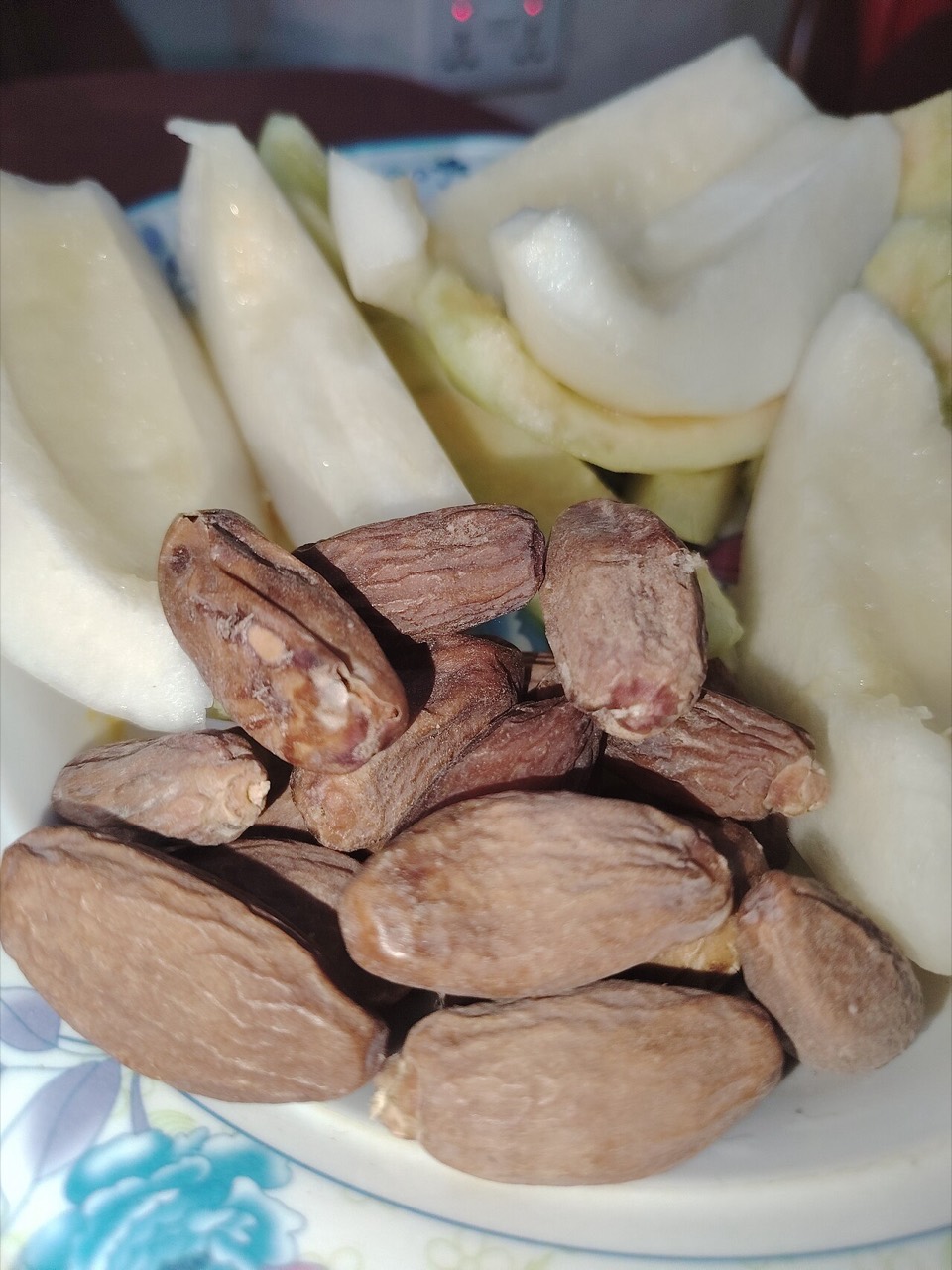
Melon refers to the group of edible fruits produced by Cucumis melo, a species that includes cantaloupe (muskmelon), honeydew, and a range of other regional market types with differing rind, flesh, and aroma characteristics. Like watermelon, melon is grown as an annual trailing vine, re-established from seed or transplants each season rather than as a permanent planting.
Although melon and watermelon are both warm-season cucurbit vine crops with broadly similar field culture, they belong to different genera: melon is Cucumis melo, while watermelon is Citrullus lanatus. Many melon types are climacteric, meaning fruit continues to ripen after harvest and often develops a characteristic aroma and a natural separation, or "slip," at the point where the fruit joins the stem as it nears maturity.
Overview
Melon is grown as an annual trailing vine crop, planted anew each season from direct-seeded plantings or transplants. Within the species Cucumis melo, growers select among distinct market types, such as netted cantaloupe, smooth-skinned honeydew, and various regional and heirloom types, each with somewhat different culture and market handling.
As with other cucurbits, successful fruit set depends on insect pollination of the flowers and on sustained warmth through the growing period. Because the crop is reseeded annually, cultivar and market-type choice, spacing, and pollination management are decided fresh each season.
Botanical classification
- Family
- Cucurbitaceae (cucurbit family)
- Genus
- Cucumis
- Principal species
- Cucumis melo (melon, including cantaloupe and honeydew types)
- Growth habit
- Trailing annual vine with tendrils and separate male and female (or hermaphrodite) flowers on the same plant
Origin and distribution
Melon is believed to have originated in Africa and Asia, where a wide range of wild and semi-domesticated Cucumis melo relatives are found, with subsequent diversification into the many market types grown around the world today. It is now cultivated commercially in warm regions across every populated continent.
Climate requirements
Melon is a heat-loving crop that grows poorly in cool conditions and is intolerant of frost. Soil temperature strongly influences seed germination and early seedling vigor, and planting into cold soil can delay emergence and increase disease risk.
Sustained heat during flowering and fruit development generally favors melon, though extreme heat stress can affect flowering and fruit set, making climate matching an important part of cultivar and planting-date choice.
Soil requirements
Melon performs best on deep, well-drained soils that warm readily in spring, with sandy loams and loams widely favored. The crop is intolerant of waterlogged or poorly aerated soils, which increase the risk of root and vine diseases.
Field establishment and management
Melon fields are established from direct-seeded plantings or from transplants set out once soil and air temperatures are suitable for the crop. Vine spread and market-type characteristics inform plant and row spacing decisions.
- Seedbed or raised-bed preparation, often with plastic mulch to warm soil and manage weeds
- Direct seeding or transplanting timed to adequate soil temperature
- Plant and row spacing suited to the market type and trellising or ground-culture system used
- Reliance on bee activity, managed or wild, for pollination and fruit set
| Market type | Typical rind | Typical flesh | Ripening behavior |
|---|---|---|---|
| Cantaloupe (muskmelon) | Netted, tan-gray | Orange, aromatic | Climacteric; often develops stem-end "slip" near maturity |
| Honeydew | Smooth, pale | Green to white, mild | Ripens after harvest but with less pronounced aroma than cantaloupe |
| Casaba and other regional types | Wrinkled or ribbed, variable | Pale, variable sweetness | Varies by type; handling practices differ by market |
Nutrient considerations
Nitrogen supports early vine and foliage development but is generally moderated as flowering and fruiting proceed, since excess vegetative growth can be at the expense of fruit set and quality. Potassium is closely linked to fruit size, sugar content, and overall eating quality in melon.
Water and irrigation
Melon has significant water demand during vine establishment and fruit development, and drip irrigation is widely used to apply water and nutrients precisely to the root zone, particularly in mulched bed systems. Deficit irrigation approaches, applying somewhat less than full crop water demand at certain growth stages, are sometimes used where water is limited or where growers aim to concentrate fruit sugars.
Because excess water near maturity can dilute fruit sugars and increase disease risk, many growers reduce irrigation as fruit approaches ripeness, with the appropriate timing depending on local conditions and regional guidance.
Common diseases and pests
Powdery mildew and downy mildew are the dominant foliar diseases of melon in most production regions, both capable of severely reducing leaf area and, consequently, fruit yield and sugar content if left unmanaged. Fusarium wilt is an important soilborne disease of melon, with distinct pathogen races that can overcome specific host resistance; race-specific resistant cultivars and crop rotation are central management tools since the pathogen persists in infested soil for years.
Common insect pests include aphids and whiteflies, both capable of transmitting plant viruses in addition to direct feeding damage, and spider mites, which can proliferate rapidly under hot, dry conditions.
Management combines resistant cultivars, crop rotation, sanitation, monitoring, and — where justified — locally authorized control products applied according to their labels.
Harvest
Many melon types, including most cantaloupes, are climacteric and continue to ripen and develop aroma after harvest, so fruit is often picked at a "full slip" or "half slip" stage, when the stem separates from the fruit with little or no force, rather than at a fixed calendar date. Honeydew and some other types slip less readily and are instead judged by rind color change, surface texture, and firmness. Because maturation timing varies with cultivar, market type, and growing conditions, harvest decisions rely on these physical indicators rather than a universal days-to-harvest figure.
Uses
- Fresh-market whole and cut fruit
- Fresh-cut and processed fruit products, including juice and purees
- Dried melon products in some regional food traditions
- Seeds used in some cuisines, either roasted or pressed for oil
Botanical identity
Species- Accepted name
- Cucumis melo
- Family
- Cucurbitaceae
- Genus
- Cucumis
- Harvested part
- fruit
- Agricultural use
- human food
- Crop group
- Fruit, Vegetables
What the authorities say
- World Flora Online — Taxonomic Backbone
- Cucumis melo
- Plants of the World Online
- Cucumis melo
Botanical identity here is what the consulted taxonomic authorities publish, on the date they were read. Where authorities disagree, both readings are shown rather than one being chosen silently.
What AgricultureID holds for this crop
- 111 crop calendar records
- 2 soil references
- 2 climate references
- 1 related crops
Not held
- No published cultivars — not researched
- No official variety registrations — source exists not mapped
- No verified extension resources — source exists not ingested
- No pests and diseases naming this crop as a host — source exists not ingested
- No farm economics observations — source exists not mapped
- No market price series — source exists not mapped
An absence here means this corpus holds no such record, not that none exists.
How to read figures on this page
Production, area and trade figures for any crop change from season to season and are compiled by FAO and by national agricultural statistics agencies. Take current numbers from those primary sources, dated to the period you mean, rather than from a secondary summary — including this one.
Crop water requirements are estimated from reference evapotranspiration and local climate data, following methods published by FAO and national agricultural agencies. A requirement quoted without the reference method and the local climate behind it is not a number that can be applied to a field.
Part of
Related crops
- Same genus
- Cucumber
Planting and harvest calendar
Usual sowing and harvest windows across 111 jurisdictions, covering melon and melon (except watermelon) and melon (except watermelon) — season 1 and melon (except watermelon) — season 2 and melon — season 1 and melon — season 2.
Tools for this
Each tool shows its formula, constants and sources, and starts empty — nothing is filled in from this page.
- Seed-rate calculator
Convert a target plant stand into a seed rate, allowing for germination and establishment.
- Row spacing calculator
Work out in-row spacing and plants per metre of row for a target density.
- Production, area and yield calculator
Relate a harvested area and a yield to a production total, in either direction.
- Growing degree-days calculator
Accumulate heat units against a base temperature.
Relationships
Evidence-backed connections in the knowledge graph.
Suitable soils
Climate sensitivity
Irrigation methods
Machinery
Managed with
Related topics
Scope & limitations
Geographic scope: Global overview. Market-type choice, spacing, planting dates, and irrigation practices are region-specific.
Climate context: Warm-season annual vine crop; requires warm soil for establishment and is intolerant of frost.
- Market-type and cultivar selection, plant spacing, and irrigation scheduling are examples of region-specific decisions not covered by universal values here.
- Production and yield statistics change over time and should be taken from primary datasets such as FAOSTAT.
- Disease and pest pressure, including fusarium wilt race distribution, varies by region and should be assessed against local monitoring and extension guidance.
Sources
This article draws on the following authoritative sources. See our sources & methodology for how they are selected.
- [1]FAO — Food and Agriculture Organization (opens in a new tab)Authoritative
Food and Agriculture Organization of the United Nations (FAO)
Cited for: Global melon production and agronomy context
- Type:
- Intergovernmental organization
- Jurisdiction:
- Global
- Accessed:
- 2026-07-12
- [2]FAOSTAT — FAO statistical database (opens in a new tab)Authoritative
Food and Agriculture Organization of the United Nations (FAO)
Cited for: Production and area statistics
- Type:
- Intergovernmental organization
- Jurisdiction:
- Global
- Accessed:
- 2026-07-12
- Authoritative
Cited for: Classification and nomenclature
- Type:
- Reference database
- Jurisdiction:
- United States
- Accessed:
- 2026-07-12
- [4]CABI Digital Library — Crop Protection Compendium (opens in a new tab)High
CABI (Centre for Agriculture and Bioscience International)
Cited for: Melon pest and disease compendium data
- Type:
- Reference database
- Jurisdiction:
- Global
- Accessed:
- 2026-07-12
- [5]UC Statewide Integrated Pest Management Program (UC IPM) (opens in a new tab)High
University of California Agriculture and Natural Resources (UC ANR)
Cited for: Integrated pest management guidelines for melon
- Type:
- University extension service
- Jurisdiction:
- United States (California)
- Accessed:
- 2026-07-12