Crop · Legume crop
Pea
Pisum sativum
Also known as: Garden pea, Field pea
Pea is a cool-season annual legume grown for its edible seeds and pods, used in both food and feed systems and valued for its symbiotic nitrogen fixation in crop rotations.
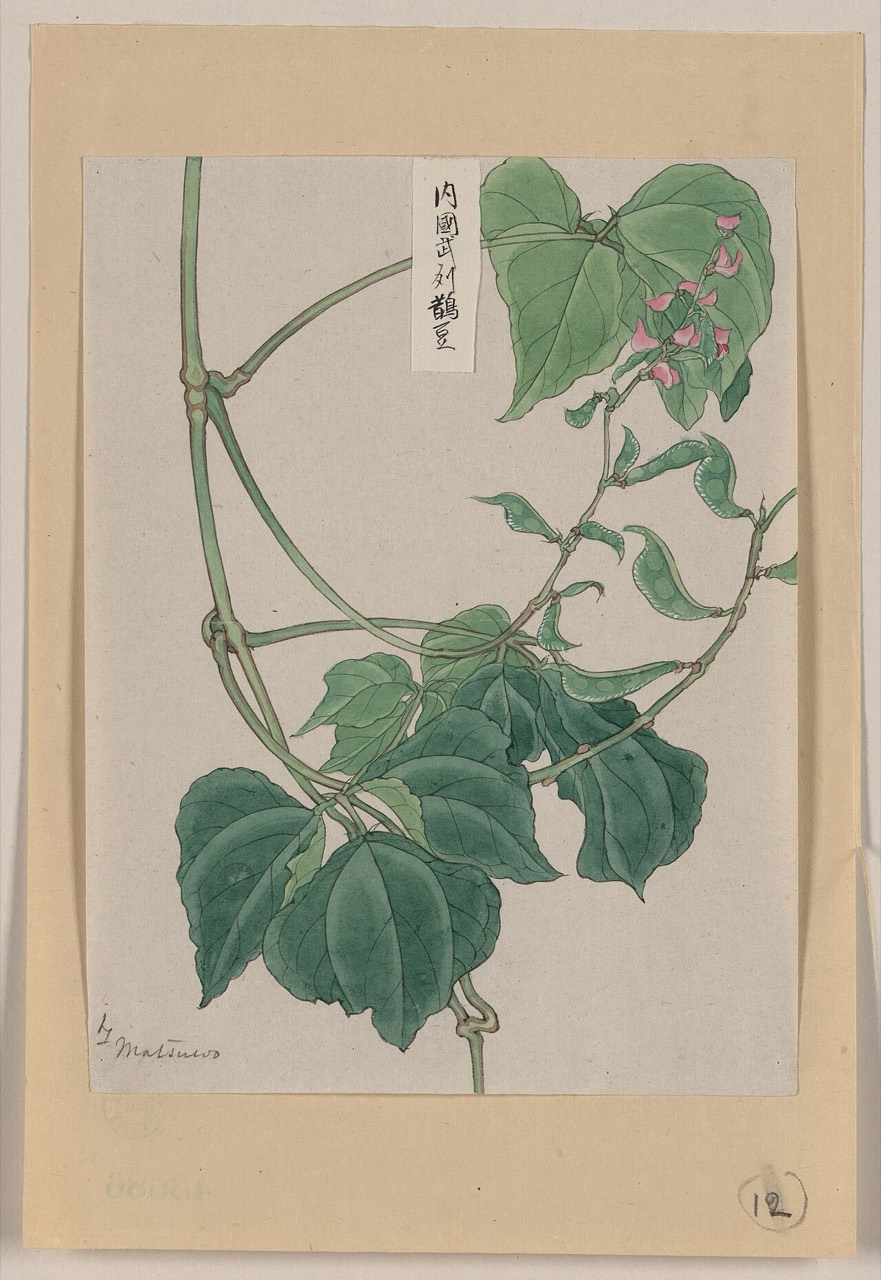
Pea is grown either as a dry or field pea, harvested mature for food or feed use, or as a fresh garden pea, picked immature for direct consumption, canning, or freezing. Plants climb by means of tendrils and are often grown supported or, in modern semi-leafless cultivars, bred to stand more independently.
As a legume, pea forms a symbiotic relationship with Rhizobium leguminosarum bacteria in root nodules, allowing it to fix atmospheric nitrogen, a trait that contributes to its long-standing role in cereal-based crop rotations.
Overview
Pea occupies two broad production streams: dry or field pea, grown to full maturity for food, feed, or protein and starch processing, and vining or garden pea, harvested immature for fresh, canned, or frozen markets.
Modern semi-leafless cultivars, in which some leaflets are replaced by additional tendrils, were bred to improve standing ability and reduce lodging, which historically complicated pea harvest.
Botanical classification
- Family
- Fabaceae (legume family)
- Genus and species
- Pisum sativum
- Growth habit
- Climbing annual supported by tendrils; semi-leafless cultivars bred for improved standing ability
- Root system
- Taproot bearing nodules that host nitrogen-fixing Rhizobium leguminosarum bacteria
Origin and distribution
Pea is among the earliest domesticated crops, cultivated in the Fertile Crescent alongside wheat and barley and spreading across Europe and Asia in antiquity. It has since become established as a widely grown crop across temperate regions worldwide.
Climate requirements
Pea is a cool-season crop, generally more tolerant of cold during early growth than many other legumes, which allows it to be sown relatively early in the season in many regions.
Flowering and pod fill are sensitive to heat, and elevated temperatures during this window can reduce both yield and seed quality, which is a key reason planting timing and cultivar maturity are matched to local conditions.
Soil requirements
Pea performs best on well-drained loams with near-neutral pH. It is sensitive to waterlogging, which restricts root and nodule development and increases the risk of root rot diseases.
Establishment and crop management
In fields without a recent history of pea production, seed is often treated with a compatible rhizobial inoculant to support effective nodulation. Rotation intervals away from pea and other closely related legumes help manage the buildup of soilborne pathogens over time.
- Cultivar selection matched to market type (dry, field, or fresh garden pea) and local season length
- Inoculation with compatible Rhizobium leguminosarum strains in fields new to pea production
- Crop rotation, commonly with cereals, to manage soilborne diseases
- Weed management during early growth, before the canopy closes
Nutrient considerations
Biological nitrogen fixation can supply a substantial share of crop nitrogen needs when nodulation is effective, while phosphorus supports early root and nodule development. Requirements depend on soil supply, target yield, and nodulation status.
Water and irrigation
Pea is grown both rain-fed and under irrigation. Moisture stress during flowering and pod fill is a major yield-limiting factor, and consistent water supply during this window is important where irrigation is available.
Common diseases and pests
Powdery mildew is one of the most recognizable foliar diseases of pea, and a complex of soilborne fungi and oomycetes can cause root rot, particularly in wet or compacted soils. The pea aphid is a classic and economically important pest, capable of transmitting viruses in addition to direct feeding damage.
Management combines resistant cultivars, crop rotation, drainage improvement, field monitoring, and, where warranted, locally authorized control measures applied according to their labels.
Harvest
Dry and field peas are combined once pods and seeds have matured and dried to a moisture content suitable for threshing and safe storage. Fresh garden peas are harvested immature, at peak sweetness and tenderness, often using specialized viner harvesters for processing markets.
Uses
- Dry split peas used in soups, dals, and other food preparations
- Fresh, canned, and frozen garden peas as a vegetable
- Field pea used as animal feed and, in some regions, as a protein and starch processing feedstock
- Pea protein isolates used as an ingredient in some plant-based food products
Botanical identity
Species- Accepted name
- Lathyrus oleraceus
- Family
- Fabaceae
- Genus
- Lathyrus
- Harvested part
- seed, pod
- Agricultural use
- human food, animal feed, forage
- Crop group
- Pulses and grain legumes, Vegetables
What the authorities say
- World Flora Online — Taxonomic Backbone
- Lathyrus oleraceus
- Plants of the World Online
- Lathyrus oleraceus
Botanical identity here is what the consulted taxonomic authorities publish, on the date they were read. Where authorities disagree, both readings are shown rather than one being chosen silently.
Traded as
This crop is traded as one commodity in this corpus.
What AgricultureID holds for this crop
- 142 crop calendar records
- 1 pests and diseases naming this crop as a host
- 2 soil references
- 2 climate references
- 312 market price series
- 1 related crops
Not held
- No published cultivars — not researched
- No official variety registrations — source exists not mapped
- No verified extension resources — source exists not ingested
- No farm economics observations — source exists not mapped
An absence here means this corpus holds no such record, not that none exists.
How to read figures on this page
Production, area and trade figures for any crop change from season to season and are compiled by FAO and by national agricultural statistics agencies. Take current numbers from those primary sources, dated to the period you mean, rather than from a secondary summary — including this one.
Crop water requirements are estimated from reference evapotranspiration and local climate data, following methods published by FAO and national agricultural agencies. A requirement quoted without the reference method and the local climate behind it is not a number that can be applied to a field.
Part of
Fabaceae — the legume family · Pulses and grain legumes · Vegetables
Related crops
- Same genus
- Grass Pea
Planting and harvest calendar
Usual sowing and harvest windows across 142 jurisdictions, covering pea, dry and pea, dry — season 1 and pea, dry — season 2 and pea, dry — season 3 and pea, green and pea, green — season 1 and pea, green — season 2 and pea, green — season 3.
Authorised inputs (France)
The French register records 10 currently authorised products whose authorised use names this crop, held by 8 authorisation holders. This is a count of what exists on the register, not a recommendation and not a shortlist.
By function
- Insecticide 6
- Fongicide 4
Targets named on the register
- Ravageurs divers (1) 3
- Oïdium(s) (1) 3
- Chenilles phytophages (1) 3
- Coléoptères phytophages (1) 3
- Maladies des taches brunes (1) 2
- Pucerons (1) 1
Use scope is recorded as the register writes it. Collective terms cover several crops at once and are left unmapped rather than expanded, because expanding one entry into several would invent authorisations that were never granted.
Authorisation is specific to one jurisdiction, one legal object and one moment. It is not a recommendation, and it says nothing about how a product may be used: always read the current official label at the source before acting.
Tools for this
Each tool shows its formula, constants and sources, and starts empty — nothing is filled in from this page.
- Seed-rate calculator
Convert a target plant stand into a seed rate, allowing for germination and establishment.
- Row spacing calculator
Work out in-row spacing and plants per metre of row for a target density.
- Production, area and yield calculator
Relate a harvested area and a yield to a production total, in either direction.
- Growing degree-days calculator
Accumulate heat units against a base temperature.
Relationships
Evidence-backed connections in the knowledge graph.
Susceptible to
Nutrients required
Climate sensitivity
Machinery
Managed with
Related topics
Harvested commodities
The traded commodities harvested from this crop. A commodity is the harvested lot, described by its own quality, grading, and storage evidence — not by the agronomy of the plant.
Scope & limitations
Geographic scope: Global overview. Market type (dry, field, or fresh garden pea), cultivar, and input levels are region-specific.
Climate context: Cool-season legume relatively tolerant of cold but sensitive to heat at flowering; grown rain-fed and under irrigation.
- Market type and cultivar selection are region- and market-specific decisions not reduced to universal guidance here.
- Nitrogen fixation reduces, but does not eliminate, the need for supplemental nitrogen in many soils.
- Disease and pest control should follow locally authorized guidance and product labels.
Sources
This article draws on the following authoritative sources. See our sources & methodology for how they are selected.
- [1]FAO — Food and Agriculture Organization (opens in a new tab)Authoritative
Food and Agriculture Organization of the United Nations (FAO)
Cited for: Role of pea in global food and feed systems
- Type:
- Intergovernmental organization
- Jurisdiction:
- Global
- Accessed:
- 2026-07-12
- [2]FAOSTAT — FAO statistical database (opens in a new tab)Authoritative
Food and Agriculture Organization of the United Nations (FAO)
Cited for: Production, area, and trade statistics
- Type:
- Intergovernmental organization
- Jurisdiction:
- Global
- Accessed:
- 2026-07-12
- Authoritative
Cited for: Classification and nomenclature
- Type:
- Reference database
- Jurisdiction:
- United States
- Accessed:
- 2026-07-12
- [4]AHDB — Agriculture and Horticulture Development Board (opens in a new tab)High
Agriculture and Horticulture Development Board (AHDB)
Cited for: Regional pea agronomy and management
- Type:
- Government agency
- Jurisdiction:
- United Kingdom
- Accessed:
- 2026-07-12
- [5]UC Statewide Integrated Pest Management Program (UC IPM) (opens in a new tab)High
University of California Agriculture and Natural Resources (UC ANR)
Cited for: Integrated pest management for pea
- Type:
- University extension service
- Jurisdiction:
- United States (California)
- Accessed:
- 2026-07-12