Crop · Tree fruit crop
Apricot
Prunus armeniaca
Also known as: Apricot tree
Apricot is a deciduous stone fruit tree grown for fresh, dried, and processed fruit. It blooms early in spring in many regions, which makes bloom-time frost a particularly important production risk.
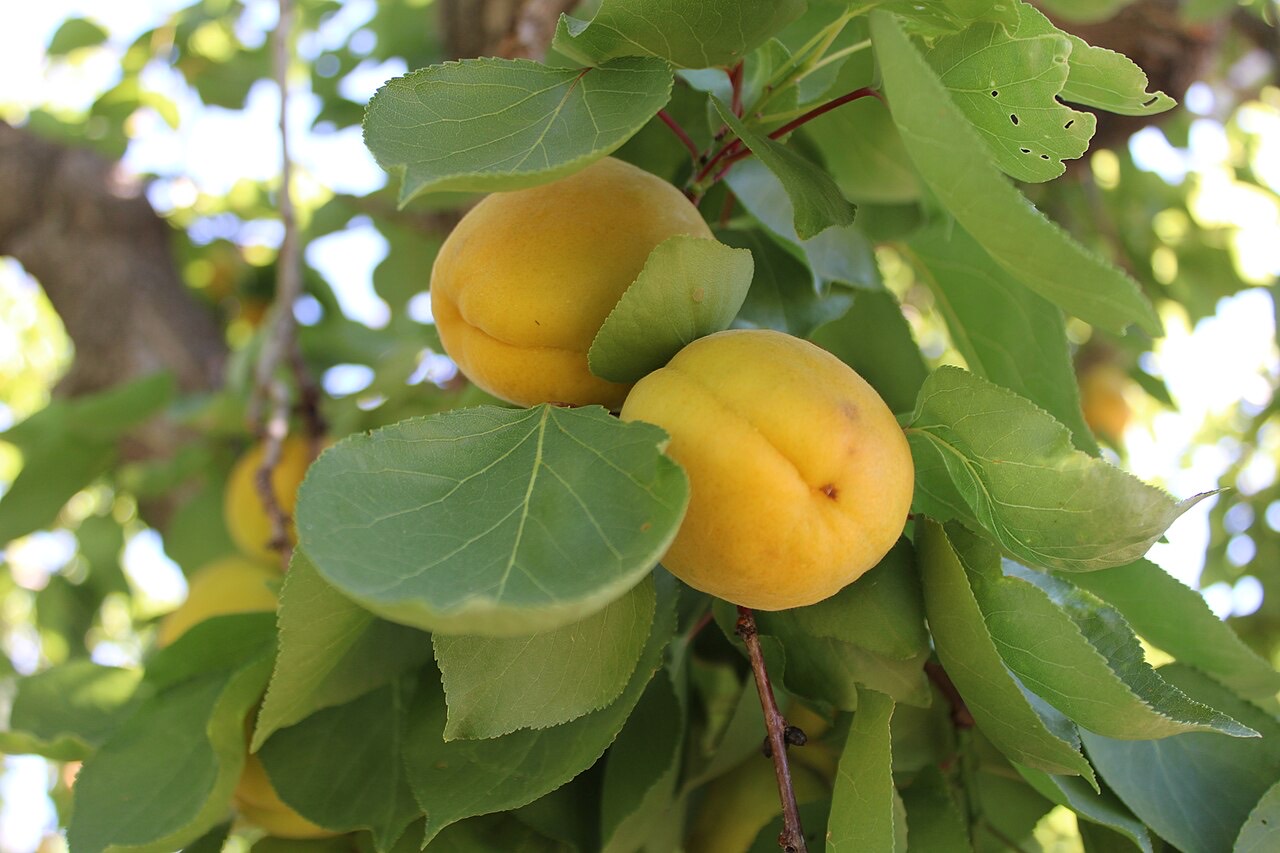
Apricot is a deciduous tree fruit in the same genus as peach, plum, and cherry, grown across temperate and Mediterranean-type climates for fresh consumption, drying, and processing. Commercial orchards are established from grafted trees combining a fruiting cultivar with a rootstock suited to the site.
A distinctive feature of apricot production in many growing regions is very early spring bloom, often earlier than related stone fruits grown in the same area. Combined with a comparatively modest winter chilling requirement in many cultivars, this early bloom leaves flowers exposed to a longer window of possible spring frost, making frost risk management a central concern for growers.
Overview
Apricot trees are grown as grafted, long-lived perennials in temperate and Mediterranean-type climates. Production ranges from large commercial orchards to smallholder plantings, often in regions where a distinct dry or mild-winter season supports fruit drying alongside fresh-market sale.
Because apricot flowers so early relative to many other tree fruits grown in the same region, site selection and local microclimate play an outsized role in the crop’s reliability from year to year.
Botanical classification
- Family
- Rosaceae (rose family)
- Genus
- Prunus
- Principal species
- Prunus armeniaca (cultivated apricot)
- Growth habit
- Deciduous tree, commercially propagated by grafting a fruiting cultivar onto a selected rootstock; a stone fruit (drupe) closely related to peach, plum, and cherry
Origin and distribution
Apricot is believed to have originated in Central and East Asia, with cultivation spreading over millennia along historical trade routes into the Mediterranean basin, the Middle East, and eventually to other temperate regions worldwide, including parts of North America, Australia, and South Africa.
Climate requirements
Like other deciduous Prunus species, apricot requires a genotype-specific period of winter chilling to break dormancy and flower normally. In many cultivars this chilling requirement is comparatively modest, which — combined with a tendency to bloom very early in spring in many growing regions — means flowers can be exposed to frost more often than later-blooming stone fruits grown in the same area.
| Factor | Typical characteristic | Relevance to frost risk |
|---|---|---|
| Bloom timing | Often very early in spring in many regions | Extends the period flowers are exposed to possible frost |
| Chilling requirement | Comparatively modest in many cultivars | Can allow dormancy to break, and bloom to start, earlier in the season |
| Site selection | Slope, elevation, and air drainage vary by site | Sites with poor air drainage tend to pool cold air and increase frost damage |
Soil requirements
Apricot performs best on deep, well-drained soils with good structure; loams and sandy loams are generally favored. The crop has poor tolerance of waterlogging, which restricts rooting and increases the risk of root and crown diseases.
Orchard establishment and management
Establishing an apricot orchard begins with choosing a rootstock and cultivar combination suited to the site, market, and local frost risk. Most apricot cultivars are self-fertile, which simplifies orchard pollination design compared with tree fruits such as sweet cherry that generally require a compatible pollinizer variety, though some cultivars and regions still benefit from cross-pollination.
- Rootstock selection for size control, anchorage, and site adaptation
- Site selection favoring good air drainage to reduce frost pooling at bloom
- Cultivar selection balancing bloom timing, chilling requirement, and market use
- Training and pruning system matched to planting density and vigor
Nutrient considerations
Nitrogen influences vegetative vigor and must be balanced against excessive shoot growth. Potassium supports fruit size and quality, calcium is linked to fruit firmness, and boron plays a role in pollination and fruit set.
Water and irrigation
Apricot runs a short, front-loaded season: it blooms earlier than almost any other stone fruit and ripens within about three months of it, so the whole water demand is compressed into spring. The crop is also unusually prone to pit-hardening stress, a period midway through fruit growth when the seed coat lignifies and the fruit takes up little water; irrigating through it as though growth were continuous wastes water and can split fruit when expansion resumes.
Irrigation scheduling aims to avoid water stress during fruit development while preventing waterlogging, which apricot tolerates poorly.
Common diseases and pests
Gray mold (Botrytis) can affect blossoms and fruit, particularly under wet or humid conditions, and powdery mildew affects shoots, leaves, and fruit finish. Bacterial leaf spot can cause lesions on leaves and fruit and is a concern in some humid growing regions.
Insect pests include aphids, which distort growth and can transmit viruses; fruit flies, whose larvae develop inside ripening fruit; and various scale insects, which feed on bark and shoots and can weaken trees under heavy infestation.
Management combines resistant or tolerant cultivars, orchard sanitation, monitoring, and — where justified — locally authorized control products applied according to their labels.
Harvest
Apricot is picked by hand, generally at a maturity stage assessed through color change, firmness, and flavor development. Fruit destined for immediate fresh sale, long-distance shipping, or drying is typically harvested at somewhat different maturities to suit each use, since apricot softens and its flavor and sugars continue to develop for only a limited period after picking.
Uses
- Fresh-market eating apricots
- Dried apricots
- Canning and processing into jams, preserves, and other products
- Juice and nectar production
Botanical identity
Species- Accepted name
- Prunus armeniaca
- Family
- Rosaceae
- Genus
- Prunus
- Harvested part
- fruit
- Agricultural use
- human food
- Crop group
- Fruit
What the authorities say
- World Flora Online — Taxonomic Backbone
- Prunus armeniaca
- Plants of the World Online
- Prunus armeniaca
Botanical identity here is what the consulted taxonomic authorities publish, on the date they were read. Where authorities disagree, both readings are shown rather than one being chosen silently.
What AgricultureID holds for this crop
- 6 crop calendar records
- 1 pests and diseases naming this crop as a host
- 2 soil references
- 2 climate references
- 5 related crops
Not held
- No published cultivars — not researched
- No official variety registrations — source exists not mapped
- No verified extension resources — source exists not ingested
- No farm economics observations — source exists not mapped
- No market price series — source exists not mapped
An absence here means this corpus holds no such record, not that none exists.
How to read figures on this page
Production, area and trade figures for any crop change from season to season and are compiled by FAO and by national agricultural statistics agencies. Take current numbers from those primary sources, dated to the period you mean, rather than from a secondary summary — including this one.
Crop water requirements are estimated from reference evapotranspiration and local climate data, following methods published by FAO and national agricultural agencies. A requirement quoted without the reference method and the local climate behind it is not a number that can be applied to a field.
Part of
Related crops
- Same genus
- Almond, Cherry, Peach, Plum, Sour Cherry
Planting and harvest calendar
Usual sowing and harvest windows across 6 jurisdictions, covering apricot.
Tools for this
Each tool shows its formula, constants and sources, and starts empty — nothing is filled in from this page.
- Seed-rate calculator
Convert a target plant stand into a seed rate, allowing for germination and establishment.
- Row spacing calculator
Work out in-row spacing and plants per metre of row for a target density.
- Production, area and yield calculator
Relate a harvested area and a yield to a production total, in either direction.
- Growing degree-days calculator
Accumulate heat units against a base temperature.
Relationships
Evidence-backed connections in the knowledge graph.
Suitable soils
Climate sensitivity
Irrigation methods
Machinery
Farming systems
Scope & limitations
Geographic scope: Global overview. Bloom timing, chilling requirement, and frost risk vary widely by cultivar, site, and region.
Climate context: Temperate deciduous stone fruit; early bloom in many regions makes it particularly vulnerable to spring frost during flowering.
- Chilling-hour values, bloom-date ranges, and frost-risk thresholds are cultivar- and site-specific and are not stated here as universal figures.
- Production and cultivar-popularity statistics change over time and should be taken from primary datasets such as FAOSTAT.
Sources
This article draws on the following authoritative sources. See our sources & methodology for how they are selected.
- [1]FAO — Food and Agriculture Organization (opens in a new tab)Authoritative
Food and Agriculture Organization of the United Nations (FAO)
Cited for: Global apricot production and trade context
- Type:
- Intergovernmental organization
- Jurisdiction:
- Global
- Accessed:
- 2026-07-12
- [2]FAOSTAT — FAO statistical database (opens in a new tab)Authoritative
Food and Agriculture Organization of the United Nations (FAO)
Cited for: Production and area statistics
- Type:
- Intergovernmental organization
- Jurisdiction:
- Global
- Accessed:
- 2026-07-12
- [3]CABI Digital Library — Crop Protection Compendium (opens in a new tab)High
CABI (Centre for Agriculture and Bioscience International)
Cited for: Apricot disease and pest compendium data
- Type:
- Reference database
- Jurisdiction:
- Global
- Accessed:
- 2026-07-12
- [4]UC Statewide Integrated Pest Management Program (UC IPM) (opens in a new tab)High
University of California Agriculture and Natural Resources (UC ANR)
Cited for: Integrated pest management guidelines for apricot
- Type:
- University extension service
- Jurisdiction:
- United States (California)
- Accessed:
- 2026-07-12
- [5]Cornell CALS — Plant pathology and crop resources (opens in a new tab)High
Cornell University College of Agriculture and Life Sciences
Cited for: Stone fruit bloom, frost risk, and orchard management research
- Type:
- University extension service
- Jurisdiction:
- United States (New York)
- Accessed:
- 2026-07-12
- Authoritative
Cited for: Classification and nomenclature
- Type:
- Reference database
- Jurisdiction:
- United States
- Accessed:
- 2026-07-12