Crop · Tree fruit crop
Plum
Prunus domestica (European plum); Prunus salicina (Japanese plum)
Also known as: European plum, Japanese plum, Prune plum
Plum is a temperate deciduous stone fruit grown as two distinct groups, European plum used fresh and for drying into prunes, and Japanese plum grown mainly for the fresh market, both propagated by grafting.
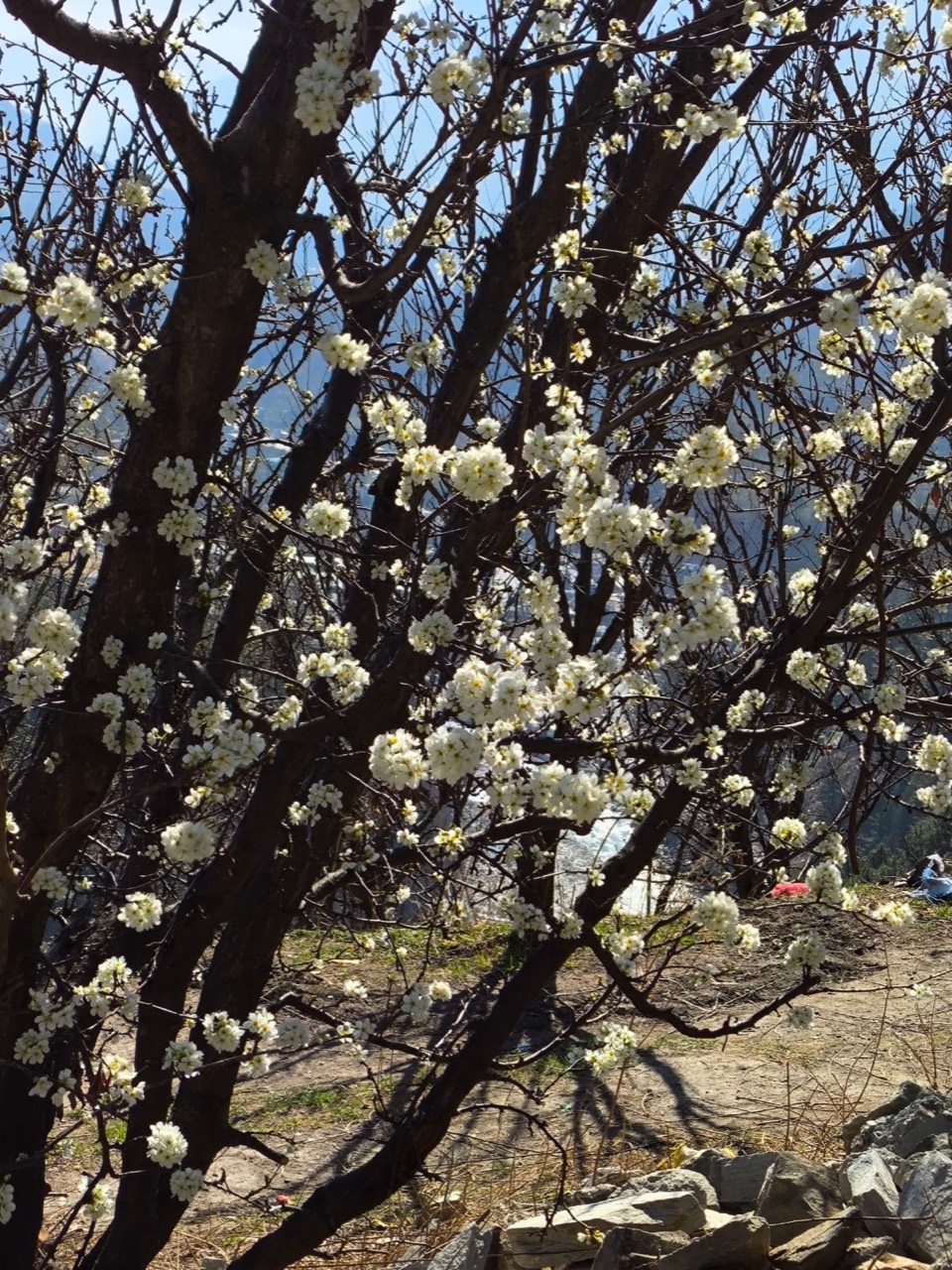
Plum rootstock choice turns on drainage. Myrobalan is the long-standing general-purpose stock and Marianna is used where ground lies wet, because plum tolerates heavier and wetter soil than most stone fruit and is planted on ground a peach would not survive. Two distinct species dominate commercial production: European plum (Prunus domestica), a hexaploid species used both fresh and for drying into prunes, and Japanese plum (Prunus salicina), a diploid species grown predominantly for the fresh market.
Pollination requirements differ between the two groups: many Japanese plum cultivars require cross-pollination from a compatible variety, while some European plum cultivars are self-fertile, an important consideration in orchard design. Chilling requirement also varies widely by cultivar and species group, with Japanese plum types generally needing somewhat less chilling than many European plum cultivars.
Overview
Plum is grown as a grafted, long-lived perennial tree. Commercial production spans European plum, valued for both fresh eating and drying into prunes, and Japanese plum, grown predominantly for fresh consumption, with each group having somewhat different orchard traditions and end markets.
Because plum is propagated clonally and cropped over many seasons, decisions on rootstock, species group, cultivar, and pollinizer requirements are made at establishment and shape orchard management for the life of the planting.
Botanical classification
- Family
- Rosaceae (rose family)
- Genus
- Prunus
- Principal species
- Prunus domestica (hexaploid European plum) and Prunus salicina (diploid Japanese plum)
- Growth habit
- Deciduous tree, commercially propagated by grafting a fruiting cultivar onto a selected rootstock
The difference in ploidy between European plum (hexaploid) and Japanese plum (diploid) reflects their distinct genetic origins, and this distinction carries through to differences in typical fruit characteristics, pollination behavior, and end use between the two groups.
Origin and distribution
European plum is believed to have originated in the region around the Caucasus and Near East, while Japanese plum originated in China despite its common name, later being developed further in Japan before spreading internationally. Both groups have long histories of cultivation and selection.
Commercial production of both species groups is now established across temperate regions on multiple continents.
Climate requirements
Plum trees require a period of winter chilling to break dormancy and flower normally; the chilling requirement varies widely by cultivar and species group. Japanese plum cultivars generally need somewhat less chilling than many European plum cultivars, though this varies enough by individual cultivar that local variety trial information should guide selection.
Frost at bloom separates the two commercial plum species rather than affecting them alike. Japanese plum flowers earlier than European plum and is correspondingly more exposed, which is one reason European types dominate where late frosts are routine and Japanese types dominate where they are not.
Soil requirements
Plum tolerates heavier ground than peach or cherry, and Prunus domestica in particular is grown on clay loams where a cherry planting would fail. It is still intolerant of standing water: the limit is duration rather than texture, and a site that drains slowly after winter rain is the one that loses trees.
Orchard establishment and management
Establishing a plum orchard begins with choosing a species group, rootstock, and cultivar combination suited to the site and target market. Pollination planning differs by group: many Japanese plum cultivars require cross-pollination from a compatible variety, while some European plum cultivars are self-fertile, though pollinizer needs should still be confirmed for the specific cultivar chosen.
- Species group selection (European vs. Japanese plum) matched to target market
- Rootstock selection for size control, anchorage, and site adaptation
- Pollinizer planning, particularly important for Japanese plum cultivars
- Training and pruning system matched to planting density
Nutrient considerations
Potassium supports fruit size and quality in plum, while calcium status is linked to fruit firmness and storage quality. Boron plays a role in flowering and fruit set, which is particularly relevant where pollination is a limiting factor, as in many Japanese plum cultivars.
Water and irrigation
Plum carries a heavy crop load relative to leaf area and drops fruit when stressed, so the water-sensitive period runs from shortly after set through stone hardening. European plums destined for drying are an exception worth noting: a controlled late-season deficit concentrates sugars and is applied deliberately.
For European "prune" plum cultivars destined for drying, fruit development is managed with attention to achieving notably high soluble-solids content, a characteristic that suits these cultivars to drying and distinguishes them from plum grown solely for the fresh market.
Common diseases and pests
Plum pox virus, also called sharka, is the most serious viral disease of stone fruit and the reason aphids matter more on plum than their direct feeding damage would suggest. It is spread by aphids locally and by the movement of infected nursery stock over long distances, and it is regulated: detection triggers quarantine, stop-sale and destruction rather than treatment. There is no cure for an infected tree, so the whole management effort sits in certified planting material and surveillance.
Management combines resistant or tolerant cultivars, orchard sanitation, monitoring, and — where justified — locally authorized control products applied according to their labels.
Harvest
Plum is generally hand-picked at a maturity stage assessed through color, firmness, and, for prune-type European plum, sugar content suited to drying. Fresh-market fruit is typically harvested somewhat earlier than fruit destined for drying, which is often allowed to develop further before harvest.
Uses
| Feature | European plum (P. domestica) | Japanese plum (P. salicina) |
|---|---|---|
| Ploidy | Hexaploid | Diploid |
| Typical use | Fresh eating and drying into prunes | Mainly fresh market |
| Pollination | Some cultivars self-fertile | Many cultivars require cross-pollination |
- Fresh-market eating plums
- Dried prunes from European plum cultivars with high soluble-solids content
- Canned and processed fruit
- Juice and preserves
What this page covers
genus conceptThis page covers plum as a crop, and the crop is two species: European plum, Prunus domestica, and Japanese plum, Prunus salicina, which supplies most of the fresh plums in world trade. The page has always said so in its own scientific name field; Wave 41 is where that became a record something can check.
The page covers several cultivated species of one genus. Each is a real, separately verifiable taxon; the page exists because the trade name covers all of them.
| Taxon | In this corpus | Role |
|---|---|---|
| Prunus salicinaJapanese plum | held as a verified taxon — listed in the taxa register, no page of its own | Diploid, earlier, larger-fruited and the source of most fresh plums traded internationally; European plum is hexaploid and supplies most prunes. Held as a taxon and covered by this page rather than published beside it, because publishing the larger crop under the qualified name would leave the smaller one holding the word "plum". |
When a taxon here earns its own page: Japanese plum would earn its own page if this page were rewritten to be about Prunus domestica alone. It is not: it covers both, and the honest resolution of Wave 39’s scope block is to say so here rather than to publish a second plum under a qualified name.
Botanical identity
Species- Accepted name
- Prunus domestica
- Family
- Rosaceae
- Genus
- Prunus
- Harvested part
- fruit
- Agricultural use
- human food
- Crop group
- Fruit
What the authorities say
- World Flora Online — Taxonomic Backbone
- Prunus domestica
- Plants of the World Online
- Prunus domestica
Botanical identity here is what the consulted taxonomic authorities publish, on the date they were read. Where authorities disagree, both readings are shown rather than one being chosen silently.
What AgricultureID holds for this crop
- 2 soil references
- 2 climate references
- 5 related crops
Not held
- No crop calendar records — source exists not mapped
- No published cultivars — not researched
- No official variety registrations — source exists not mapped
- No verified extension resources — source exists not ingested
- No pests and diseases naming this crop as a host — source exists not ingested
- No farm economics observations — source exists not mapped
- No market price series — source exists not mapped
An absence here means this corpus holds no such record, not that none exists.
How to read figures on this page
Production, area and trade figures for any crop change from season to season and are compiled by FAO and by national agricultural statistics agencies. Take current numbers from those primary sources, dated to the period you mean, rather than from a secondary summary — including this one.
Crop water requirements are estimated from reference evapotranspiration and local climate data, following methods published by FAO and national agricultural agencies. A requirement quoted without the reference method and the local climate behind it is not a number that can be applied to a field.
Part of
Related crops
- Same genus
- Almond, Apricot, Cherry, Peach, Sour Cherry
Authorised inputs (France)
The French register records 130 currently authorised products whose authorised use names this crop, held by 69 authorisation holders. This is a count of what exists on the register, not a recommendation and not a shortlist.
By function
- Fongicide 56
- Insecticide 50
- Attractif phéromone (confusion sexuelle) 11
- Acaricide 7
- Régulateur de croissance 3
- Herbicide 1
Targets named on the register
- Chenilles foreuses des fruits 27
- Moniliose(s) 26
- Bactériose(s) 20
- Acariens et phytoptes 16
- Tavelure(s) 15
- Pucerons 14
Use scope is recorded as the register writes it. Collective terms cover several crops at once and are left unmapped rather than expanded, because expanding one entry into several would invent authorisations that were never granted.
Authorisation is specific to one jurisdiction, one legal object and one moment. It is not a recommendation, and it says nothing about how a product may be used: always read the current official label at the source before acting.
Tools for this
Each tool shows its formula, constants and sources, and starts empty — nothing is filled in from this page.
- Seed-rate calculator
Convert a target plant stand into a seed rate, allowing for germination and establishment.
- Row spacing calculator
Work out in-row spacing and plants per metre of row for a target density.
- Production, area and yield calculator
Relate a harvested area and a yield to a production total, in either direction.
- Growing degree-days calculator
Accumulate heat units against a base temperature.
Relationships
Evidence-backed connections in the knowledge graph.
Suitable soils
Climate sensitivity
Irrigation methods
Machinery
Farming systems
Scope & limitations
Geographic scope: Global overview. Species group, rootstock, cultivar, and chilling requirements are region- and site-specific.
Climate context: Temperate deciduous stone fruit; chilling requirement varies widely by cultivar and species group, and bloom-time frost is a significant risk.
- Rootstock, pollinizer pairing, and chilling-hour specifics are cultivar- and region-specific decisions not covered by universal values here.
- Production and cultivar-popularity statistics change over time and should be taken from primary datasets such as FAOSTAT.
Sources
This article draws on the following authoritative sources. See our sources & methodology for how they are selected.
- [1]FAO — Food and Agriculture Organization (opens in a new tab)Authoritative
Food and Agriculture Organization of the United Nations (FAO)
Cited for: Global plum production and cultivation context
- Type:
- Intergovernmental organization
- Jurisdiction:
- Global
- Accessed:
- 2026-07-12
- [2]FAOSTAT — FAO statistical database (opens in a new tab)Authoritative
Food and Agriculture Organization of the United Nations (FAO)
Cited for: Production and area statistics
- Type:
- Intergovernmental organization
- Jurisdiction:
- Global
- Accessed:
- 2026-07-12
- [3]CABI Digital Library — Crop Protection Compendium (opens in a new tab)High
CABI (Centre for Agriculture and Bioscience International)
Cited for: Plum pest and disease compendium data
- Type:
- Reference database
- Jurisdiction:
- Global
- Accessed:
- 2026-07-12
- [4]UC Statewide Integrated Pest Management Program (UC IPM) (opens in a new tab)High
University of California Agriculture and Natural Resources (UC ANR)
Cited for: Integrated pest management guidelines for plum
- Type:
- University extension service
- Jurisdiction:
- United States (California)
- Accessed:
- 2026-07-12
- [5]Cornell CALS — Plant pathology and crop resources (opens in a new tab)High
Cornell University College of Agriculture and Life Sciences
Cited for: Plum cultivar and orchard management research
- Type:
- University extension service
- Jurisdiction:
- United States (New York)
- Accessed:
- 2026-07-12
- Authoritative
Cited for: Classification and nomenclature
- Type:
- Reference database
- Jurisdiction:
- United States
- Accessed:
- 2026-07-12