Crop · Fruit crop
Orange
Citrus sinensis (sweet orange)
Also known as: Sweet orange
Orange is an evergreen citrus tree grown in subtropical and tropical regions for its fresh fruit and juice. Orchards are established from grafted trees and remain productive for many years.
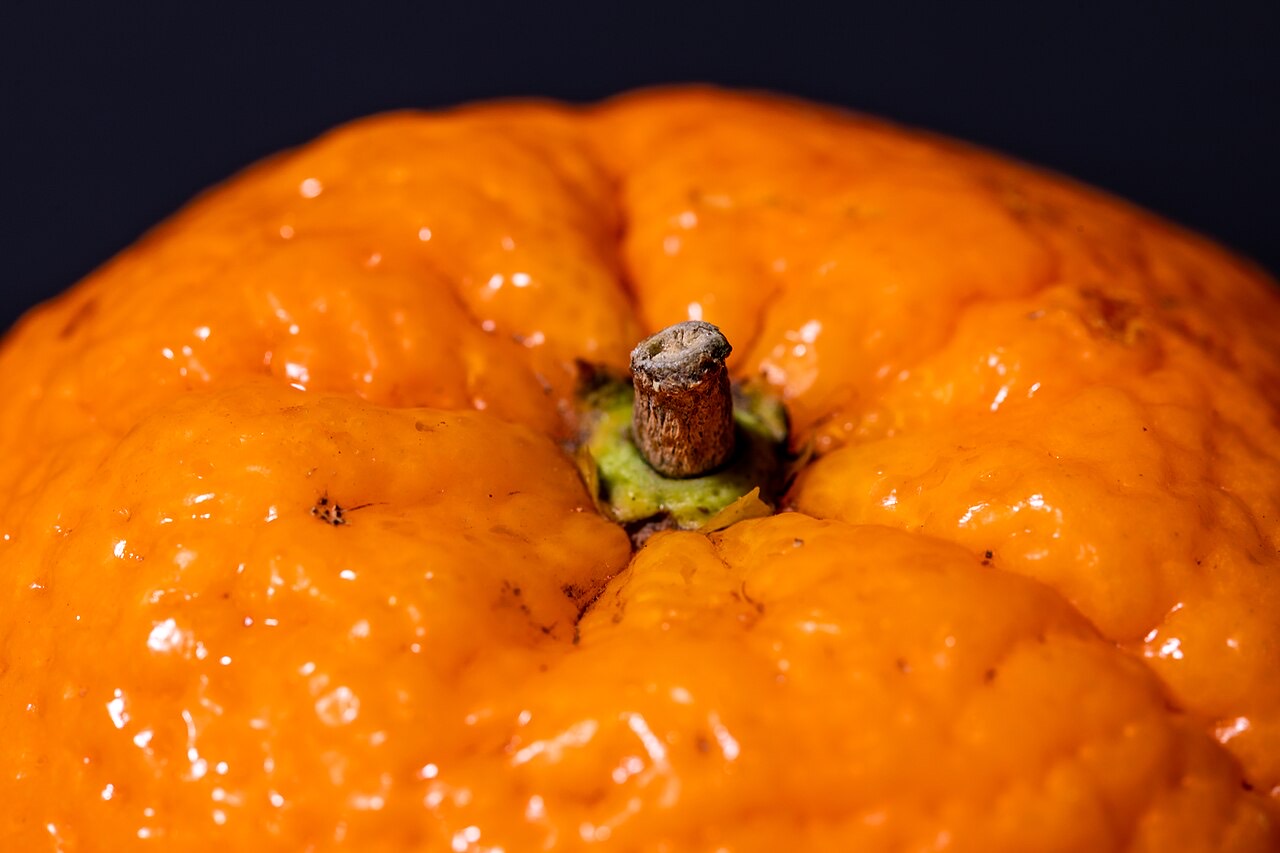
The sweet orange is an evergreen citrus tree cultivated widely across subtropical and tropical climates for fresh consumption and, in many producing regions, for large-scale juice processing. Like most citrus, commercial orange trees are grafted, combining a fruiting variety with a rootstock chosen for its disease resistance, vigor, and soil adaptation.
Rootstock selection has historically been shaped by regional disease pressures, since some rootstocks are susceptible to graft-transmissible pathogens that spread through infected propagation material or insect vectors. This makes certified, disease-tested nursery stock an important part of orchard establishment in many regions.
Overview
Orange is grown commercially across a band of subtropical and tropical regions suited to citrus, from large processing-oriented plantings supplying juice concentrate to orchards focused on fresh-market fruit.
As an evergreen tree, orange does not have a dormant leafless season like temperate deciduous fruit crops, which shapes both its climate sensitivity and its year-round management needs.
Botanical classification
- Family
- Rutaceae (citrus family)
- Genus
- Citrus
- Principal species
- Citrus sinensis (sweet orange)
- Growth habit
- Evergreen tree, commercially propagated by grafting a fruiting variety onto a selected rootstock
Origin and distribution
Sweet orange is believed to have originated in southern China and Southeast Asia, arising through the ancient hybridization of ancestral citrus species, before spreading via trade routes to the Mediterranean, and later to the Americas following European colonization.
Today, orange production is concentrated in a number of subtropical and tropical growing regions worldwide.
Climate requirements
Orange is adapted to subtropical and tropical climates and is notably sensitive to frost, which can damage or kill foliage, wood, and fruit depending on severity and duration. Cold-hardiness varies somewhat among citrus types, but sweet orange has limited frost tolerance overall.
Fruit quality, including sugar and acid balance and peel color, is influenced by temperature patterns during maturation, with some cooler nighttime temperatures during ripening favoring peel coloration in certain climates.
Soil requirements
Orange is generally grown on well-drained sandy loam soils, since citrus roots are highly sensitive to waterlogging and prolonged saturation. The crop also has limited tolerance of soil and irrigation-water salinity compared with many other tree crops.
Orchard establishment and management
Establishing a citrus orchard depends on certified, disease-tested nursery trees grafted onto a rootstock matched to local soil, disease pressure, and irrigation-water quality.
- Rootstock selection for disease resistance, vigor, and soil adaptation
- Use of certified, disease-tested planting material
- Canopy management and pruning suited to the local climate and pest pressure
- Windbreaks or frost-protection measures in marginal climates
Nutrient considerations
Nitrogen supports vegetative growth and fruit yield, while citrus is also prone to micronutrient deficiencies, including zinc, which can appear as characteristic leaf mottling and reduced growth in affected trees.
Water and irrigation
Orange is grown both under irrigation in drier subtropical regions and with supplemental irrigation in more humid climates. Drip irrigation is widely used to supply water precisely while managing salinity in the root zone.
Water stress at key developmental stages can affect fruit size and, in some cases, fruit drop, so irrigation scheduling is matched to local evapotranspiration data and soil-moisture monitoring.
Common diseases and pests
Anthracnose is a fungal disease that can affect citrus foliage, twigs, and fruit, particularly under humid conditions. Citrus is also affected by a range of other fungal, bacterial, and viral diseases whose regional importance varies considerably. Aphids can transmit graft-transmissible viruses in addition to direct feeding damage, and spider mites can affect leaves and fruit finish.
Management relies on certified disease-free planting material, resistant or tolerant rootstocks where relevant, monitoring, and — where justified — locally authorized control products applied according to their labels.
Harvest
Orange fruit does not continue to ripen significantly after picking, so harvest timing is based on reaching an acceptable sugar-to-acid ratio and peel condition for the intended market, whether fresh consumption or juice processing. Fruit is typically hand-picked to avoid damage.
Uses
- Fresh-market fruit consumption
- Juice and juice-concentrate processing
- Peel-derived essential oils and by-products
- Marmalade and other processed foods
Botanical identity
Cultivar group- Accepted name
- Citrus × aurantium Sweet Orange Group
- Family
- Rutaceae
- Genus
- Citrus
- Harvested part
- fruit
- Agricultural use
- human food, beverage
- Crop group
- Fruit
What the authorities say
- World Flora Online — Taxonomic Backbone
- Citrus × aurantium
- Plants of the World Online
- Citrus × aurantium
Both authorities place sweet orange and grapefruit at the SAME name — Citrus × aurantium f. aurantium. Published at that rank they would be one taxon, which is agriculturally useless: orange and grapefruit are different crops with different agronomy, markets and trade rules. Cultivated citrus is a hybrid complex, and the horticultural answer is a cultivar group of the hybrid species, which is what is published here. The authorities’ own reading is recorded alongside it.
Botanical identity here is what the consulted taxonomic authorities publish, on the date they were read. Where authorities disagree, both readings are shown rather than one being chosen silently.
Traded as
This crop is traded as one commodity in this corpus.
What AgricultureID holds for this crop
- 13 crop calendar records
- 7 pests and diseases naming this crop as a host
- 2 soil references
- 2 climate references
- 305 market price series
- 8 related crops
Not held
- No published cultivars — not researched
- No official variety registrations — source exists not mapped
- No verified extension resources — source exists not ingested
- No farm economics observations — source exists not mapped
An absence here means this corpus holds no such record, not that none exists.
How to read figures on this page
Production, area and trade figures for any crop change from season to season and are compiled by FAO and by national agricultural statistics agencies. Take current numbers from those primary sources, dated to the period you mean, rather than from a secondary summary — including this one.
Crop water requirements are estimated from reference evapotranspiration and local climate data, following methods published by FAO and national agricultural agencies. A requirement quoted without the reference method and the local climate behind it is not a number that can be applied to a field.
Part of
Related crops
- Same crop concept
- Citrus, Grapefruit, Makrut Lime, Lemon, Lime, Mandarin, Pomelo
- Shared pest and disease pressure
- Mango
Planting and harvest calendar
Usual sowing and harvest windows across 13 jurisdictions, covering orange.
Tools for this
Each tool shows its formula, constants and sources, and starts empty — nothing is filled in from this page.
- Seed-rate calculator
Convert a target plant stand into a seed rate, allowing for germination and establishment.
- Row spacing calculator
Work out in-row spacing and plants per metre of row for a target density.
- Production, area and yield calculator
Relate a harvested area and a yield to a production total, in either direction.
- Growing degree-days calculator
Accumulate heat units against a base temperature.
Relationships
Evidence-backed connections in the knowledge graph.
Susceptible to
Suitable soils
Irrigation methods
Managed with
Farming systems
Harvested commodities
The traded commodities harvested from this crop. A commodity is the harvested lot, described by its own quality, grading, and storage evidence — not by the agronomy of the plant.
Scope & limitations
Geographic scope: Global overview of subtropical and tropical production. Rootstock and disease pressure vary substantially by region.
Climate context: Evergreen citrus tree adapted to subtropical and tropical climates; sensitive to frost.
- Rootstock choice and disease pressure vary regionally and are not exhaustively covered here.
- Production statistics change annually and should be taken from primary datasets such as FAOSTAT.
Sources
This article draws on the following authoritative sources. See our sources & methodology for how they are selected.
- [1]FAO — Food and Agriculture Organization (opens in a new tab)Authoritative
Food and Agriculture Organization of the United Nations (FAO)
Cited for: Global orange production and trade context
- Type:
- Intergovernmental organization
- Jurisdiction:
- Global
- Accessed:
- 2026-07-12
- [2]FAOSTAT — FAO statistical database (opens in a new tab)Authoritative
Food and Agriculture Organization of the United Nations (FAO)
Cited for: Production and area statistics
- Type:
- Intergovernmental organization
- Jurisdiction:
- Global
- Accessed:
- 2026-07-12
- Authoritative
Cited for: Classification and nomenclature
- Type:
- Reference database
- Jurisdiction:
- United States
- Accessed:
- 2026-07-12
- [4]CABI Digital Library — Crop Protection Compendium (opens in a new tab)High
CABI (Centre for Agriculture and Bioscience International)
Cited for: Citrus disease and pest compendium data
- Type:
- Reference database
- Jurisdiction:
- Global
- Accessed:
- 2026-07-12
- [5]UC Statewide Integrated Pest Management Program (UC IPM) (opens in a new tab)High
University of California Agriculture and Natural Resources (UC ANR)
Cited for: Integrated pest management guidelines for citrus
- Type:
- University extension service
- Jurisdiction:
- United States (California)
- Accessed:
- 2026-07-12